You have not yet added any article to your bookmarks!
Join 10k+ people to get notified about new posts, news and tips.
Do not worry we don't spam!
Post by : Saif Rahman
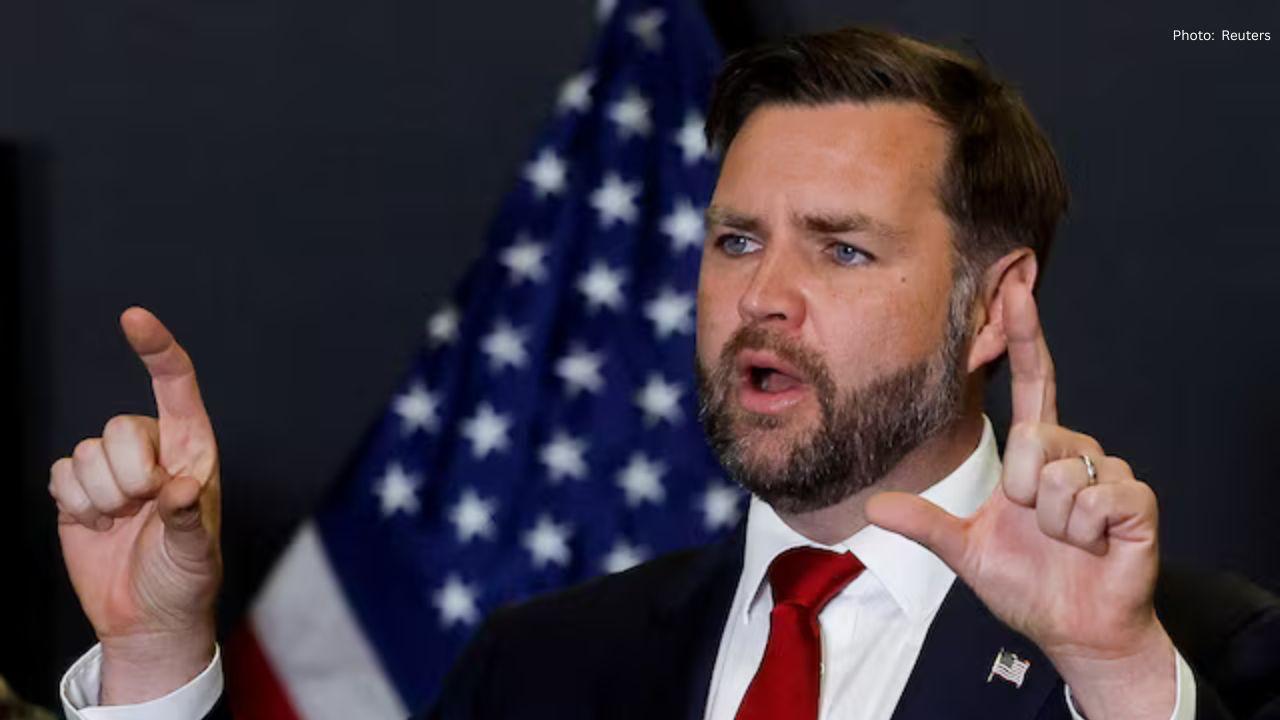
The U.S. Supreme Court is preparing to review critical aspects of campaign finance regulations, specifically involving Vice President JD Vance. Historically, the court has moved to diminish the laws designed to limit political expenditures, often citing free speech rights. With a solid conservative majority, analysts predict a continuation of this trend.
This case originates from a 2022 Senate campaign in Ohio, where JD Vance and two Republican committees contested limits established by Congress in the 1970s. These restrictions govern how much political parties can spend in coordination with federal candidates. A lower court upheld these limits, but following an appeal by the Republican factions, the matter has reached the Supreme Court.
While the Biden administration has previously defended these spending regulations, former President Trump has now lent his support to Vance's challenge, advocating for the removal of such limits. Oral arguments are scheduled for next week, with a ruling expected by June.
Legal experts highlight the court's consistent trend toward relaxing spending laws. Jessica Levinson, a Loyola Law School professor, pointed out that for over two decades, the Supreme Court has incrementally dismantled campaign finance protections, often viewing these laws as infringements on free speech.
A pivotal example is the 2010 Citizens United decision, which allowed corporations and independent groups to spend unlimited funds in elections, provided there is no direct coordination with campaigns. This ruling spurred the establishment of Super PACs capable of raising and expending vast financial resources. Subsequent rulings in 2014 and 2022 have further eroded limitations on candidate contributions.
Supporters of these decisions contend that they bolster free speech by eliminating hurdles to political engagement, whereas critics claim they enable affluent donors to exert excessive influence in elections, undermining fairness.
The current case, National Republican Senatorial Committee v. Federal Election Commission, examines a clause in the Federal Election Campaign Act of 1971 that aims to prevent corruption by restricting how much political parties can financially support candidates they collaborate with directly. Uncoordinated expenditures are categorized as independent and are subject to fewer restrictions.
Spending limits vary based on the candidate’s state; for instance, those running for Senate in 2024 face caps between approximately $123,000 and $3.7 million, while House candidates have limits from $62,000 to $123,000. The objective is to deter wealthy donors from circumventing direct contribution ceilings through political parties.
Tara Malloy, an attorney at the Campaign Legal Center, emphasized that these limits play a crucial role in staving off corruption by preventing major donors from concealing substantial contributions through party committees. She cautioned that the elimination of these limits could pave the way for more corruption, making it increasingly challenging to monitor.
Traditionally, the Justice Department has defended these regulations, but this has shifted under Trump’s administration, which has chosen not to uphold the law in this case. Instead, Roman Martinez, a court-appointed attorney, will advocate for maintaining the limits, arguing that their absence could lead to parties being used as loopholes to bypass donation restrictions. He referenced concrete instances of corruption stemming from such loopholes throughout U.S. history.
Martinez also hinted that the Supreme Court might opt to dismiss the case without a significant ruling, thereby sidestepping an overturning of longstanding precedents. Some observers believe that the justices could take this route to mitigate ongoing public backlash regarding their influence on electoral regulations.
This case underscores a broader discussion in America: how much financial influence is acceptable in politics, and at what point does free speech infringe upon equitable electoral practices? As the nation awaits the Supreme Court's decision, the ramifications on political campaigns could be profound and long-lasting.


India Warns Poland Against Unfair Targeting, Urges Zero Tolerance on Terror
India raises strong concerns with Poland over unfair trade pressure and calls for zero tolerance on

Japan’s PM Takaichi Likely to Call Snap Election to Boost Support
Japan’s PM Sanae Takaichi plans a snap election soon, aiming to strengthen her party amid new opposi

12-Year-Old Boy Critically Injured in Rare Shark Attack at Sydney Beach
A 12-year-old boy is in intensive care after a rare shark attack at Sydney’s Shark Beach. His friend

Deadly Factory Blast in Northern China Kills 2, Injures 84, 8 Missing
A massive explosion at a steel plant in northern China kills 2, injures 84, and leaves 8 missing. Au
Bengaluru Matrimony Scam: Engineer Loses Rs 1.52 Crore to Fake Groom
A Bengaluru software engineer was cheated of Rs 1.52 crore by a man she met on a matrimony site, who
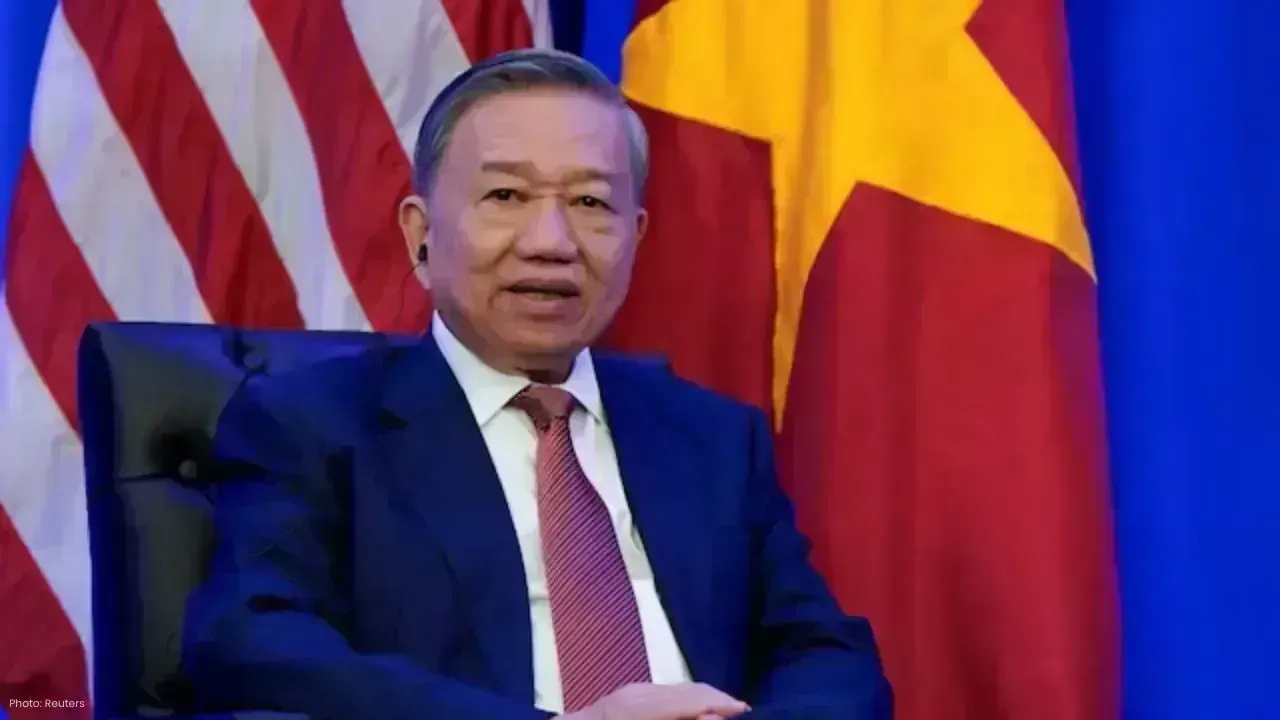
Vietnam Party Congress Begins, To Lam’s Power in Focus
Vietnam’s Communist Party meets to choose its top leader and set economic goals, as To Lam looks set