You have not yet added any article to your bookmarks!
Join 10k+ people to get notified about new posts, news and tips.
Do not worry we don't spam!
Post by : Samjeet Ariff
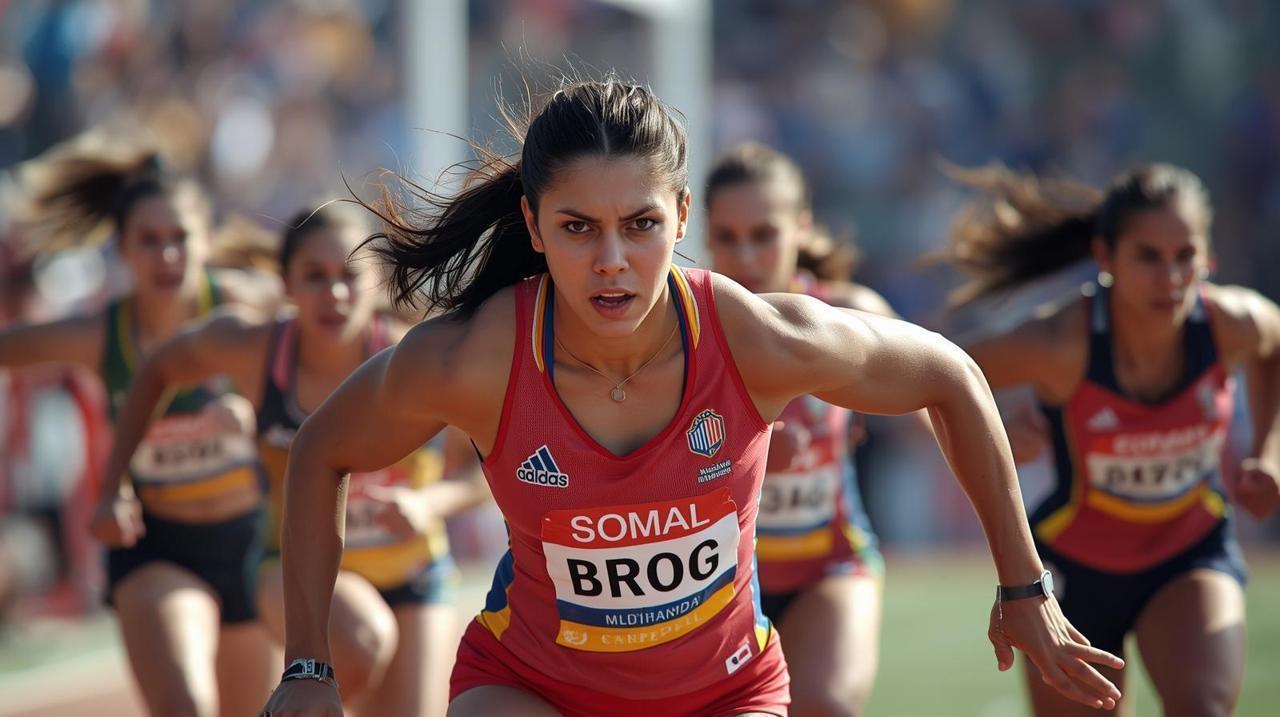
In the world of professional sports, focus can be the decisive factor in winning or losing. While skills like speed and physical strength are vital, maintaining mental clarity during critical moments distinguishes top athletes. Whether it’s a critical penalty in football, a tense moment in tennis, or the final countdown in basketball, it is essential for athletes to control their mental state as precisely as their physical actions.
Modern sports science, psychology, and neuroscience reveal the techniques athletes utilize to sustain high levels of concentration in stressful conditions. This piece elaborates on the most effective strategies elite athletes employ — and how these can be integrated into everyday situations.
Top athletes understand that talent alone isn't enough; they train their minds as rigorously as their bodies. Mental conditioning encompasses:
Athletes visualize successful performances—be it landing a jump, scoring a goal, or executing a lift.
This approach strengthens neural pathways, making the action feel instinctual.
Reassuring phrases such as:
“I can do this.”
“Maintain your calm.”
“Just one step forward.”
These affirmations help keep negative thoughts at bay when stress levels spike.
Setting short-term goals (like achieving a perfect serve) helps prevent mental overwhelm.
Mental training fosters a controlled internal environment, minimizing anxiety and boosting confidence.
Heightened pressure drives the body into a “fight or flight” reaction—racing heartbeat, shaky hands, and constricted breathing. Athletes counteract this through controlled breathing techniques for immediate refocusing.
Common methods include:
Inhale for 4 seconds → Hold for 4 → Exhale for 4 → Hold for 4.
A technique that encourages deep, steady breathing to slow the heart rate.
Inhale for 4, hold for 7, and exhale for 8 seconds.
Breathing exercises stabilize the nervous system, enhance mental clarity, and improve decision-making. Many athletes employ these methods during breaks or prior to crucial moments.
Outstanding athletes adhere to specific rituals—not mere superstition.
Such routines signal to their brains that it’s time to focus.
Examples include:
Tennis players bouncing the ball before serving.
Basketball players dribbling in a precise manner ahead of free throws.
Sprinters warming up their limbs before taking their mark.
Weightlifters performing consistent warm-up sequences prior to each lift.
The routines eliminate randomness and prime the brain for “performance mode”. Even amidst chaos, these rituals provide a sense of calm.
Focus cues serve as brief phrases athletes repeat under pressure.
Typical cues include:
“Breathe”
“Stay smooth”
“One play at a time”
“Stay in position”
“Commit fully”
These verbal anchors help maintain present-moment focus and prevent distractions.
Implementing focus cues diminishes cognitive strain and averts overthinking, a leading cause of last-minute errors.
Athletes intentionally train in stressful environments to normalize high-pressure situations.
Competing amidst loud artificial crowd noise.
Practicing within time constraints.
Introducing consequences for mistakes.
Executing high-intensity drills after exhaustive activity.
This prepares them so that competitive anxiety feels familiar, rather than overwhelming.
The mind acclimatizes to pressure, making it less intimidating over time.
Mindfulness has become an essential tool in athletic training.
This involves exercises geared toward increasing awareness, emotional regulation, and mindfulness.
Examples include:
Meditation
Guided body scans
Mindful stretching
Focused breathing techniques
Improved mental clarity
Reduced performance anxiety
Enhanced reaction times
Boosted emotional control
Mindfulness enables athletes to maintain composure, even when adrenaline surges.
Achieving peak focus is impossible without adequate recovery.
Athletes focus on:
7–9 hours of quality sleep
Nutritious diets to regulate blood sugar levels
Staying hydrated to enhance cognitive function
Regular rest days
The prefrontal cortex, which governs decision-making and focus, functions optimally when the body is well-rested.
Athletes follow diets that bolster cognitive ability:
Fish rich in Omega-3
Nuts and seeds
Blueberries
Complex carbohydrates
Leafy greens
Electrolytes for hydration
Maintaining stable energy levels is crucial for sustaining mental sharpness throughout long events.
Athletes cultivate the ability to detach emotionally from stressful moments.
Instead of fixating on:
“What if I make a mistake?”
“What if I fail?”
They shift focus to actions they can control.
Techniques include:
Transforming pressure into motivation:
“I’m anxious” becomes “I’m prepared.”
Focusing solely on the next action, rather than the entire event.
Avoiding the pitfall of letting one error snowball.
As athletes encounter various situations, they develop the ability to maintain focus.
Over time, heightened pressure becomes a familiar experience.
This familiarity is why seasoned athletes thrive during clutch moments—they’ve faced such situations before.
Athletes don’t possess an innate ability for superhuman focus; rather, they cultivate it. By engaging in mental training, adopting breathing strategies, establishing routines, practicing mindfulness, following proper nutrition, and mastering emotional control, they become adept at thriving under stress.
These principles are applicable in everyday scenarios, whether studying for exams, presenting, or making challenging choices. Focus is a skill, and like any other, it can be enhanced with practice.
This article serves general informational purposes and is not a substitute for professional medical or sports training advice.







Nvidia Pledges $250 Million for UK AI Safety Research
Nvidia will provide $250 million in computing resources over five years to support AI safety researc

Jacob Bethell Returns as England Name Squads for Australia Tour
England name ODI and T20 squads for the Australia tour, with Jacob Bethell returning from injury and
Beauden Barrett Opens Up About Mental Struggles During All Blacks Exile
Beauden Barrett discusses his confidence struggles after missing six tests, his return against Austr

IMF Says AI Investment Supports Global Growth Despite Energy Shock
IMF says AI investment is supporting global growth near 3%, with Asian economies benefiting from ris
Will O'Rourke Ruled Out of New Zealand's India Series
New Zealand fast bowler Will O'Rourke will miss the India series with hamstring and calf injuries as

AI Companies Expected to Drive Most US Earnings Growth in Q3
AI companies are expected to drive US third-quarter earnings growth as investors assess tech profits