
You have not yet added any article to your bookmarks!
Join 10k+ people to get notified about new posts, news and tips.
Do not worry we don't spam!
Post by : Anis Farhan
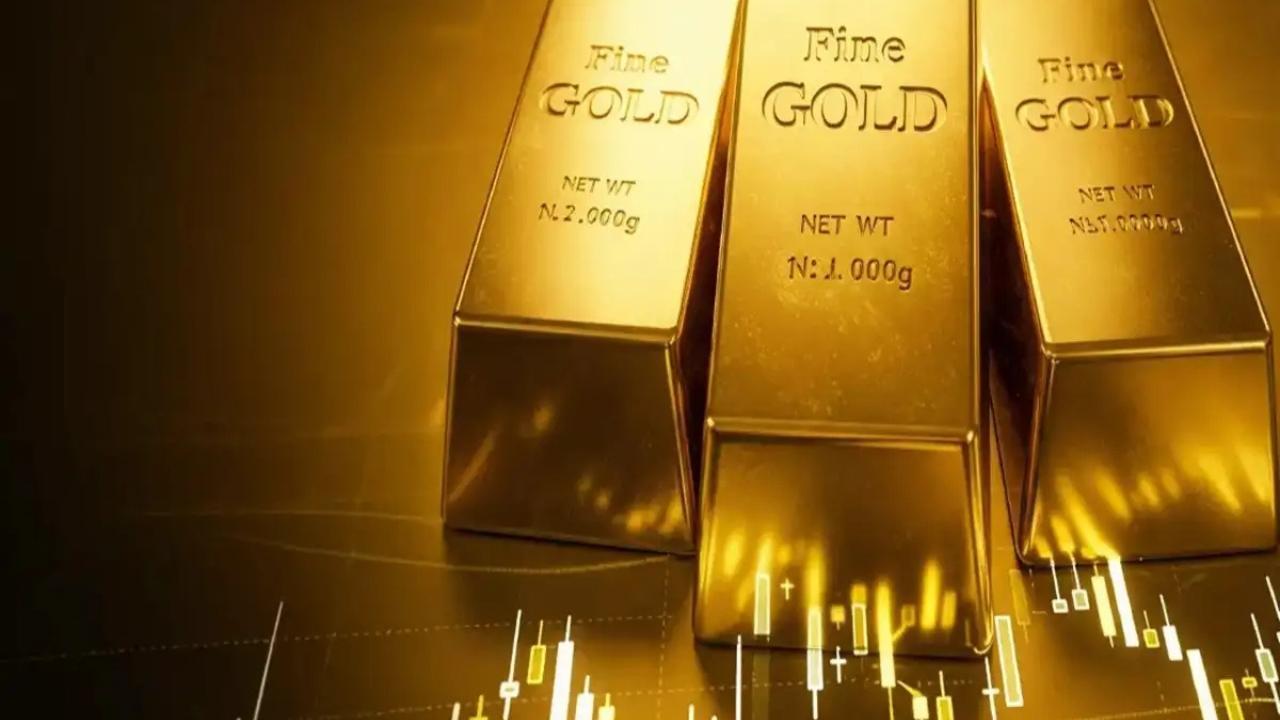
Gold — long regarded as a store of value, a safe-haven asset, and a cornerstone of global financial markets — has undergone dramatic price swings in recent years and especially in the last 12 months. After surging to historic levels, hitting multiple record highs above previous benchmarks, the metal witnessed one of its sharpest short-term declines in decades, only to rebound again as investors recalibrated their expectations and market conditions evolved in response to global economic factors. Analysts and investors alike are asking: What exactly is driving this rise, fall, and potential resurgence in gold prices?
In late January 2026, gold prices reached all-time highs, with spot rates pushing above $5,500 per ounce, reflecting intense demand from global investors amid mounting macroeconomic and geopolitical uncertainty. This peak represented a continuation of strong price momentum established in 2025, when gold repeatedly broke historical records, driven by concerns over inflation, currency weakness, and ongoing market instability.
The rally was underpinned by perceptions of gold as a “flight-to-safety” asset, where investors sought refuge from volatile equity markets, uncertain interest rate policies, and geopolitical tensions. Gold’s allure in such conditions is rooted in its traditional role as a store of value — particularly when major economies face slowing growth or financial stress.
Despite reaching record heights, gold did not maintain this peak for long. Within a short span, the metal registered one of its largest one-day declines since the early 1980s, plummeting nearly 10 % below $5,000 per ounce at one point before stabilising. Analysts attributed this sharp correction to factors such as shifts in investor sentiment, macroeconomic data releases, changes in expectations around monetary policy, and short-term profit-taking by traders.
Gold’s volatility in this phase was notable because it unfolded against strong recent gains — a combination that illustrated how quickly speculative momentum and risk perceptions can change in commodities markets. Despite this steep pullback, the long-term bullish trend remained intact in the view of many industry experts, who pointed to continued structural drivers of demand that could support future price increases.
One of the most enduring drivers of gold’s rise has been its reputation as a safe-haven asset — a store of value that investors turn to during periods of heightened risk or uncertainty. When global markets experience volatility, inflation fears rise, or geopolitical flashpoints emerge, interest in gold often increases as investors seek to hedge their portfolios.
Instances of geopolitical tension — whether conflicts, trade disputes, or diplomatic standoffs — tend to reinforce this dynamic. As news of economic disruptions mounts, so does gold’s appeal, leading to upward pressure on prices. Even after steep corrections or short-term dips, sustained safe-haven demand can support renewed price gains.
Gold is priced in U.S. dollars on international markets, meaning that changes in the currency’s strength can significantly influence bullion’s dollar price. When the U.S. dollar weakens against other major currencies, gold becomes relatively cheaper for holders of foreign currencies, boosting demand and pushing prices higher.
Conversely, a strengthening dollar — often driven by expectations of tighter monetary policy or higher interest rates — can exert downward pressure on gold prices. Such currency dynamics help explain some of the rapid swings witnessed during periods of shifting economic expectations and central bank policy signals.
Inflation expectations and real interest rates are central to gold’s fundamental appeal. Gold does not yield interest or dividends, so when real interest rates (nominal interest rates adjusted for inflation) are low or negative, the opportunity cost of holding gold decreases, making it more attractive relative to bonds or cash assets.
Periods of elevated inflation — when money loses purchasing power — tend to push investors toward gold, which historically preserves value over time. Conversely, in environments where inflation is subdued or real rates rise, gold’s relative appeal diminishes, potentially leading to price corrections.
In recent years, investment demand — particularly through gold-backed exchange-traded funds (ETFs) and other institutional investment vehicles — has become a major driver of price movements. When large financial institutions and investors allocate capital toward gold holdings, this can create significant upward pressure on the market.
Even though central bank purchases — traditionally a cornerstone of gold demand — saw temporary moderation amid high prices, private investment flows have surged, helping sustain long-term price momentum.
Gold’s demand is not solely financial. In many cultures, especially in countries like India and China, gold jewellery remains a culturally significant asset class — both for adornment and wealth preservation. Fluctuations in jewellery demand can influence overall consumption patterns, affecting price dynamics, particularly in local markets. Higher gold prices can dampen jewellery volumes, as buyers become more price sensitive, even while overall demand value rises due to higher rates.
While gold’s recent pullbacks illustrate the metal’s susceptibility to rapid sentiment shifts, many analysts emphasise that the longer-term fundamentals remain supportive of higher prices. Forecasts by financial institutions suggest targets well above current levels by year-end, driven by persistent economic uncertainty and sustained investor interest in safe havens.
These mid- to long-term outlooks reflect confidence that, despite temporary volatility, gold continues to play a strategic role in diversified portfolios — especially amid risks such as inflationary pressures, fluctuating currency valuations, and geopolitical instability.
Corrections — even sharp ones — are not uncommon in commodities markets. They often occur as traders take profits after strong rallies or as short-term macroeconomic signals shift expectations about interest rates or currency strength.
For long-term investors, such corrections can present opportunities for accumulation at lower prices, reinforcing gold’s role as a long-term hedge rather than a short-term trading play. However, volatility underscores the importance of strategic planning and diversification in asset allocation decisions.
Gold’s movements are often inversely correlated with riskier asset classes such as equities. When stock markets fall or investor confidence declines, shifts toward gold and other safe havens can intensify. Conversely, periods of market strength or risk appetite can reduce gold’s appeal relative to growth-oriented assets.
This dynamic makes gold an important hedge in diversified allocation strategies, even though it does not generate income like bonds or equities. Its performance during periods of stress can provide balance in mixed portfolios.
Central bank policy decisions — especially in major economies like the United States, European Union, and China — play a significant role in gold pricing. Expectations around rate cuts or hikes, quantitative easing programmes, or shifts in reserve allocations can influence sentiment and demand for gold.
For example, expectations of interest rate cuts can reduce the opportunity cost of holding a non-yielding asset like gold, enhancing its appeal and potentially boosting prices. Conversely, anticipated rate hikes or hawkish monetary stances can depress gold demand.
Gold’s journey through recent price extremes — from historic highs to steep pullbacks and renewed rallies — captures the multifaceted forces shaping global markets today. Influenced by economic uncertainty, currency dynamics, investment flow patterns, and traditional demand drivers, gold remains a barometer of risk, confidence, and long-term value preservation.
While short-term corrections may unsettle traders, long-term fundamentals — including safe-haven demand, portfolio diversification needs, and global investment trends — continue to support gold’s relevance in the financial ecosystem. Whether prices climb to new records or enter phases of consolidation, gold’s status as a core component of diversified investment strategies and economic signalling cannot be understated.
Disclaimer: This article is for informational and analytical purposes only and does not constitute financial or investment advice. Gold markets are subject to fluctuations, and readers should consult financial professionals before making investment decisions.










PM Modi Pays Tribute to Mahatma Gandhi, Urges People to Support Khadi
PM Modi pays tribute to Mahatma Gandhi on Gandhi Jayanti and urges citizens to support Khadi and the

Amazon Seeks to Offload $8 Billion in Nvidia Chips to Investors
Amazon plans to move $8 billion in Nvidia chips to investors, using a new financing model to strengt

Samsung Raises Galaxy S26 Prices as Memory Chip Costs Rise
Samsung raises Galaxy S26 prices in South Korea as rising memory chip costs put pressure on smartpho

Lewis Hamilton Calls Singapore Grand Prix One of F1's Toughest Races
Lewis Hamilton discusses the demanding Singapore Grand Prix and brings Plus44 and Almave to Singapor

Denmark's Pandora Opens World's Largest Jewellery Factory in Vietnam
Pandora opens its largest jewellery factory in Vietnam, expanding global production, strengthening s

Gautam Gambhir Questions Batting-Friendly Pitches After India's Record ODI Chase
Gautam Gambhir questions batting-friendly ODI pitches after India’s record chase, calling for a bett

