You have not yet added any article to your bookmarks!
Join 10k+ people to get notified about new posts, news and tips.
Do not worry we don't spam!
Post by : Anis Farhan
Photo: PTI
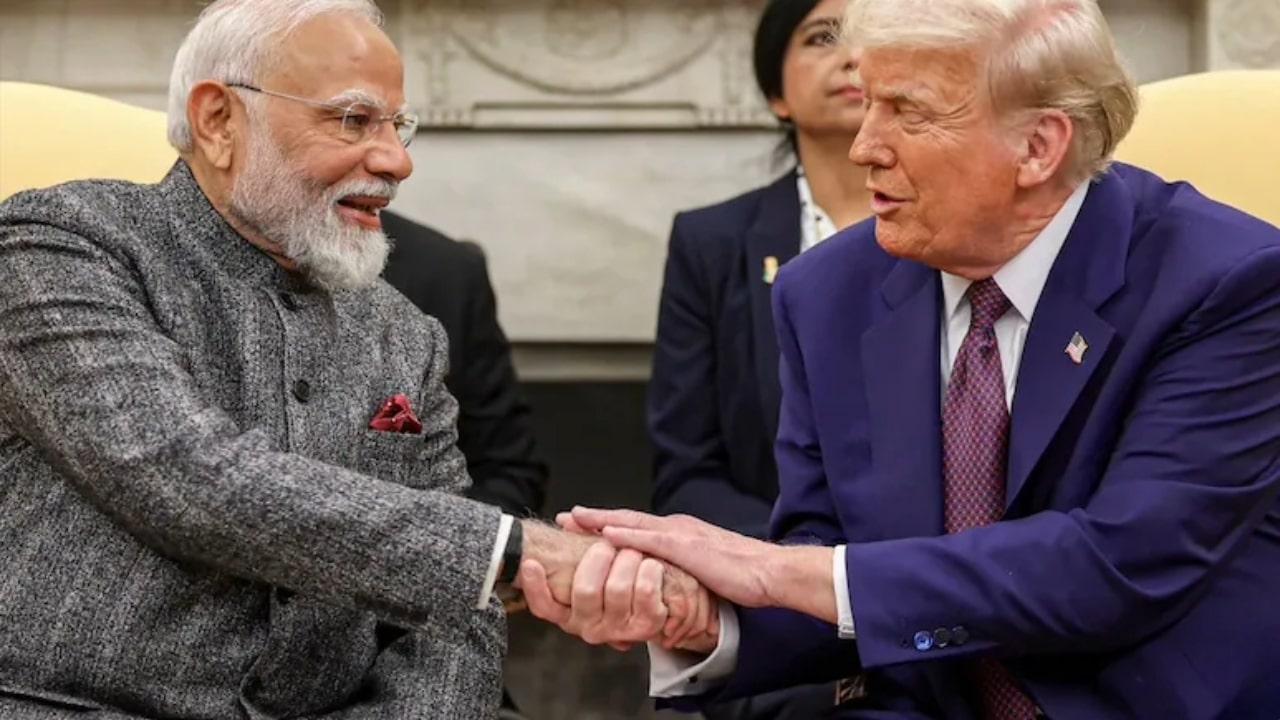
During Thursday’s “Big Beautiful Bill” event at the White House, President Trump revealed that after finalising a significant trade deal with China, his administration could soon unveil an even larger agreement with India. He described it as a “very big one,” suggesting that the groundwork is already in place and that the U.S. is preparing to “open up India” in a similar fashion.
This comes on the heels of talks earlier this month featuring a four-day closed-door negotiation led in Washington by a high-level Indian delegation, including Chief Negotiator Rajesh Agrawal. Commerce Minister Piyush Goyal confirmed that the discussions aim to reach a bilateral pact that is both “fair and balanced,” with mutual benefits for both nations.
While the full scope of the proposed deal has not been disclosed, it is expected to cover a wide range of sectors—including digital trade, pharmaceuticals, energy, agriculture, auto parts, electronics, and defense supply chains. A critical focus is tariff liberalisation. India remains cautious, especially regarding agriculture—citing concerns over genetically modified crops and the welfare of small-scale farmers. Talks have reportedly stalled over U.S. demands for open access to wheat, corn, dairy, and other farm products.
Secretary of Commerce Howard Lutnick expressed optimism that the deal could be finalised shortly, stating that both countries “found a place that really works” for their economies. On the other side, India is seeking assurances, including commitments that the U.S. will not impose additional tariffs once the agreement is in place.
Timing is tight. Trump has set a July 9 deadline, tied to the end of a 90-day suspension on his proposed 26% reciprocal tariff on Indian goods. While officials say this timeline is flexible, industry stakeholders are closely watching the clock.
Any deal carries big stakes for India-U.S. economic relations. Trade between the two countries hit approximately USD 190 billion in 2024, and there’s shared ambition—to boost that to USD 500 billion by 2030 . For the United States, the agreement would deepen access to India’s vast consumer market and secure supply chains. For India, it would mean expanded market entry and treatment parity for services and investment.
Still, friction points remain. India’s pharmaceutical and auto sectors are cautious, while U.S. exporters push hard for greater opportunity in India’s sizable agricultural and industrial markets . Both sides remain open to compromise but refuse to settle for a shallow agreement.






Josh Kerr and Jakob Ingebrigtsen Set for 1,500m Rivalry Rematch
Josh Kerr and Jakob Ingebrigtsen will renew their 1,500m rivalry at the Ultimate Championship in Bud

PSG Coach Luis Enrique Urges Players to Step Outside Comfort Zone
PSG coach Luis Enrique says players must leave their comfort zone and keep improving as the club tar

China’s Tiangong Sets New 400m Record at Robot Olympics
China’s Tiangong robot sets a new 400m record at the Robot Olympics, beating a South African robot i

George Russell Wins Dutch GP Sprint, Boosts Mercedes Morale
George Russell wins the Dutch GP Sprint from pole as Mercedes teammate Kimi Antonelli extends his F1
Australia 50/3 After Bangladesh Bowled Out for 64 in Second Test
Australia reached 50/3 after Bangladesh were bowled out for 64 in the second Test, with Mitchell Sta
Jordan Burroughs Returns to Wrestling with 2028 Olympic Dream
Jordan Burroughs returns to wrestling with Real American Freestyle as the Olympic champion eyes a po