You have not yet added any article to your bookmarks!
Join 10k+ people to get notified about new posts, news and tips.
Do not worry we don't spam!
Post by : Saif Rahman
The United Arab Emirates (UAE) has declared its intent to withdraw its remaining military personnel from Yemen, marking a significant shift in Middle Eastern dynamics. Once allies in a joint mission against Houthi forces, growing tensions with Saudi Arabia have turned a cooperative effort into a contentious dispute.
On December 30, 2022, the UAE confirmed the removal of its last troops from Yemen. This contingent included counterterrorism forces that had remained since the UAE formally ended its military activities in 2019. The UAE's defence ministry stated that this withdrawal was a voluntary decision based on a recent assessment of the situation.
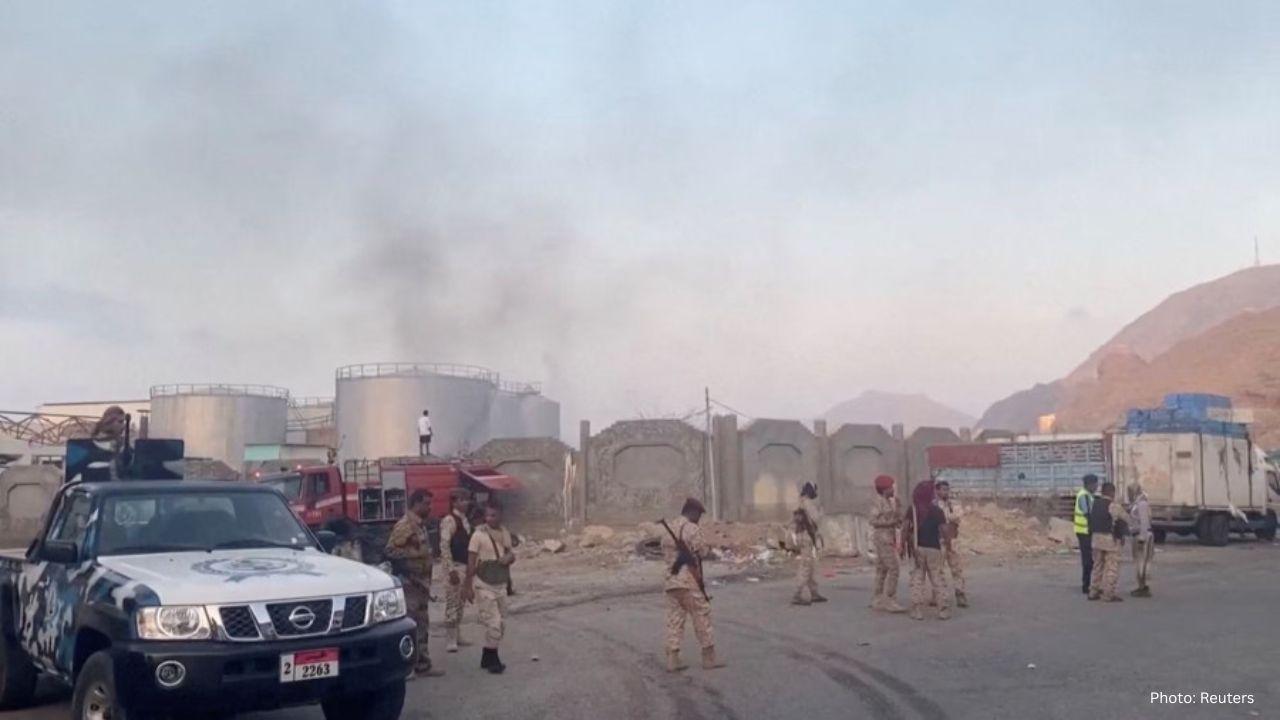
The announcement followed Saudi-led airstrikes in Yemen’s southern port city of Mukalla aimed at destroying what Saudi Arabia claimed was a shipment of weapons associated with the UAE, intended for separatist groups. This incident intensified the already rising tensions between the two nations.
Saudi Arabia supported a prompt request from Yemen's presidential council for the Emirati military to exit the country within a day. Rashad al-Alimi, the council's head, denounced the UAE for allegedly fostering dissent and escalating military actions by the Southern Transitional Council (STC), which seeks autonomy for southern Yemen.
In response, the UAE refuted these claims, expressing surprise over the Saudi airstrike and asserting that no weapons were present in the cargo arriving at Mukalla, which was purportedly meant for supporting its personnel. Despite the tensions, the UAE emphasized the need for a resolution that prioritizes peaceful dialogue and factual verification.
Historically, Saudi Arabia and the UAE were key partners in the coalition formed in 2015 to combat the Iran-aligned Houthis. However, their priorities have diverged, with Saudi Arabia advocating for a unified Yemen under an internationally-recognized government while the UAE pursued ties with southern factions.
This growing rift has manifested in hostilities as Saudi officials accused the UAE of furthering STC ties near Saudi borders, labeling it a threat to their national security, boldly declaring that the safety of Saudi Arabia is non-negotiable.
The STC has recently initiated aggressive maneuvers against Saudi-allied forces, achieving control over extensive territories in southern Yemen, including the vital Hadramout province, which broke a prolonged stalemate despite Saudi warnings.
The Saudi-led coalition reported unapproved shipments arriving at Mukalla from the UAE’s Fujairah port, with state media showcasing video evidence of weapons and military vehicles being unloaded, which the UAE-linked shipping company did not respond to.
Saudi officials indicated the airstrike resulted in no civilian harm; however, Yemeni state television reported extensive damage and smoke ascending from the port area. In reaction, Alimi established a temporary no-fly zone, imposing a 72-hour blockade on sea and land routes.
This escalating crisis has enlisted international interest, with U.S. Secretary of State Marco Rubio discussing the situation with key foreign ministers from both Saudi Arabia and the UAE. Other Gulf nations like Kuwait and Bahrain are advocating for dialogue, with Qatar acknowledging that Saudi Arabia's security is intertwined with its interests.
Beyond the immediate conflict in Yemen, this discord threatens to disrupt global oil markets. As significant players in OPEC and OPEC+, their disagreement could complicate consensus on oil production rates. Following the news, Gulf stock indices showed fluctuations.
While the UAE’s military exit could offer a temporary easing of tensions, crucial questions linger. Will the UAE genuinely cease its support for the STC? Can Saudi Arabia ensure unity among its allies in Yemen? And most critically, will Yemeni civilians find relief after years of turmoil?
The ongoing strife in Yemen is one of the most severe humanitarian crises globally. Internal conflicts among allies only exacerbate the suffering. This recent split underscores the vulnerability of regional alliances and the rapid deterioration of formerly common goals.
Ultimately, the UAE's departure from Yemen signals more than just a military shift; it highlights deepening fissures within the Gulf, which could profoundly influence the future of Yemen, regional safety, and global energy trends for years to come.






PSG Coach Luis Enrique Urges Players to Step Outside Comfort Zone
PSG coach Luis Enrique says players must leave their comfort zone and keep improving as the club tar

China’s Tiangong Sets New 400m Record at Robot Olympics
China’s Tiangong robot sets a new 400m record at the Robot Olympics, beating a South African robot i

George Russell Wins Dutch GP Sprint, Boosts Mercedes Morale
George Russell wins the Dutch GP Sprint from pole as Mercedes teammate Kimi Antonelli extends his F1

Australia 50/3 After Bangladesh Bowled Out for 64 in Second Test
Australia reached 50/3 after Bangladesh were bowled out for 64 in the second Test, with Mitchell Sta

Jordan Burroughs Returns to Wrestling with 2028 Olympic Dream
Jordan Burroughs returns to wrestling with Real American Freestyle as the Olympic champion eyes a po

Lamborghini Catches Fire on Singapore's ECP, Causing Heavy Traffic
A Lamborghini caught fire on Singapore's ECP, causing heavy traffic and bus delays. No injuries were