
You have not yet added any article to your bookmarks!
Join 10k+ people to get notified about new posts, news and tips.
Do not worry we don't spam!
Post by : Badri Ariffin
The Gulf region is witnessing increased friction between the United States and Iran, as both nations issued fire exchanges around the critical Strait of Hormuz on Friday, deepening worries about ceasefire discussions and the overall stability in the area.
A recent assessment from the CIA suggests that Iran can withstand a naval blockade from the US for an extended period without experiencing significant economic strain. A US official, familiar with this intelligence, indicated that Washington's leverage over Tehran might be constrained even as military and economic pressures mount.
This evaluation surfaced amid a surge in confrontations, marking some of the most intense conflicts since the ceasefire established on April 7. Reports of intense hostilities near the Strait of Hormuz, a pivotal channel for oil shipments, characterized this week.
Further escalating tensions, the United Arab Emirates reported attacks on Friday, claiming that their air defense systems successfully intercepted two ballistic missiles and three drones launched from Iranian territory. Authorities confirmed that three individuals sustained moderate injuries due to these attacks.
In a broader diplomatic context, the United States awaits Iran's reaction to a proposal that aims to formally conclude hostilities before broader negotiations, including discussions about Iran's nuclear activities, commence.
US Secretary of State Marco Rubio expressed anticipation regarding a timely reply from Tehran, indicating hopes for clarity on the matter by late Friday. However, Iran's foreign ministry stated that the proposal remains under review and no official response has been provided yet.
Ongoing Clashes in the Strait of Hormuz
According to Iran’s semi-official Fars news agency, fresh skirmishes took place in the Strait of Hormuz on Friday. The Iranian news outlet Tasnim later reported a temporary easing of tensions, though the probability of additional military confrontations remains.
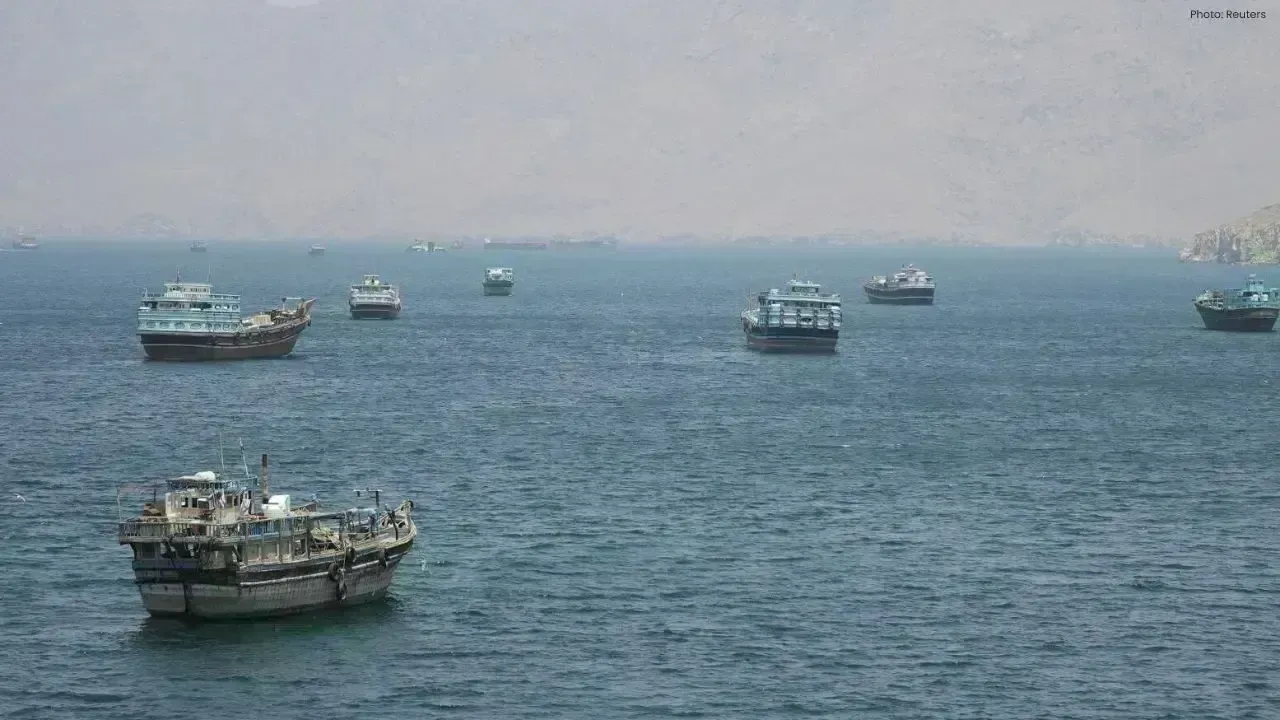
The US military asserted they targeted two vessels linked to Iran attempting to sail into an Iranian port. Reports indicate that a fighter jet struck the ships, leading them to withdraw.
Since the conflict escalated following US-Israeli airstrikes on Iran on February 28, Iranian authorities have instituted severe restrictions on non-Iranian vessels in the Strait of Hormuz, with a blockade on Iranian ships imposed last month by the US.
These ongoing skirmishes have influenced global oil markets, pushing Brent crude prices above $101 per barrel amidst apprehensions about potential supply disruptions, even though prices are still over 6 percent lower for the week.
Despite these developments, US President Donald Trump noted on Thursday that the ceasefire largely holds, despite recent spikes in tensions.
Iran Blames US for Complications in Diplomacy
Iran has accused the United States of undermining diplomatic initiatives by sustaining military operations while negotiations linger.
Foreign Minister Abbas Araqchi articulated that the US tends to opt for military action at moments when diplomatic avenues seem plausible.
Furthermore, reports from Iran’s Mehr news agency divulged that one crew member was killed, ten others injured, and four remain missing following what they termed a US Navy offensive on an Iranian merchant vessel late Thursday.
Rubio has criticized European nations for insufficiently backing efforts to reopen the Strait of Hormuz for international shipping, warning that allowing any nation control over such international waterways could set dangerous precedents.
New Sanctions Targeting Iran from the US
In conjunction with military maneuvers, the United States unveiled additional sanctions aimed at Iran’s military-industrial complex, with the US Treasury imposing restrictions on ten individuals and entities, including those based in China and Hong Kong. Authorities accused these entities of assisting Iran in procuring components and raw materials for Shahed drones.
US officials have also signaled that forthcoming sanctions could target foreign firms, airlines, and financial institutions that support Iranian trade activities, particularly those linked to Chinese independent oil refineries.
These sanctions were disclosed just ahead of President Trump’s anticipated visit to China for discussions with President Xi Jinping.










PM Modi Pays Tribute to Mahatma Gandhi, Urges People to Support Khadi
PM Modi pays tribute to Mahatma Gandhi on Gandhi Jayanti and urges citizens to support Khadi and the

Amazon Seeks to Offload $8 Billion in Nvidia Chips to Investors
Amazon plans to move $8 billion in Nvidia chips to investors, using a new financing model to strengt

Samsung Raises Galaxy S26 Prices as Memory Chip Costs Rise
Samsung raises Galaxy S26 prices in South Korea as rising memory chip costs put pressure on smartpho

Lewis Hamilton Calls Singapore Grand Prix One of F1's Toughest Races
Lewis Hamilton discusses the demanding Singapore Grand Prix and brings Plus44 and Almave to Singapor

Denmark's Pandora Opens World's Largest Jewellery Factory in Vietnam
Pandora opens its largest jewellery factory in Vietnam, expanding global production, strengthening s

Gautam Gambhir Questions Batting-Friendly Pitches After India's Record ODI Chase
Gautam Gambhir questions batting-friendly ODI pitches after India’s record chase, calling for a bett

