
You have not yet added any article to your bookmarks!
Join 10k+ people to get notified about new posts, news and tips.
Do not worry we don't spam!
Post by : Shweta
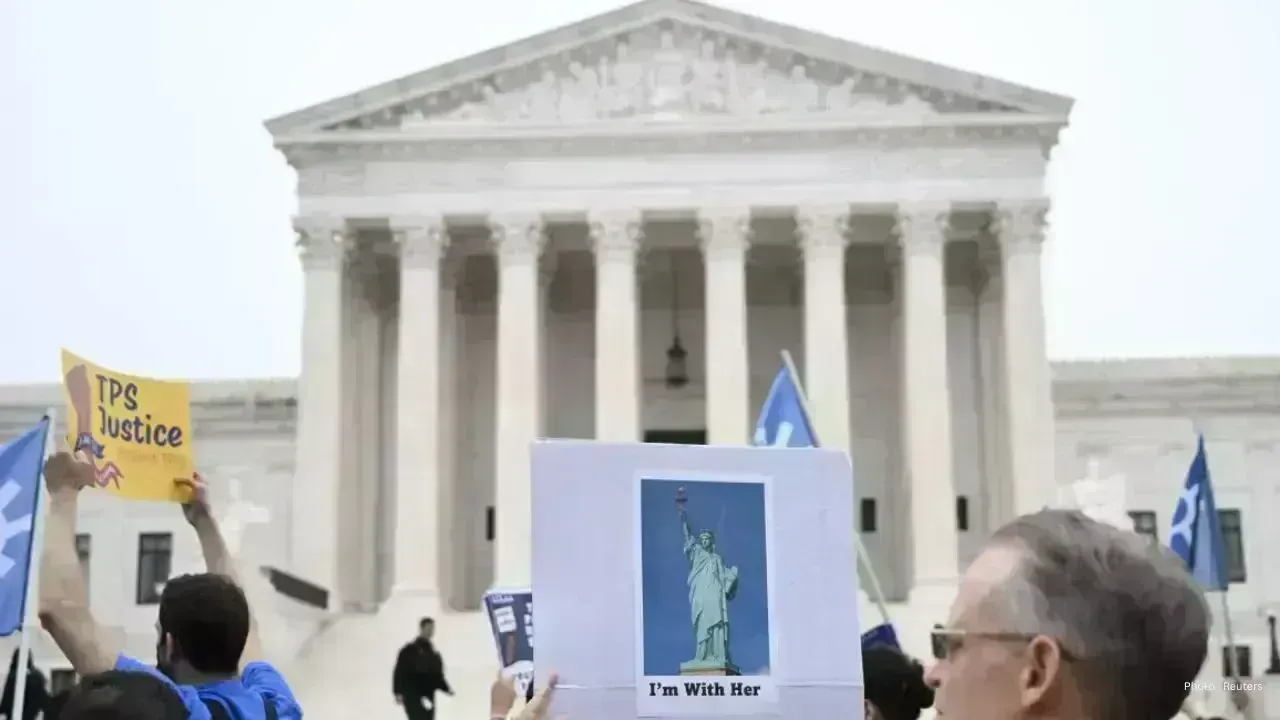
The recent ruling by the United States Supreme Court regarding voting rights has stirred considerable political debate across the nation as we approach the 2026 midterm elections. In a contentious 6-3 verdict, the court deemed Louisiana's congressional voting map unconstitutional, citing an overreliance on race in the creation of electoral districts aimed at enhancing Black representation.
Legal experts and civil rights organizations view this ruling as a significant blow to the historic Voting Rights Act of 1965, a law designed to protect African-American voters from electoral discrimination. Detractors of the ruling express concerns that it could open doors for states to redraw districts in ways that diminish Black political influence, especially in the Southern states where racial voting issues have been a point of contention for decades.
Central to the case was Louisiana's congressional map, which featured a “majority-Black district” established following advocacy from civil rights groups. Such districts are intended to provide minority communities the voting power needed to elect their preferred representatives. However, the Supreme Court majority adjudicated that Louisiana's emphasis on race in delineating district boundaries breached the Equal Protection Clause of the Constitution.
Justice Samuel Alito, representing the conservative majority, posited that while race-based protections were once vital to counter discrimination, the societal landscape has drastically evolved. He claimed racial considerations in voting legislation are no longer warranted to the same extent as they were during the civil rights movement.
Justice Clarence Thomas echoed support for the ruling, describing race-centered voting policies as a “disastrous misadventure” in American legal history. He has long maintained that laws offering preferential treatment based on race undermine constitutional equality.
Conversely, the court's liberal justices voiced strong dissent against the ruling. Justice Elena Kagan cautioned that this decision could undermine protections that helped African-American voters secure equitable political representation after enduring years of racial discrimination. She warned of significant risks to Black electoral influence in numerous states.
Voting rights advocates and political analysts expressed their alarm promptly following the announcement. Many civil rights proponents fear the ruling may prompt states to redraw congressional maps, which could significantly decrease the districts where Black voters hold substantial political power. Experts predict these changes may sway election results in a number of closely-followed states come midterm elections.
Political science educator Matthew Lebo from Western University labeled the ruling one of the most vital setbacks for voting rights in recent American history. He indicated that the court's conservative majority behaves as though racial discrimination in voting is a relic of the past, ignoring prevailing issues surrounding voter suppression and gerrymandering.
This decision’s timing is particularly critical as states finalize their district maps ahead of the elections in November. Following the ruling, Republican lawmakers in Florida expedited the approval of new congressional maps criticized as heavily gerrymandered. Civil rights advocates argue that these revisions weaken Black voting strength while enhancing Republican political leverage in numerous districts.
The ruling's implications are also closely monitored for their potential impact on President Donald Trump and the Republican Party. Analysts suggest changes to congressional boundaries in Southern states may provide Republicans with greater opportunities to secure additional seats during the midterm elections. Some Democratic leaders cautioned that this could significantly alter the political equilibrium in Congress for years to come.
The Voting Rights Act has historically represented a cornerstone of civil rights legislation in America. Pioneered during the civil rights movement, it aimed to eliminate discriminatory practices barring numerous Black Americans from exercising their voting rights, especially in the South during the Jim Crow period.
Over the past decade, however, the Supreme Court's conservative composition has incrementally constricted key aspects of this law. Several prior decisions have diminished federal oversight powers that previously mandated specific states with histories of racial discrimination to seek approval before modifying election laws or district maps. Critics assert that the latest ruling continues this troubling trend.
Supporters of the ruling contend that electoral systems must regard all voters equally irrespective of race and that district lines should not predominantly hinge on racial identity. Conservative legal advocates argue that race-based districting has the potential to fragment communities and create unfair political benefits.
In contrast, civil rights activists express fear that the ruling may reverse decades of advancements made in enhancing minority political representation across the nation. Various organizations have already vowed to mount legal challenges against district maps in states such as Florida, Georgia, Alabama, and Texas, where voting rights disputes remain prevalent.
As preparations gear up for the 2026 midterm elections, the Supreme Court’s ruling is set to amplify nationwide discussions concerning race, voting rights, political representation, and the trajectory of American democracy.










PM Modi Pays Tribute to Mahatma Gandhi, Urges People to Support Khadi
PM Modi pays tribute to Mahatma Gandhi on Gandhi Jayanti and urges citizens to support Khadi and the

Amazon Seeks to Offload $8 Billion in Nvidia Chips to Investors
Amazon plans to move $8 billion in Nvidia chips to investors, using a new financing model to strengt

Samsung Raises Galaxy S26 Prices as Memory Chip Costs Rise
Samsung raises Galaxy S26 prices in South Korea as rising memory chip costs put pressure on smartpho

Lewis Hamilton Calls Singapore Grand Prix One of F1's Toughest Races
Lewis Hamilton discusses the demanding Singapore Grand Prix and brings Plus44 and Almave to Singapor

Denmark's Pandora Opens World's Largest Jewellery Factory in Vietnam
Pandora opens its largest jewellery factory in Vietnam, expanding global production, strengthening s

Gautam Gambhir Questions Batting-Friendly Pitches After India's Record ODI Chase
Gautam Gambhir questions batting-friendly ODI pitches after India’s record chase, calling for a bett

