
You have not yet added any article to your bookmarks!
Join 10k+ people to get notified about new posts, news and tips.
Do not worry we don't spam!
Post by : Shweta
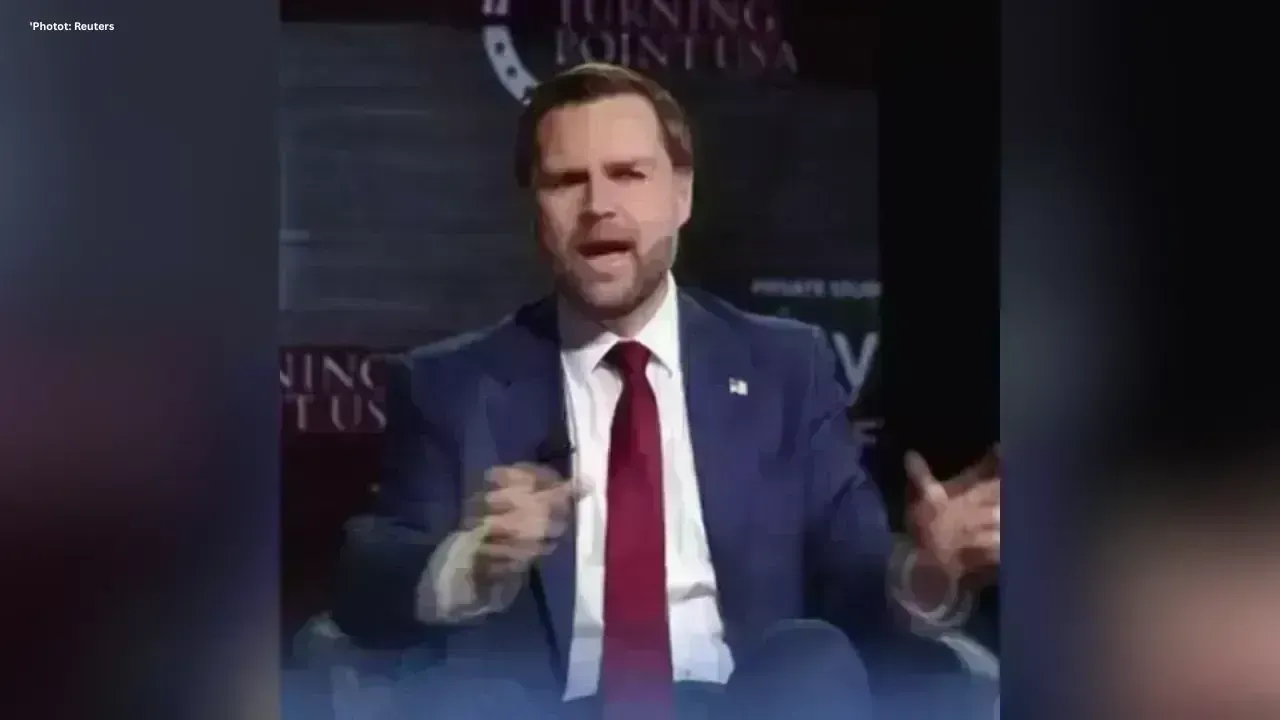
A significant dispute has arisen between U.S. Vice President JD Vance and Pope Leo XIV regarding the application of religious teachings to justify the current conflict in Iran.
The contention revolves around the principle of “just war,” which originates from Christian theological discourse attributed to Saint Augustine. This doctrine stipulates specific conditions under which warfare can be morally sanctioned, such as self-defense and the desire to restore peace.
Pope Leo XIV has vehemently opposed using religious doctrine to back military interventions, asserting that divinity is not aligned with warfare. He further criticized threats of significant destruction, asserting that such actions contradict moral teachings and violate international laws.
In a public response, JD Vance challenged the Pope’s stance, referencing a historical tradition that upholds just war theory. He drew on examples like World War II, proposing that military intervention could sometimes be warranted to prevent greater evils. His comments, however, sparked backlash, with numerous individuals accusing him of attempting to lecture theological principles to a religious leader—an action many termed as “popesplaining.”
This debate unfolds against a backdrop of intensified scrutiny towards the Trump administration for its growing incorporation of religious rhetoric concerning the Iran situation. U.S. President Donald Trump has also encountered criticism for actions such as portraying himself in a Christ-like manner.
Religious scholars and authorities have expressed their views, underscoring that the Catholic Church’s teachings on warfare are firmly rooted in established doctrine. They emphasize that, for a conflict to be deemed just, it must adhere to strict moral guidelines, including being a last resort and having a distinct defensive objective.
This disagreement underscores broader anxieties regarding the intersection of faith with contemporary politics and warfare. Detractors argue that invoking religion to rationalize military operations risks oversimplifying intricate conflicts and potentially alienating those with differing beliefs.
As tensions rise, the ongoing discussion between political figures and religious leaders signifies a larger global discourse on ethics, belief systems, and the rationale behind warfare in today's society.










PM Modi Pays Tribute to Mahatma Gandhi, Urges People to Support Khadi
PM Modi pays tribute to Mahatma Gandhi on Gandhi Jayanti and urges citizens to support Khadi and the

Amazon Seeks to Offload $8 Billion in Nvidia Chips to Investors
Amazon plans to move $8 billion in Nvidia chips to investors, using a new financing model to strengt

Samsung Raises Galaxy S26 Prices as Memory Chip Costs Rise
Samsung raises Galaxy S26 prices in South Korea as rising memory chip costs put pressure on smartpho

Lewis Hamilton Calls Singapore Grand Prix One of F1's Toughest Races
Lewis Hamilton discusses the demanding Singapore Grand Prix and brings Plus44 and Almave to Singapor

Denmark's Pandora Opens World's Largest Jewellery Factory in Vietnam
Pandora opens its largest jewellery factory in Vietnam, expanding global production, strengthening s

Gautam Gambhir Questions Batting-Friendly Pitches After India's Record ODI Chase
Gautam Gambhir questions batting-friendly ODI pitches after India’s record chase, calling for a bett

