You have not yet added any article to your bookmarks!
Join 10k+ people to get notified about new posts, news and tips.
Do not worry we don't spam!
Post by : Anis Farhan
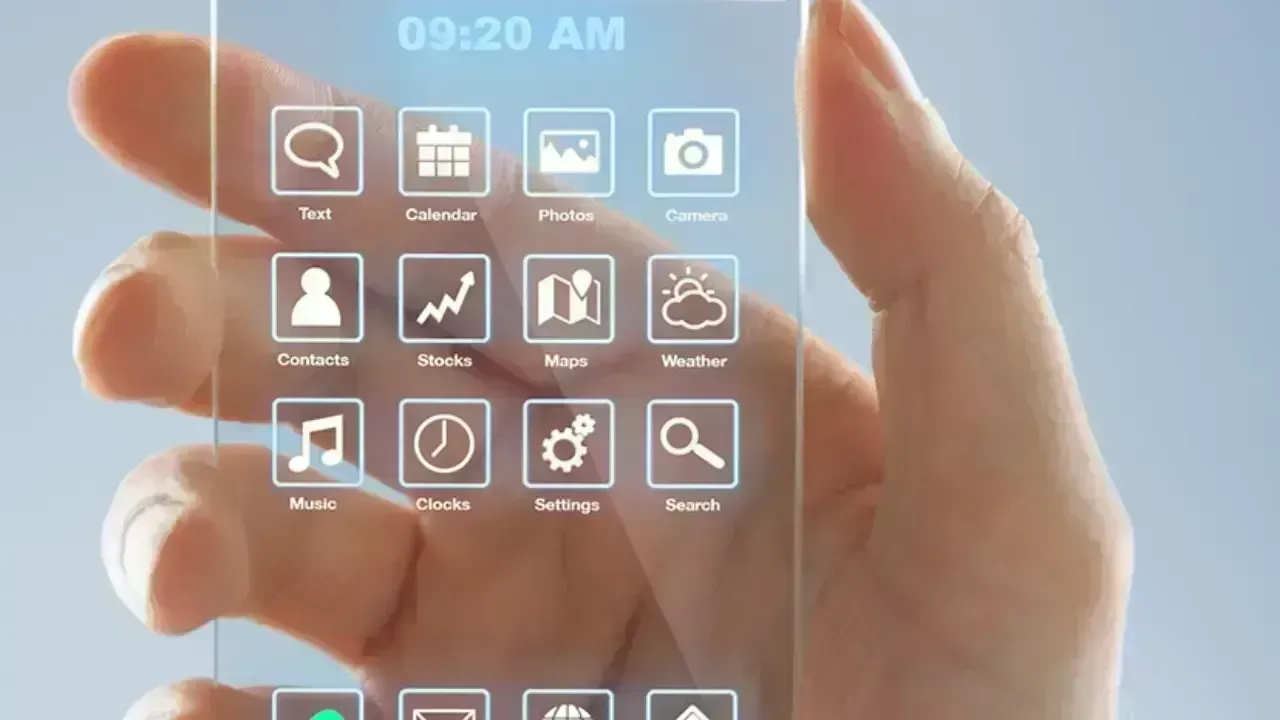
For years, smartphones have been the most important personal technology humans own. They serve as cameras, wallets, maps, offices, entertainment hubs, and social lifelines. Yet despite incremental improvements—better cameras, faster chips, sharper displays—the core experience has barely changed.
People now unlock their phones hundreds of times a day, often compulsively. Screen fatigue, privacy concerns, mental health debates, and physical discomfort have sparked a growing desire for alternatives. At the same time, technological breakthroughs are making it possible to interact with digital systems without staring at a glass rectangle.
The next decade is unlikely to bring a single device that instantly replaces smartphones. Instead, smartphones may slowly lose their central role as new technologies absorb their functions—until they become secondary tools rather than constant companions.
Smartphones succeeded because they combined multiple tools into one portable device. Ironically, that same concentration of functions is now their weakness. People increasingly want technology that is more intuitive, less distracting, and better integrated into daily life.
Touchscreens demand visual attention. Notifications fragment focus. Holding a device occupies hands. These limitations clash with a world moving toward automation, ambient computing, and seamless interaction.
Replacement doesn’t mean disappearance. It means transformation. Just as laptops didn’t vanish when smartphones arrived, smartphones may persist—but no longer dominate.
One of the most widely discussed smartphone successors is augmented reality (AR) eyewear. Smart glasses aim to overlay digital information directly onto the real world, removing the need to constantly look down at a screen.
Navigation directions could appear in your field of vision. Messages could float discreetly at the edge of sight. Calls, translations, reminders, and visual search could happen without pulling out a phone.
The early versions struggled with bulky design, limited battery life, and privacy concerns. However, rapid advances in miniaturization, AI-powered vision, and lightweight materials suggest that AR glasses may become socially acceptable and functionally powerful within the next decade.
Instead of replacing smartphones outright, smart glasses may replace the screen itself—turning phones into background processors while glasses become the primary interface.
Another emerging category is wearable AI companions—devices designed to assist users through voice, context awareness, and predictive intelligence rather than touchscreens.
These could take the form of pendants, clips, rings, or ear-based devices that listen, process, and respond in real time. Rather than opening apps, users would ask questions, issue commands, or receive proactive suggestions.
For example, instead of checking a calendar, the device might remind you to leave early based on traffic. Instead of searching for information, it might surface answers when it senses relevance.
This shift represents a move from “app-driven” interaction to “intent-driven” computing. The device anticipates needs instead of waiting for input.
Voice technology has quietly matured. Speech recognition is more accurate, natural language understanding is deeper, and AI responses are increasingly conversational.
In the next decade, voice may become the primary interface for many digital interactions. People already talk to smart speakers, cars, and assistants—but future systems will be more context-aware, private, and capable of handling complex tasks.
This evolution reduces dependence on screens. Instead of reading notifications, users may hear summaries. Instead of typing, they may speak naturally. Combined with wearables or ambient systems, voice-first computing could dramatically reduce screen time.
However, voice alone is not always practical. That’s why it will likely integrate with other interfaces rather than fully replace them.
Among the most futuristic possibilities are brain-computer interfaces (BCIs). These systems aim to translate neural signals directly into digital commands.
In theory, users could send messages, control devices, or retrieve information simply by thinking. While this sounds like science fiction, early versions already exist for medical purposes, such as helping patients with paralysis communicate.
Consumer-grade brain interfaces are still years away, limited by safety, ethics, and technical challenges. But even partial adoption—such as non-invasive neural sensors—could revolutionize how humans interact with technology.
If successful, BCIs wouldn’t just replace smartphones. They would redefine the concept of an interface entirely.
Another strong contender is spatial computing—a blend of physical and digital environments where screens are replaced by virtual surfaces anchored in real space.
Instead of holding a phone, users might interact with floating displays projected into their surroundings. Workspaces could appear in mid-air. Media could exist as immersive environments rather than flat videos.
This approach extends beyond glasses. Entire rooms could become interfaces, responding to gestures, eye movement, and presence.
In such a world, the smartphone becomes redundant—not because it’s obsolete, but because the environment itself becomes the device.
Perhaps the most profound shift will be toward ambient computing—technology that fades into the background and responds automatically without explicit commands.
Lights adjust based on mood and time. Health systems monitor vitals continuously. Vehicles schedule maintenance autonomously. Digital assistants coordinate tasks invisibly.
In this model, the smartphone is no longer the control center. Intelligence is distributed across devices, spaces, and systems. Interaction becomes subtle, contextual, and largely invisible.
This doesn’t eliminate personal devices, but it removes the need to constantly manage them.
AI is the connective tissue behind every potential replacement. Without intelligent systems capable of understanding context, preferences, and intent, new devices would simply replicate old problems in new forms.
The next decade will see AI shift from reactive to proactive behavior. Devices won’t just respond—they’ll anticipate.
This reduces the need for constant checking. Instead of scrolling, users receive what matters when it matters.
As AI becomes more personalized, the need for manual control interfaces like smartphones diminishes.
Despite bold predictions, it’s unlikely that one device will fully replace smartphones. Instead, smartphones will fragment into multiple specialized tools.
Glasses for visual information. Wearables for health and AI assistance. Voice interfaces for control. Environmental systems for automation.
Smartphones may remain as hubs—powerful processors carried in pockets or bags—but not the primary point of interaction.
This mirrors how personal computers evolved. Desktops didn’t vanish; they changed roles.
Several challenges slow the transition. Privacy concerns loom large, especially with always-on devices. Social acceptance matters—people resist technology that feels intrusive or awkward.
Battery life, cost, and accessibility remain critical. Smartphones succeeded because they were affordable, versatile, and familiar.
Any replacement must offer clear advantages without introducing new frustrations.
Technology doesn’t replace itself—people do. The success of post-smartphone devices depends on cultural readiness.
Younger generations already interact differently, favoring voice, video, and immersive experiences. Work habits are shifting. Attention spans are under pressure.
As people seek less friction and fewer distractions, tools that reduce cognitive load will gain traction.
Rather than disappearing, smartphones may evolve into invisible companions. Smaller, modular, screen-optional devices that serve as computational cores.
The phone of the future might spend most of its time in a pocket, quietly supporting glasses, wearables, and environments.
Its identity may shift from “screen” to “brain.”
The next decade won’t kill smartphones overnight. But it will slowly dethrone them.
As interfaces become more natural, intelligent, and integrated into daily life, the smartphone’s dominance will fade. Not replaced by one device—but by an ecosystem of experiences.
What comes next is not about gadgets. It’s about reducing friction between humans and technology.
When interaction feels effortless, invisible, and intuitive, the era of staring at a glowing rectangle may finally give way to something more human.
Disclaimer: This article is a forward-looking analysis based on current technological trends and research. Actual developments may vary depending on innovation, regulation, and societal adoption.








Danaher to Launch AI-Powered Autonomous Research Lab in 2027
Danaher plans an AI research lab for 2027, combining robotics and automation to speed up drug discov

Musk Welcomes German Support for Tesla Driver Assistance Tech as EU Approval Push Continues
Elon Musk welcomes Germany's backing for Tesla FSD as the company seeks EU approval amid speed, safe

Microsoft and Nvidia CEOs to Unveil AI Laptop at San Francisco Event
Microsoft and Nvidia showcase a new AI laptop with RTX Spark chips as they push powerful local AI co

Man to face charges over perfume thefts at Changi Airport
A 47-year-old man faces charges over perfume theft at Changi Airport after six items worth nearly S$

Google Signs 3.6-GW Power Deal With Constellation Energy in US
Google signs a 3.6-GW power deal with Constellation Energy, including nuclear power upgrades to supp

Harmanpreet Kaur Steps Down as India Captain Across All Formats
Harmanpreet Kaur steps down as India captain across all formats after a remarkable leadership journe