
You have not yet added any article to your bookmarks!
Join 10k+ people to get notified about new posts, news and tips.
Do not worry we don't spam!
Post by : Anis Farhan
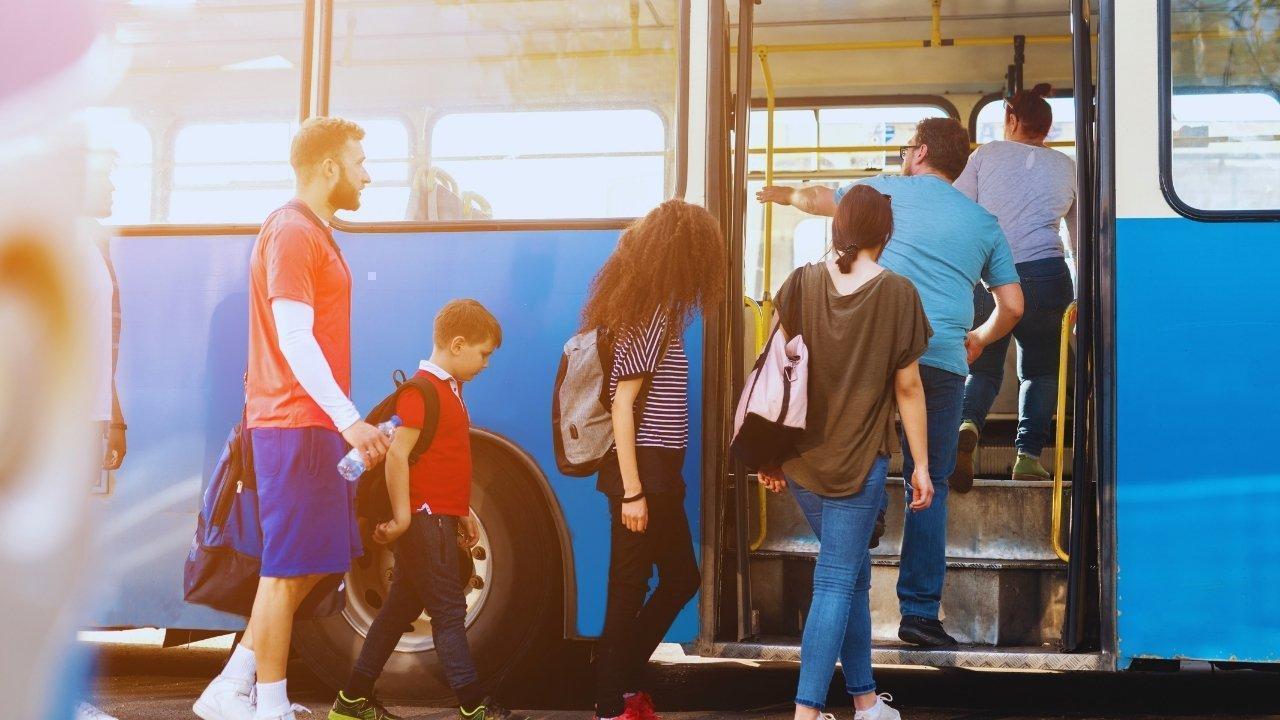
Long before the sun casts its light over buildings, markets, and streets, cities are already alive. The hum of engines, the soft screech of brakes, and the shuffle of early commuters signal that public transport has begun its daily rhythm. This pre-dawn movement, often invisible to those who wake later, is what truly powers the pulse of a city.
While the world outside still yawns in darkness, train stations, bus depots, and metro lines spring into action. These quiet hours, often between 4 a.m. and 6 a.m., carry with them a unique energy—less crowded than peak rush hour, yet no less important. The story of a city before daybreak is written on its platforms, in its buses, and across its tracks.
The earliest travelers are a diverse group. Some are workers who must reach factories or offices before the main crowd arrives. Others are vendors, carrying produce, flowers, or supplies to markets. In global cities, one may find students heading for early classes or travelers racing to catch long-distance trains and flights.
These commuters often share an unspoken bond. Unlike the hurried rush of mid-morning, early passengers move with calm determination. They know the system when it is at its quietest, and in that quiet, stories unfold—stories of ambition, survival, and daily resilience.
Public transport at dawn is not only about passengers. Long before the first bus departs or train whistles, thousands of workers prepare for the day.
Drivers and Conductors: They begin their shifts earlier than most, ensuring buses roll out on time.
Station Staff: Ticket counters open, cleaning crews tidy platforms, and security patrols ensure safety.
Maintenance Teams: Engineers check engines, replace worn parts, and confirm that vehicles are safe for the long day ahead.
Their unseen labor keeps the machinery of urban life running smoothly. A city’s lifeline depends not only on concrete tracks and steel buses but also on the dedication of people who keep them functional.
Traveling on public transport before sunrise carries a distinct atmosphere. The air is cool and sometimes damp with dew. Stations glow with artificial light, creating a contrast with the surrounding darkness. Conversations are softer, music in headphones is quieter, and the usual chaos of a city seems muted.
It is also a time when small details stand out more clearly: the aroma of tea and coffee stalls, the rhythm of footsteps on a nearly empty platform, or the tired but determined faces of those beginning their workday. For travelers, it feels like being part of an exclusive group experiencing a city in its most vulnerable and authentic moment.
Cities thrive because of their ability to connect people. Public transport at dawn symbolizes this in its purest form. Whether it is a worker traveling miles to a factory or a nurse heading to the first shift at a hospital, these early commuters embody the essence of urban survival.
At this hour, the gaps between social classes and professions blur. The bus driver shares the road with a delivery worker; the train seat is occupied by both a business professional and a vegetable vendor. This intersection of lives demonstrates the inclusivity of public transport—it is the one place where the city gathers regardless of background.
Though the sounds and sights may vary, public transport at dawn looks remarkably similar across the world:
New York City Subways: Even at 5 a.m., trains carry construction workers, cleaners, and service staff who are the backbone of the city’s daily life.
Tokyo Metro: Known for its precision, the first trains roll out in near silence, carrying students and office workers preparing for long days ahead.
London Buses: Double-deckers rumble along empty streets, picking up a quiet mix of travelers.
Delhi Local Trains: Vendors and laborers board trains loaded with goods for wholesale markets, their day already in full swing before others awake.
These snapshots remind us that while cultures differ, the rhythm of cities at dawn is universally tied to public transport.
Economists often highlight how transport systems are critical for productivity. The pre-dawn commute plays a surprisingly large role in fueling economies. Factories begin shifts early, supply chains start moving goods, and essential services like hospitals depend on early staff arrivals.
Without these initial movements, the day’s economic engine would face disruptions. The timing of a single bus or train can determine whether goods reach a market in time or whether a medical professional arrives for surgery. Public transport at dawn, though understated, is an essential cog in the machinery of urban economies.
Each passenger carries a story. A fruit vendor boards with baskets of produce, hoping for brisk sales. A young professional, still sleepy, reviews a presentation on a tablet. A grandmother, visiting family across the city, clutches a small bag of gifts.
The pre-dawn transport scene is not just about logistics—it is about lives unfolding in parallel. Travelers may not exchange words, but their collective journeys reflect the diversity and resilience of urban existence. Writers, filmmakers, and photographers often find inspiration in these early hours, capturing the poetry hidden in everyday travel.
While romantic in its quietness, early-morning travel has its challenges.
Safety Concerns: Sparse crowds can make passengers feel vulnerable. Women and elderly commuters often highlight the need for better security.
Frequency of Services: Not all routes run as frequently at dawn, forcing commuters to wait longer.
Infrastructure Limitations: Smaller towns or developing cities may lack efficient early transport altogether, leaving workers dependent on private options.
These challenges highlight the importance of investing in round-the-clock, inclusive public transport systems that serve all citizens equally.
Traveling before sunrise has a psychological dimension as well. For many, the quiet journey provides a moment of reflection before the chaos of the day. It can feel meditative—watching a city slowly wake up through the bus window or train carriage.
At the same time, constant early travel can take a toll. Sleep deprivation, long commutes, and physical strain often weigh heavily on workers dependent on dawn transport. Their sacrifices often go unnoticed in conversations about urban development, though they are the very people sustaining city life.
Beyond practicality, there is symbolism in how public transport carries the city’s first wave of activity. It represents resilience, community, and determination. Each early passenger is a reminder that cities do not simply wake up when office towers light up—they awaken when buses roll out, when markets open, and when the first shift of workers clocks in.
Public transport before daybreak is the city’s heartbeat, faint yet strong, steady yet unnoticed.
As cities modernize, the role of public transport at dawn is evolving. With the rise of 24-hour services, on-demand shuttles, and smart transport systems, early commuters may find smoother, safer, and more efficient travel. Sustainable transport—electric buses, green metros, and cycling networks—could also transform the early urban experience.
Technology may change the tools, but the essence remains the same: cities rely on their earliest commuters to keep them alive.
Public transport before dawn tells a hidden story of cities. It is a time when the first wave of people sets out to keep hospitals running, markets stocked, and industries moving. The atmosphere is quieter, the crowd thinner, but the importance immeasurable.
When we think of urban life, we often picture skyscrapers, traffic jams, and crowded stations. But the true pulse of a city begins much earlier—in the dim light of dawn, when buses pull out of depots and trains carry their first passengers. Public transport is not just a mode of travel; it is the invisible thread weaving together the rhythm of life before the rest of the city even opens its eyes.
This article is for informational and editorial purposes, capturing the significance of public transport in urban life before dawn. It does not represent official data or transport authority perspectives.








Rabada Misses First Australia Test as South Africa Pick Two Spinners
Kagiso Rabada misses the opener as South Africa vs Australia begins, with Anrich Nortje returning an

Starc Compares Australia's Tough Year to McIlroy's Major Sweep
Mitchell Starc says Australia winning three away Test series and the World Cup would match Rory McIl

France’s Sesterce Plans $11 Billion AI Data Centre in Finland
Sesterce plans a $11 billion AI data centre in Finland, with major expansion, green energy plans and

Danaher to Launch AI-Powered Autonomous Research Lab in 2027
Danaher plans an AI research lab for 2027, combining robotics and automation to speed up drug discov

Musk Welcomes German Support for Tesla Driver Assistance Tech as EU Approval Push Continues
Elon Musk welcomes Germany's backing for Tesla FSD as the company seeks EU approval amid speed, safe

Microsoft and Nvidia CEOs to Unveil AI Laptop at San Francisco Event
Microsoft and Nvidia showcase a new AI laptop with RTX Spark chips as they push powerful local AI co

