
You have not yet added any article to your bookmarks!
Join 10k+ people to get notified about new posts, news and tips.
Do not worry we don't spam!
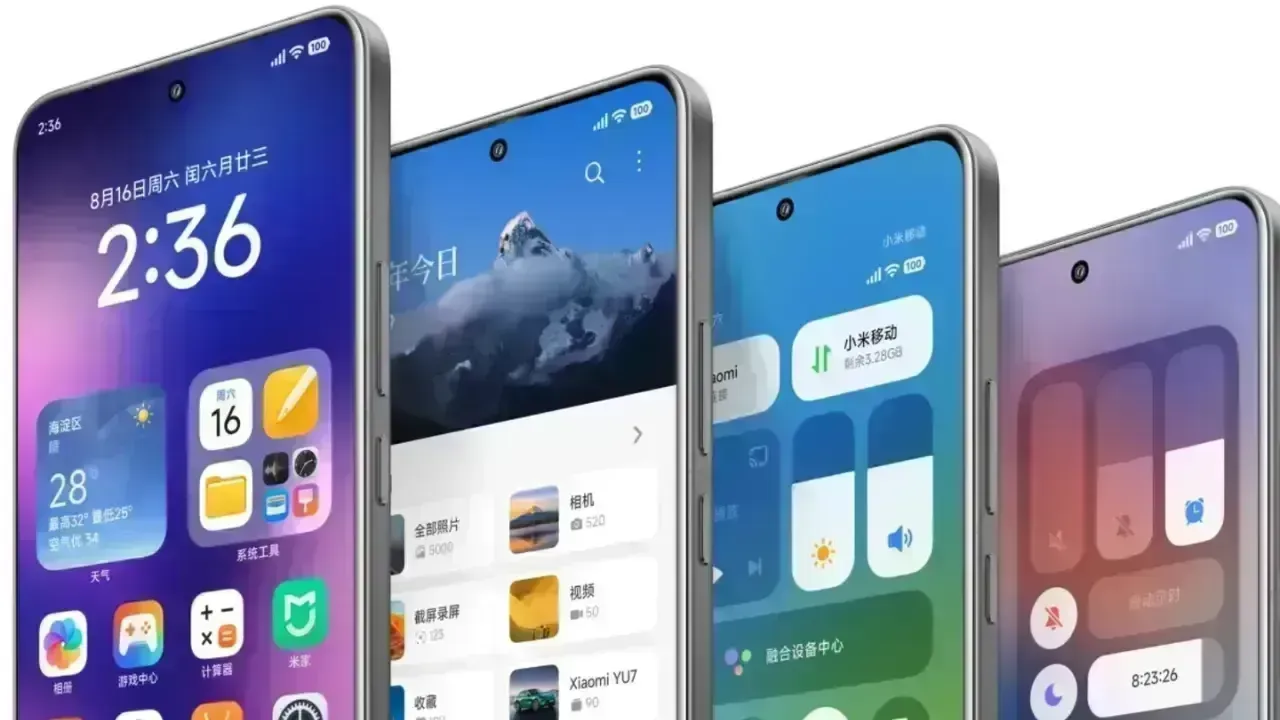
Post by : Anis Farhan
Xiaomi’s ambitious HyperOS 3 operating system rollout, designed to bring a richer Android-based experience with improved performance and AI-driven features, has encountered a significant setback. Shortly after a stable update reached some devices, users began reporting that their devices were suddenly rendered silent, with no audio coming from the internal speakers. The issue has raised concerns among affected owners and sparked broader discussion across forums and tech communities.
The problem seems to be concentrated on specific units — most notably the Redmi Pad 2 running the problematic build number OS3.0.1.0.WOVMIXM. After updating, owners discovered that the hardware speakers no longer emitted any sound, even though everything else on the device appeared to function normally.
Once the affected software update is installed, users find that internal speaker audio ceases altogether. This means notifications, media playback, alarm sounds, system tones, and any other audio dependent on the device’s built-in speakers stop working entirely. Restarting the device or performing a factory reset — common troubleshooting steps for post-update issues — has not resolved the problem for many users, indicating that this may be a deeper software-level bug related to HyperOS 3’s audio system configuration or drivers.
Affected users have pointed out that the only way to get sound back — at least temporarily — is by using external audio sources, such as Bluetooth speakers or headphones connected via USB-C or a wireless connection. While these can provide a workaround, they clearly do not solve the core issue for owners who rely on internal speakers for everyday use.
Xiaomi has publicly acknowledged the bug and confirmed that it is actively working on a fix. While the company has not provided a specific timeline for a patch release, the statement indicates that developers are investigating the issue’s root cause and preparing an updated HyperOS 3 build to restore audio functionality for affected devices.
This isn’t the first time a major update has introduced a widespread bug. Large system overhauls, especially in an evolving platform like HyperOS 3, sometimes result in unexpected incompatibilities or regressions. But a problem as obvious and impactful as complete audio loss naturally draws intense attention from the community, especially when it affects a device segment known for media use and entertainment.
HyperOS 3 is Xiaomi’s latest operating system iteration, representing a significant step forward from HyperOS 2. It continues Xiaomi’s shift from the older MIUI paradigm toward a more unified ecosystem across phones, tablets, and smart devices. The update is intended to enhance performance, visual design, connectivity, AI-driven features, and overall system smoothness — often based on newer Android versions like Android 15 or Android 16 depending on the device model.
Over the past several months, Xiaomi has been rolling out HyperOS 3 to an expanding list of devices — from flagship phones like the Xiaomi 15 series to mid-range models and tablets. The expansion aims to bring a modern, cohesive user experience across the brand’s ecosystem, with features such as HyperIsland, enhanced cross-device connectivity, generative AI tools, and refined UI animations.
Audio output is among the most fundamental functions of any modern device, affecting phone calls (on tablets with calling support), notifications, alarms, video playback, media streaming, gaming, and accessibility features. For many users, the sudden disappearance of this functionality renders a device far less useful.
In particular, tablet owners — who often choose these devices for media consumption, including videos, music, and online content — are especially impacted. A silent device fails to deliver on one of its core hardware capabilities, leading not only to inconvenience but also to frustration among those who installed the update expecting enhanced performance.
Affected owners have been sharing their experiences across social platforms and tech forums, detailing how the audio issue emerged immediately after installing the HyperOS 3 build. Videos, screenshots, and comments confirm that the internal speaker module no longer produces sound, even when system volume is turned up fully.
Some users have also mentioned other audio aspects — such as low sound output on other devices after HyperOS 3 updates — though these appear to be linked to different builds or models and not the complete silence seen on the Redmi Pad 2.
Community discussions also reflect a broader conversation around HyperOS updates, including users sharing tips, temporary workarounds (like using Bluetooth or USB-C audio adapters), and speculation about when Xiaomi might issue a patch. This grassroots engagement often helps affected users stay informed while awaiting official updates.
The reaction isn’t only about the bug itself — there’s also debate about Xiaomi’s update rollout strategy. Some users praise the company for bringing cutting-edge features and Android upgrades to a wide range of devices, while others critique the stability or timeliness of software delivery. Tech communities often note that early adopters of major OS updates tend to face such issues before patches are rolled out.
While waiting for an official patch, the only reliable workaround for affected users is to use external audio outputs. Bluetooth speakers or headphones can still function normally, as can wired USB-C audio devices. This is because the bug appears to affect only the internal speaker driver or system audio routing, not the overall audio stack.
This solution isn’t ideal for everyone — especially in situations where users expect to use the device hands-free or without additional accessories — but it does provide a stopgap until Xiaomi delivers a software fix.
Based on typical update practices, Xiaomi’s developers are probably identifying the specific audio driver conflicts or system service misconfigurations introduced by the affected HyperOS 3 build. Once identified, this will likely be addressed in a follow-up OTA (over-the-air) update, which Xiaomi has acknowledged is in the works.
When it arrives, the patch is expected to automatically restore internal speaker functionality without requiring users to perform resets or reinstall the operating system manually. Users should keep an eye on system update notifications and official Xiaomi community posts for the rollout schedule.
Xiaomi’s HyperOS 3 rollout has not been confined to a small number of devices. Throughout late 2025 and into early 2026, the update has expanded to include an ever-wider slate of Xiaomi, Redmi, and POCO phones and tablets. Some devices have already received stable builds, while others are in staged rollout or beta testing phases.
This staggered deployment strategy is designed to catch bugs early on smaller user segments before broader delivery. However, even with such precautions, issues like the audio bug can occasionally slip through — especially on global builds pushing out to many regional variants.
The confirmation of the HyperOS 3 audio bug underlines the challenges inherent in rolling out major system updates across diverse hardware profiles. While Xiaomi continues to innovate with new features and technologies, occasional stability issues like total audio loss on affected devices can emerge and disrupt the user experience.
For now, affected users should continue using external audio solutions and monitor official Xiaomi updates for a forthcoming patch. These kinds of software problems are typically resolved through targeted OTA updates once the root cause is identified — though the wait can be frustrating for everyday users relying on their device’s core functions.
Disclaimer:
This article is based on publicly available reports and community discussions about Xiaomi HyperOS 3 updates and the confirmed audio issue. Details may evolve as Xiaomi releases additional software updates or official advisories.










Google Signs 3.6-GW Power Deal With Constellation Energy in US
Google signs a 3.6-GW power deal with Constellation Energy, including nuclear power upgrades to supp

Harmanpreet Kaur Steps Down as India Captain Across All Formats
Harmanpreet Kaur steps down as India captain across all formats after a remarkable leadership journe

Michael Bracewell Chooses Casual Contract, Targets BBL Opportunity
Michael Bracewell moves to a casual contract as he eyes a BBL opportunity while remaining available

Tuchel Says Alex Scott Can Challenge Declan Rice for England Midfield Spot
Thomas Tuchel says Alex Scott can challenge Declan Rice for an England midfield place after his impr
Air Quality Turns Unhealthy in Central and Western Singapore Amid Haze
Singapore haze pushes PSI above 100 in central and western areas as smoke from regional hotspots rai

PM Modi Pays Tribute to Mahatma Gandhi, Urges People to Support Khadi
PM Modi pays tribute to Mahatma Gandhi on Gandhi Jayanti and urges citizens to support Khadi and the

