You have not yet added any article to your bookmarks!
Join 10k+ people to get notified about new posts, news and tips.
Do not worry we don't spam!
Post by : Anis Farhan
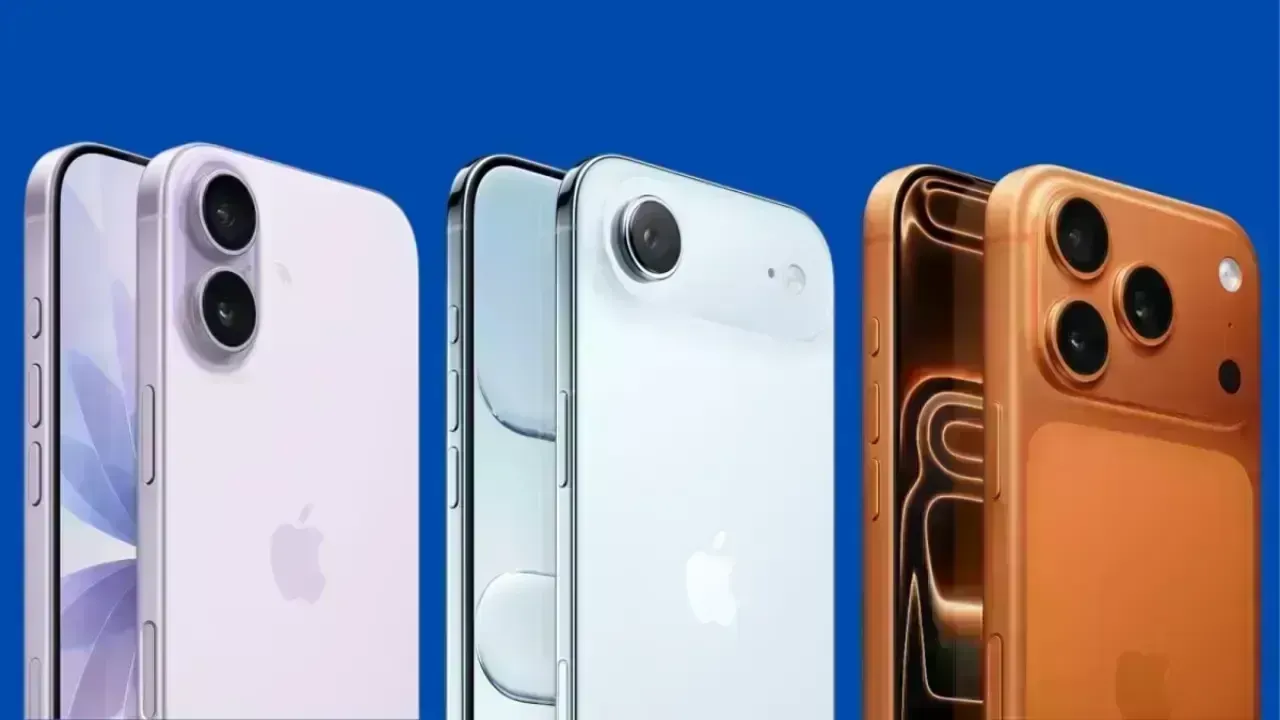
For more than a decade, Apple has followed a clockwork-like routine with its iPhone launches. Every year, customers expect a new device, new colors, sharper cameras, and faster chips. This steady rhythm has become part of modern digital culture. Yet, the new report suggests that Apple might press the pause button on that tradition. According to the claim, the standard iPhone 18 will not see a 2026 release, and the base model may arrive months later in 2027.
Such a move would be unusual for the company that built its reputation on predictability. The iPhone is Apple’s most visible product and its biggest revenue driver. Any change in schedule naturally triggers debate among fans, developers, suppliers, and investors. The report has therefore raised an important question — is Apple preparing a new strategy for a more complicated smartphone era?
One of the central points of the report is that Apple may split the iPhone 18 family into two phases. The premium Pro models could still debut during the regular fall 2026 event, while the standard iPhone 18 might be held back until spring 2027. This approach would allow Apple to spotlight high-margin devices first and give engineers more breathing room to polish the mainstream version.
Staggering releases could also help the company manage marketing fatigue. Instead of one crowded announcement covering four or five phones, Apple could create two major moments of attention. The Pro launch would target enthusiasts ready to pay top price, whereas the standard model would later serve the broader audience.
Modern iPhones depend on extremely advanced components. Next-generation silicon, new display technology, and AI-centric hardware demand longer testing and production alignment. The report hints that Apple may be prioritizing its resources toward the Pro models to avoid shortages. Delaying the base model could ensure enough units are available when it finally lists on exchanges and retail shelves.
Apple has rarely deviated from its annual cycle. The last comparable disruption dates back to earlier generations such as the iPhone 4s, which arrived about fifteen months after its predecessor. More recently, the pandemic pushed some timelines by a few weeks, but Apple never skipped an entire year.
If the iPhone 18 indeed lands in 2027, the gap between iPhone 17 and standard iPhone 18 would extend to roughly eighteen months. That would be the longest interval in Apple’s modern history. Customers accustomed to upgrading each year may therefore have to adjust to a slower pace.
Despite the gloomy claim around the standard model, Apple is unlikely to stay silent in 2026. Industry watchers believe the company will still introduce:
iPhone 18 Pro
iPhone 18 Pro Max
Possibly a foldable iPhone or ultra-premium variant
This suggests Apple may be doubling down on the luxury end rather than abandoning the market. The strategy would mirror how some competitors release flagship and mainstream devices at different times.
A split schedule would give Apple the chance to clearly separate Pro and standard identities. The Pro models could showcase experimental hardware such as periscope cameras, larger batteries, titanium frames, and exclusive AI features. The standard iPhone 18 would then inherit selected upgrades later at a more accessible price.
Keeping the iPhone 17 as the primary mainstream device for longer may help Apple extract more revenue from existing tooling. Many users who do not need Pro features would continue buying iPhone 17 through 2026, softening the impact of a delayed successor.
The iPhone community thrives on yearly excitement. A skipped 2026 release for the standard iPhone 18 could feel like a cold shower. Users who plan their upgrades around annual launches may postpone purchases or explore Android alternatives.
Samsung, Google, and Chinese brands innovate aggressively each year. If Apple’s mainstream model arrives late, rivals may capture undecided buyers in 2026. Market share battles could therefore intensify, especially in India and Southeast Asia where price sensitivity is high.
A postponed iPhone 18 would not affect only Apple. Thousands of suppliers in Taiwan, China, Vietnam, India, and the US align factories around Apple’s September timeline. A new rhythm could push them to redesign contracts and hiring cycles.
Developers may also feel the ripple. App makers often wait for new hardware APIs and screen sizes. A spring 2027 standard launch could create an unusual mid-year software push.
Three timelines are now being tracked:
Fall 2026 — launch of Pro models
Spring 2027 — arrival of standard iPhone 18 and possibly iPhone 18e
Continued adjustment in Apple’s smartphone planning
Until Apple issues official confirmation, the claim remains speculative. However, the consistency of the new report suggests Apple is at least debating flexibility over strict yearly cycles.
The smartphone world of 2026 is very different from that of 2016. Devices last longer, chips improve incrementally, and AI services rather than hardware alone define upgrades. Apple may therefore believe customers no longer need a brand-new mainstream phone every twelve months.
A staggered iPhone 18 schedule could be Apple’s answer to this new reality. Instead of chasing tiny yearly improvements, the company may be aiming for bigger generational leaps spaced further apart.
The new report claiming Apple will not release the standard iPhone 18 in 2026 has stirred the tech industry like few rumors before. If accurate, Apple would break away from its predictable cadence and adopt a two-phase strategy with Pro models leading in 2026 and mainstream versions following in 2027.
Such a decision carries clear risks, particularly around consumer frustration and competitive pressure. Yet it also offers benefits in marketing focus, supply management, and stronger product differentiation. Apple has always balanced innovation with business discipline. The iPhone 18 delay claim, whether it becomes fact or not, highlights that the company is preparing for a more complex and flexible smartphone future.
This article is for informational purposes only and is based on a third-party report. Apple has not officially confirmed any change in its iPhone 18 launch schedule. Product plans and timelines may evolve.








Meta Bans TikTok Ads on Facebook and Instagram in Seven Countries
Meta has banned TikTok ads in seven countries, escalating competition over social media users, adver

ASML and Zeiss Target Next-Generation Chip Technology in 10 Years
ASML and Carl Zeiss are developing Hyper NA technology to print smaller chip circuits, with the next

Rabada Misses First Australia Test as South Africa Pick Two Spinners
Kagiso Rabada misses the opener as South Africa vs Australia begins, with Anrich Nortje returning an

Starc Compares Australia's Tough Year to McIlroy's Major Sweep
Mitchell Starc says Australia winning three away Test series and the World Cup would match Rory McIl

France’s Sesterce Plans $11 Billion AI Data Centre in Finland
Sesterce plans a $11 billion AI data centre in Finland, with major expansion, green energy plans and

Danaher to Launch AI-Powered Autonomous Research Lab in 2027
Danaher plans an AI research lab for 2027, combining robotics and automation to speed up drug discov