You have not yet added any article to your bookmarks!
Join 10k+ people to get notified about new posts, news and tips.
Do not worry we don't spam!
Post by : Shweta
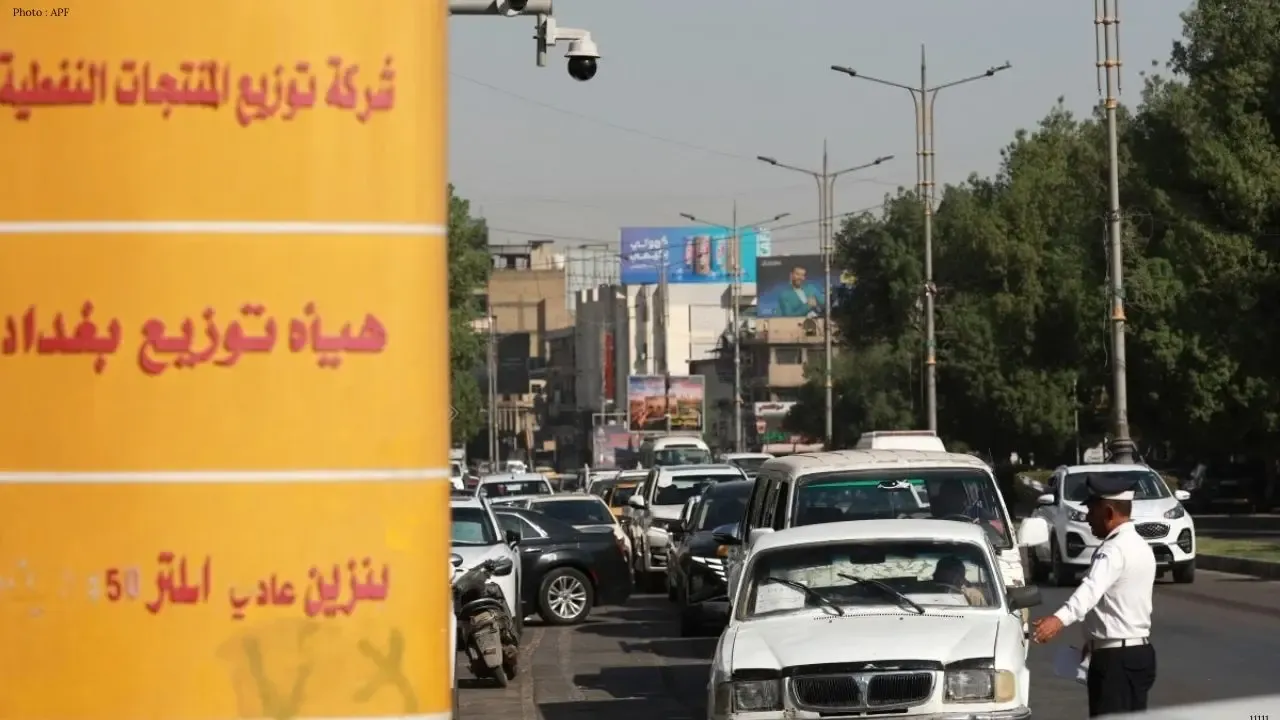
Cities across Iraq, particularly Baghdad, are grappling with severe fuel shortages as tensions in the region hinder gasoline imports. The ongoing conflict has forced local drivers to endure lengthy wait times at gas stations, a situation underlining the broader ramifications of Middle Eastern instability on regional supply chains. Despite Iraq's status as a leading oil producer, the country struggles with gasoline availability due to insufficient domestic refining capacity.
In recent weeks, long queues have become a familiar sight outside gas stations in Baghdad and surrounding areas. Drivers flock to government-operated stations, hoping to secure gasoline for their vehicles. Ibrahim Hashem, a Baghdad resident, shared his frustrating ordeal of waiting two hours on Friday before leaving empty-handed, only to return the next day for another attempt. This compounded the daily challenges facing Baghdadis, including heavy traffic and inadequate public services, as waiting for fuel exacerbates congestion on the city's roads.
Iraq has a high demand for gasoline, consuming around 33 million litres daily. When public concerns about shortages arise, demand can spike to 38 million litres as motorists rush to fill their tanks. Such fluctuations drive further demand pressure leading to longer lines and increased consumption. The Oil Ministry has urged citizens to purchase only what they need to alleviate crowding at petrol stations.
The Oil Ministry highlights that ongoing regional conflicts have complicated tanker logistics, delaying fuel shipment arrivals at Iraqi ports. Minister Bassem Mohammed Khudair assured that the current gasoline shortage is temporary and that new shipments are forthcoming to stabilize the situation. This crisis reflects how strife in the Middle East can affect regional energy markets and import availability.
The situation is closely tied to the Strait of Hormuz, a pivotal shipping lane for global energy. The ongoing tensions between the US and Iran have led to disruptions in this vital route, complicating oil and fuel transport across the region. Iraq's economic stability hinges on oil revenues, which account for nearly 90% of the country's budget, underscoring its vulnerability to conflicts affecting energy trade.
Although the regional conflict initially caused a drop in Iraqi oil exports, recent reports indicate a recovery to above 2.2 million barrels per day. This recovery offers a silver lining for Iraq's oil sector, yet the ongoing disruptions in shipping and imported fuel persist as significant concerns. The mismatch between crude oil output and domestic refining capabilities remains a critical factor behind its fuel shortages.
As reported by the Iranian state news agency IRNA, Iran has granted certain Iraqi oil tankers permission to navigate through the Strait of Hormuz in recent months. This development may provide some relief in moving Iraqi oil but does not eliminate the uncertainties surrounding shipping conditions, which can impact fuel supplies and costs. For Iraqi citizens, the pressing issue remains gasoline access, highlighting the fragility of regional energy markets amid ongoing conflicts.
The re-emergence of long fuel lines in Baghdad emphasizes a persistent dilemma for Iraq: abundant crude oil production does not equate to sufficient gasoline supply for domestic needs. Current challenges are labeled by officials as temporary, anticipating new shipments to regulate supplies. However, this situation illustrates the degree of vulnerability in Iraq's fuel infrastructure influenced by regional conflicts interrupting transport and logistics. As unrest continues in the Middle East, Iraqi authorities must closely monitor fuel imports, refinery productivity, and shipping capacities, as any disruptions in the Strait of Hormuz could have broader implications on the nation's economy and consumers facing extended waits for fuel.








Mumbai Indians Appoint Kieron Pollard as Head Coach for 2027 IPL
Mumbai Indians appoint Kieron Pollard as head coach for IPL 2027, replacing Mahela Jayawardene as th

Marquez Takes Australian MotoGP Pole After Early Qualifying Crash
Marc Marquez claims pole at the wet Australian MotoGP after a crash, with Alex Marquez second and Jo

MotoGP Qatar GP to Proceed Despite Regional Tensions and Safety Fears
MotoGP Qatar GP is scheduled for November 6-8 despite regional tensions, as Alex Marquez questions s

Fiji Appeals to Mark Nawaqanitawase’s Pride Ahead of Rugby World Cup
Fiji hopes Mark Nawaqanitawase will choose his ancestral homeland over Australia as the 2027 Rugby W

OpenAI and Poland’s NASK Team Up to Improve AI Safety
OpenAI and Poland’s NASK will research AI safety, security risks and stronger safeguards as concerns

Asian Football Confederation Backs Infantino for FIFA Re-Election
The Asian Football Confederation has backed Gianni Infantino for FIFA re-election, despite earlier o