
You have not yet added any article to your bookmarks!
Join 10k+ people to get notified about new posts, news and tips.
Do not worry we don't spam!
Post by : Rohit Dhiman
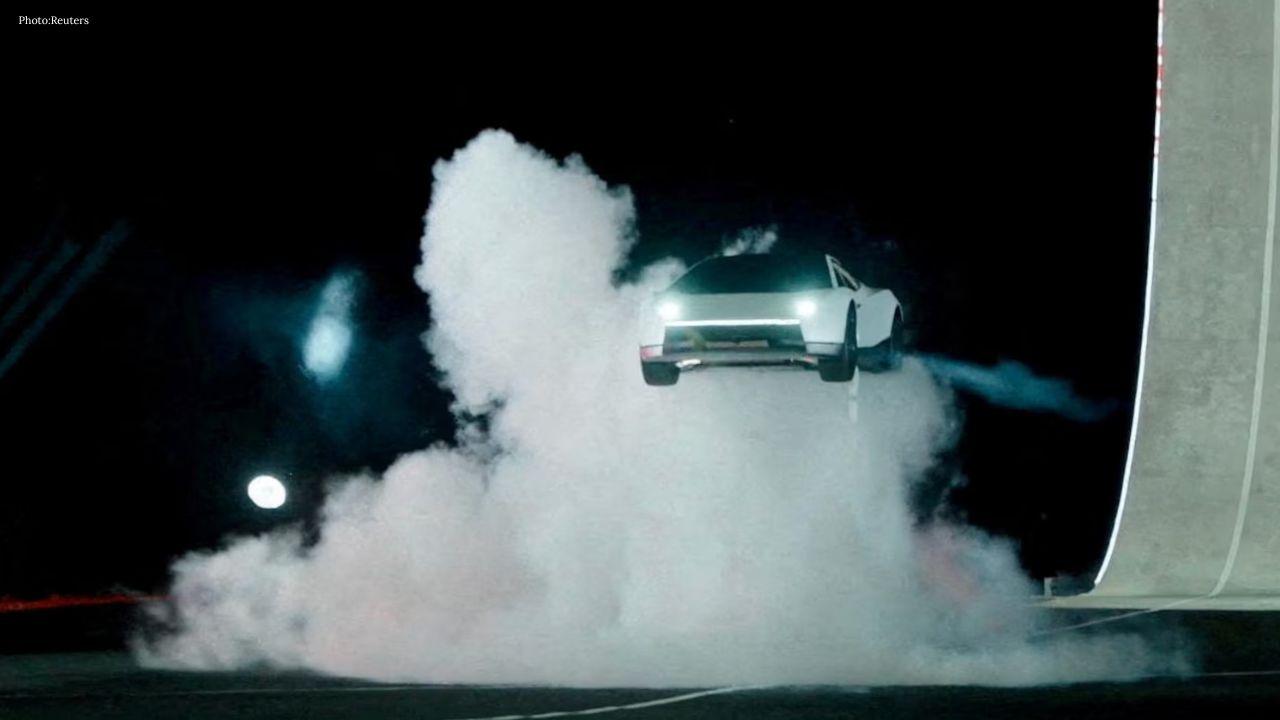
Tesla shares fell around 5% in premarket trading on Thursday, October 22, 2026, after the electric vehicle maker reduced its capital expenditure forecast for the year. The decision raised questions among investors about the pace of investment supporting CEO Elon Musk’s ambitions in artificial intelligence, robotics and autonomous driving. The company lowered its expected Tesla capital spending for 2026 to approximately $20 billion, down from its earlier forecast of more than $25 billion. The revision followed lower-than-expected spending on artificial intelligence and robotics during the third quarter, which contributed to an unexpected positive free cash flow position. Although lower expenditure can help preserve cash in the near term, investors are weighing whether delayed investment could affect the company’s longer-term technology plans.
Capital expenditure refers to money a company spends on long-term assets, infrastructure and equipment. For Tesla, such investment is connected to its vehicle operations as well as its ambitions in computing infrastructure, autonomous driving and robotics. The revised forecast suggests that the company expects to spend less in 2026 than previously anticipated. However, the figures alone do not establish that Tesla has abandoned or permanently reduced its long-term technology ambitions. J.P. Morgan analysts, led by Rajat Gupta, said the delay could reduce near-term cash outflows but might also indicate that investments supporting future growth opportunities are taking longer to materialise.
Tesla’s future strategy extends beyond electric vehicle manufacturing. The company is continuing to pursue several technology projects that could influence its long-term business model. These include Tesla AI, its planned robotaxi services, the Optimus humanoid robot programme, computing capacity for artificial intelligence and the Terafab initiative. Management commentary reportedly indicated that spending could increase again in 2027 and 2028 as the company works towards milestones across these projects. This means the lower 2026 forecast may reflect a shift in investment timing rather than a permanent reduction in spending. For investors, a key question is whether Tesla can convert these projects into commercially successful businesses while managing the cost of development.
Tesla shares have faced pressure during 2026. According to the report, the stock had declined approximately 14% during the year, while the Nasdaq had gained around 15%. The shares were also trading about 23% below their record intraday high of $498.83, reached in December 2025. Despite the decline, Tesla's valuation remained considerably higher than those of traditional US automakers. The report put its forward price-to-earnings ratio at 188.24, compared with 6.58 for Ford and 5.16 for General Motors. These figures highlight the difference in how investors value Tesla and established vehicle manufacturers. Tesla's valuation reflects expectations about future growth, including technology-related opportunities, rather than only its current vehicle business.
Read Also: Comcast Loses More Broadband Customers as Competition Intensifies
Another factor attracting investor attention is the possibility of a combination involving Tesla and SpaceX, the aerospace company led by Musk. AJ Bell investment director Russ Mould said investors could face a period of uncertainty while awaiting further information about a potential combination. He also pointed to possible regulatory hurdles. No completed merger or final agreement was confirmed in the supplied report. Any such transaction would depend on further developments and applicable regulatory requirements.
Investors are likely to focus on whether Tesla follows through on its projected spending plans for 2027 and 2028, and whether its AI, robotics and autonomous-driving projects meet their development targets. The company must also demonstrate how these investments can support future revenue and profitability. Until more details emerge, the reduced 2026 expenditure forecast presents both a near-term cash-flow benefit and questions about the timing of longer-term growth plans.


Tesla Shares Fall 5% as Spending Cuts Raise AI Concerns
Tesla shares drop 5% after cutting its 2026 spending forecast to $20 billion, raising questions abou

Spotify Forecasts Higher Fourth-Quarter Profit on AI Investments
Spotify forecasts fourth-quarter operating income above estimates as AI-powered playlists and person

Steve Smith Fit to Bat as Rain Delays South Africa Test
Steve Smith is available to bat despite a neck issue as rain delays the second South Africa Test, wi

Besi Quarterly Orders Beat Forecasts on Strong AI Data Centre Demand
BE Semiconductor Industries reports stronger quarterly orders as AI data centre investment boosts de

Bukayo Saka Injury: Arteta Worried After Arsenal Star Exits Early
Arsenal boss Mikel Arteta fears Bukayo Saka’s quadriceps injury after the winger left the Bayern Mun

Tom Cruise to Receive AFI Life Achievement Award in April 2027
Tom Cruise will receive the AFI Life Achievement Award at a Hollywood ceremony in April 2027, recogn

