You have not yet added any article to your bookmarks!
Join 10k+ people to get notified about new posts, news and tips.
Do not worry we don't spam!
Post by : Anis Farhan
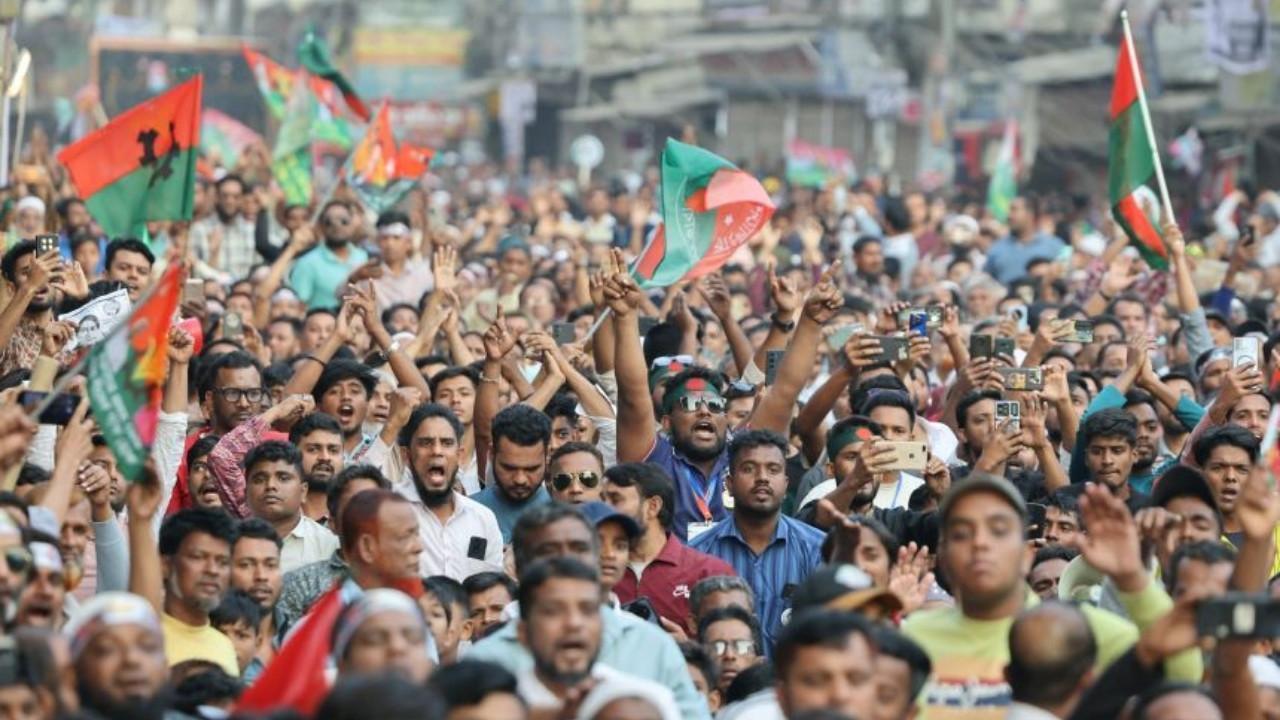
Bangladesh witnessed a political earthquake in its 13th parliamentary elections, with the Bangladesh Nationalist Party (BNP) emerging triumphant and poised to form a government after nearly two decades in opposition. The elections, held in the wake of intense political upheaval and a mass uprising in 2024, captured global attention as voting and counting unfolded amid high public stakes.
According to provisional results, the BNP, led by Tarique Rahman, surged ahead to secure a commanding majority in the Jatiya Sangsad (National Parliament). While official results awaited confirmation, trend data and media reports signalled a decisive mandate for the BNP, underscoring broad popular desire for change and ushering in a new chapter for Bangladesh’s political landscape.
This article examines the election outcomes, the forces that shaped them, reactions from key political actors, implications for governance, regional and international responses, and what this seismic shift means for Bangladesh’s future.
Bangladesh’s political climate was already volatile leading up to the 2026 polls. A Gen-Z-led uprising in 2024 resulted in the ouster of long-serving former Prime Minister Sheikh Hasina, triggering an unexpected power realignment. This grassroots movement, fuelled by concerns over corruption, economic challenges, and demands for more representative governance, created a political opening that reshaped the country’s electoral landscape.
While the former Awami League — Bangladeshi politics’ dominant force for over a decade — was effectively sidelined during these elections due to internal strife, boycotts and legal challenges, the BNP emerged as the principal beneficiary. The party previously last held national power in the early 2000s and had since been excluded from governance despite being a core political player.
The 2026 election was one of the largest democratic exercises in Bangladesh’s history. With an electorate numbering over 127 million, voters were called to decide the composition of 300 parliamentary seats. The election process included innovations such as postal ballots and technological support across tens of thousands of polling stations — an attempt by the Bangladesh Election Commission to enhance transparency and accessibility.
Given the high stakes, turnout rates were significant and reported to be above previous decades’ averages. While the official figure was pending release at the time of writing, local counting trends showed spirited participation across urban, rural and expatriate constituencies.
Trend figures from multiple news outlets pointed to a commanding performance by the BNP, with the party securing a two-thirds parliamentary majority and more than 212 seats — well beyond the 151 needed for control. This emphatic result, if confirmed officially, represents a significant reversal of fortunes for the party and its leadership.
Tarique Rahman, son of party founder Ziaur Rahman, led the campaign from abroad before returning amid the results. He contested multiple constituencies and was declared victorious in both, underscoring his appeal within core party strongholds.
Party sources publicly framed the victory as a mandate for meaningful reform, promising to address national priorities such as economic revitalisation, corruption mitigation and educational advancement for the nation’s growing youth population. This rhetoric resonated strongly with voters disenchanted by the recurring conflicts and governance challenges of recent years.
With such a commanding majority, the BNP is well positioned not only to form a government but also to enact substantial legislative changes. Analysts noted that its ability to shape constitutional and institutional reforms would hinge on maintaining a cohesive parliamentary coalition and managing intra-party expectations.
Early statements from senior BNP leaders emphasised unity and inclusive policymaking, while also recognising that rebuilding institutional trust would require careful governance emphasis and public outreach.
Despite efforts to reassert themselves in the national political arena, the Jamaat-e-Islami and its allied coalition failed to make the expected gains. Early media assessments showed the party and its partners trailing with a significantly smaller seat count, undermining their bid to become a principal force in the new parliament.
The Jamaat alliance, which had previously sought to position itself as a stabilising alternative to both the BNP and the Awami League, expressed dissatisfaction with the counting process. Some party figures alleged irregularities and procedural flaws in certain constituencies. These claims, however, were neither universally substantiated nor widely echoed by independent observers.
Political analysts suggest the Jamaat coalition’s underperformance reflected broader shifts in voter preferences — notably a preference for pragmatic governance credentials over ideological positioning, after years of political instability.
Public reactions to the election results were mixed but predominantly characterised by hope, especially among youth and civil society groups who had been vocal supporters of democratic reform following years of unrest. Many cited the vote as an opportunity to restore political agency and institutional autonomy after turbulent political cycles.
At the same time, some observers voiced cautious optimism, noting that the real test for Bangladesh’s leadership would lie not in electoral victory but in fostering economic growth, ensuring social equity and strengthening democratic institutions without polarization.
Interim leaders and election stakeholders urged political actors across the spectrum to embrace democratic norms and facilitate a peaceful transition. Notably, Nobel laureate Muhammad Yunus, serving in an advisory role prior to the new government’s inauguration, called on all parties to “remain united in the greater national interest,” emphasising the need for cooperation rather than confrontation.
International leaders and regional powers swiftly recognised the significance of Bangladesh’s election outcome. Messages of congratulations poured in from multiple capitals, acknowledging the electorate’s decisive choice and offering support for peaceful governance transitions.
Statements from foreign ministries emphasised continued collaboration on trade, security and climate resilience — areas of strategic interest given Bangladesh’s role in South Asian geopolitics and as a rapidly developing economy with deep linkages to neighbouring markets.
Strategic analysts suggested that the BNP’s return to power could recalibrate diplomatic alignments within South Asia, particularly in terms of economic partnerships, infrastructure initiatives and cross-border cooperation. Enhanced engagement with major powers — including India and the United States — was highlighted as a potential avenue for regional stability and mutual prosperity.
As the BNP prepares to assume office, the governance agenda will likely prioritise economic revitalisation, youth employment, judicial reforms and anti-corruption measures — all central themes that influenced voter sentiment. Effective policy implementation, however, will depend on the party’s ability to deliver on its electoral promises while managing coalition priorities and parliamentary responsibilities.
Restoration of public confidence in electoral and democratic institutions will remain a central challenge. Election observers have emphasised the need for transparent governance practices and institutional reforms that safeguard free speech, protect minority rights and ensure broad civic participation.
The 2026 general election in Bangladesh marks a pivotal turning point — one defined by a decisive electoral mandate for the BNP, the underwhelming performance of the Jamaat alliance, and the promise of substantive political transformation after years of turmoil.
While the journey ahead will be shaped by complex domestic and international challenges, the outcome reflects a powerful moment of political expression and democratic engagement by the nation’s electorate. The coming months will test whether this historic mandate translates into effective governance and sustained progress for Bangladesh’s diverse and dynamic population.
Disclaimer: This article is based on preliminary reports and evolving information at the time of publication. Official results from election authorities were pending at the time of writing. The content is intended for informational purposes and should not be interpreted as definitive or a substitute for official electoral documentation.









George Russell Wins Dutch GP Sprint, Boosts Mercedes Morale
George Russell wins the Dutch GP Sprint from pole as Mercedes teammate Kimi Antonelli extends his F1

Australia 50/3 After Bangladesh Bowled Out for 64 in Second Test
Australia reached 50/3 after Bangladesh were bowled out for 64 in the second Test, with Mitchell Sta

Jordan Burroughs Returns to Wrestling with 2028 Olympic Dream
Jordan Burroughs returns to wrestling with Real American Freestyle as the Olympic champion eyes a po

Lamborghini Catches Fire on Singapore's ECP, Causing Heavy Traffic
A Lamborghini caught fire on Singapore's ECP, causing heavy traffic and bus delays. No injuries were

Bangkok Airport Duty-Free Area Flooded by Pipe Burst
A burst water pipe flooded the duty-free shopping area at Bangkok's Suvarnabhumi Airport on July 16,
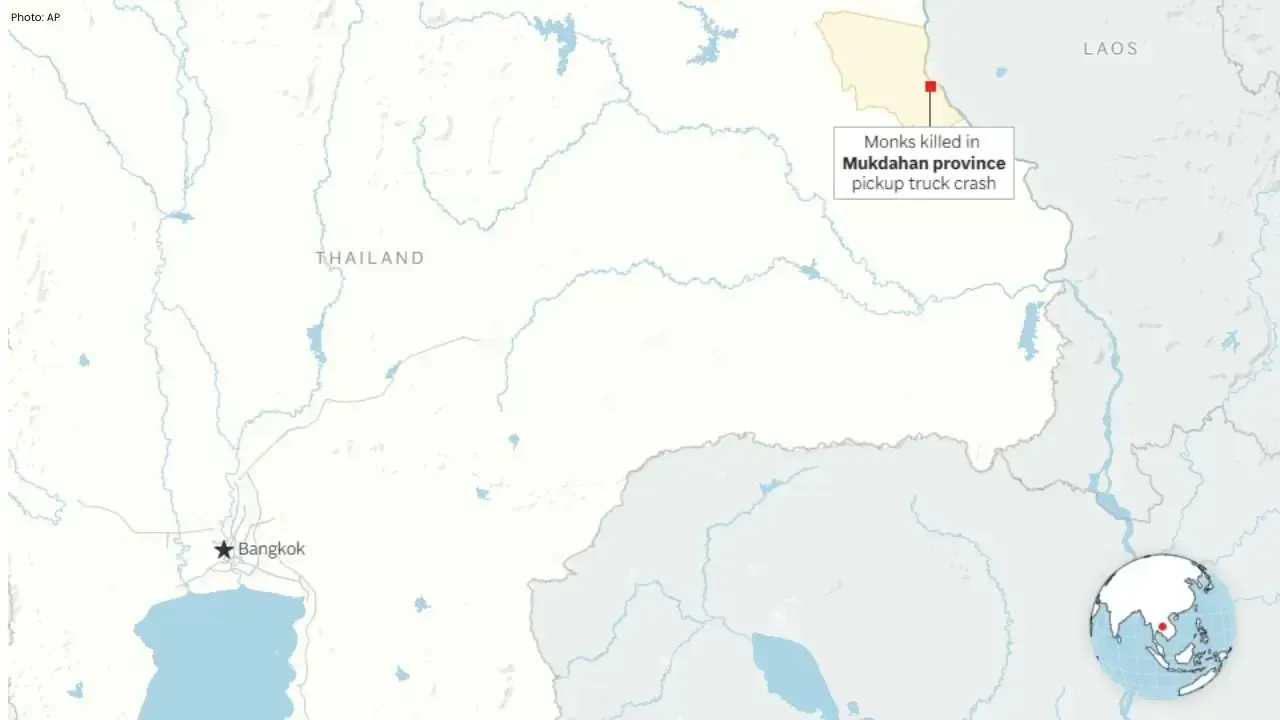
Nine Monks Killed in Thailand Pickup Truck Tragedy
An 11-year-old boy driving a pickup truck crashed into monks during a pilgrimage in northeastern Tha