You have not yet added any article to your bookmarks!
Join 10k+ people to get notified about new posts, news and tips.
Do not worry we don't spam!

Post by : Anis Farhan
Global oil prices were little changed on Friday but remained on track for a second straight weekly drop, reflecting easing geopolitical tensions and renewed worries about an oversupply of crude in 2026. Traders and analysts noted that recent gains — driven by fears of conflict in the Middle East — had largely reversed as diplomatic signals and production forecasts shifted market sentiment toward a more bearish outlook. (turn0news0)
Brent crude futures were marginally higher early in the session at around $67.55 per barrel, while U.S. West Texas Intermediate (WTI) hovered near $62.85, though both benchmarks remained weaker on the week compared with earlier trading sessions. The downward trend underscores how rapidly global oil markets can shift when geopolitical premiums recede and fundamental supply-demand dynamics come back into focus. (turn0search16)
In recent days, oil markets had been elevated by concerns that conflict between the United States and Iran could disrupt crude exports from the Middle East — a region that accounts for a significant share of global oil flows. However, comments by U.S. political leaders suggesting that negotiation with Tehran could lead to a diplomatic breakthrough dampened those fears, prompting traders to reduce the geopolitical risk premium embedded in crude prices. This material reassessment contributed to the reversal of earlier gains.
IG analysts noted that indications the United States might extend talks with Iran and pursue a nuclear deal — potentially within a month — were key drivers of the recent price slide. As geopolitical pressure eased, the risk-averse positioning by many investors receded, translating into weaker crude prices despite ongoing volatility in the region.
Compounding the reduced geopolitical premium, global supply concerns have shifted from scarcity to abundance. The International Energy Agency (IEA) in a recent report projected that global oil demand growth in 2026 will be weaker than previously expected, a forecast that implies supply could outpace demand over the coming year. Such projections signal a potential oversupply environment, contradicting earlier expectations of tightening markets and supporting downward price pressures.
Analysts emphasise that weaker demand estimates paired with continued production growth from key exporters could maintain downward pressure on prices if consumption does not accelerate as anticipated. This oversupply concern stands in contrast with previous risk-on trading driven by Middle East tensions.
In addition to the demand outlook, data showing robust U.S. crude inventories have capped price gains in recent sessions. A build-up in stocks suggests that supply is currently sufficient to meet market requirements, barring significant disruptions or sharp increases in consumption. Higher inventories typically signal that producers are outpacing demand, a condition often associated with price weakness. (turn0search16)
Concurrently, expectations that Venezuelan crude output could increase in the near future — as sanctions ease and exports resume — add another layer of supply pressure to an already well-supplied market. Analysts highlight that any return of Venezuelan barrels to the global market could further erode pricing power for producers already facing declining demand forecasts. (turn0search16)
For the trading week ending February 13, Brent crude was positioned to fall about 0.8 percent, while WTI was on track for a 1.1 percent decline — the second consecutive week of lower prices. These figures reflect the tug-of-war between ongoing geopolitical concerns and fundamental oversupply issues that have tipped the balance toward bearish tendencies in recent sessions. (turn0news0)
While daily price changes have been relatively modest, the broader trend points to a market recalibrating after earlier spikes driven by Middle East tensions. The week’s performance highlights how quickly investor expectations can reposition when risk factors evolve.
For oil-producing nations and energy companies, lower prices may compress profit margins and influence production decisions, especially for high-cost producers. Countries reliant on oil revenue could face renewed fiscal pressure if prices remain subdued for extended periods. Conversely, consumers and energy-intensive industries may benefit from lower input costs, which could translate into broader economic relief — particularly in markets where fuel constitutes a large expense category.
Lower or stabilising oil prices could also shape energy policy decisions worldwide. Governments focused on energy security might recalibrate strategic reserve releases or adjust renewable energy investments based on shifting market dynamics. Meanwhile, central banks and economic policymakers may incorporate energy price trends into inflation forecasts, given the close relationship between fuel costs and broader price levels.
Looking ahead, the oil market faces a complex interplay of factors. While geopolitical risks related to the Middle East could rekindle volatility, fundamental oversupply concerns anchored by weak demand forecasts and higher inventories are likely to temper upward price moves unless production cuts or demand surprises emerge.
Although prices have softened, some market observers note that crude has not significantly weakened in the face of predominantly bearish headlines, suggesting that downside momentum may be losing steam. If demand picks up or coordinated production adjustments occur within exporter groups — such as OPEC+ — prices could find support and limit further declines.
Disclaimer: This article is based on available reporting and market data at the time of writing. Crude oil prices are volatile and can fluctuate rapidly due to evolving geopolitical events, demand indicators, inventory data, and policy shifts. Readers should consider these dynamics and seek multiple sources for comprehensive market assessment.






George Russell Wins Dutch GP Sprint, Boosts Mercedes Morale
George Russell wins the Dutch GP Sprint from pole as Mercedes teammate Kimi Antonelli extends his F1

Australia 50/3 After Bangladesh Bowled Out for 64 in Second Test
Australia reached 50/3 after Bangladesh were bowled out for 64 in the second Test, with Mitchell Sta

Jordan Burroughs Returns to Wrestling with 2028 Olympic Dream
Jordan Burroughs returns to wrestling with Real American Freestyle as the Olympic champion eyes a po

Lamborghini Catches Fire on Singapore's ECP, Causing Heavy Traffic
A Lamborghini caught fire on Singapore's ECP, causing heavy traffic and bus delays. No injuries were

Bangkok Airport Duty-Free Area Flooded by Pipe Burst
A burst water pipe flooded the duty-free shopping area at Bangkok's Suvarnabhumi Airport on July 16,
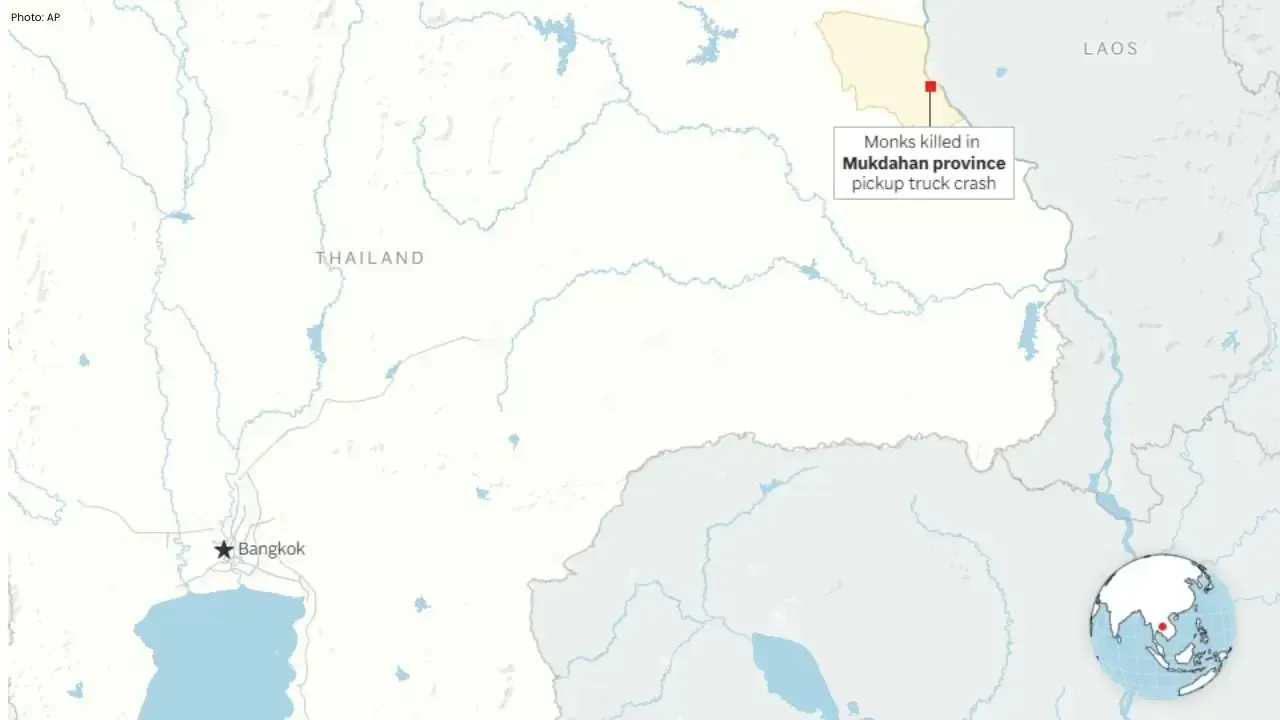
Nine Monks Killed in Thailand Pickup Truck Tragedy
An 11-year-old boy driving a pickup truck crashed into monks during a pilgrimage in northeastern Tha