
You have not yet added any article to your bookmarks!
Join 10k+ people to get notified about new posts, news and tips.
Do not worry we don't spam!
Post by : Rohit Dhiman
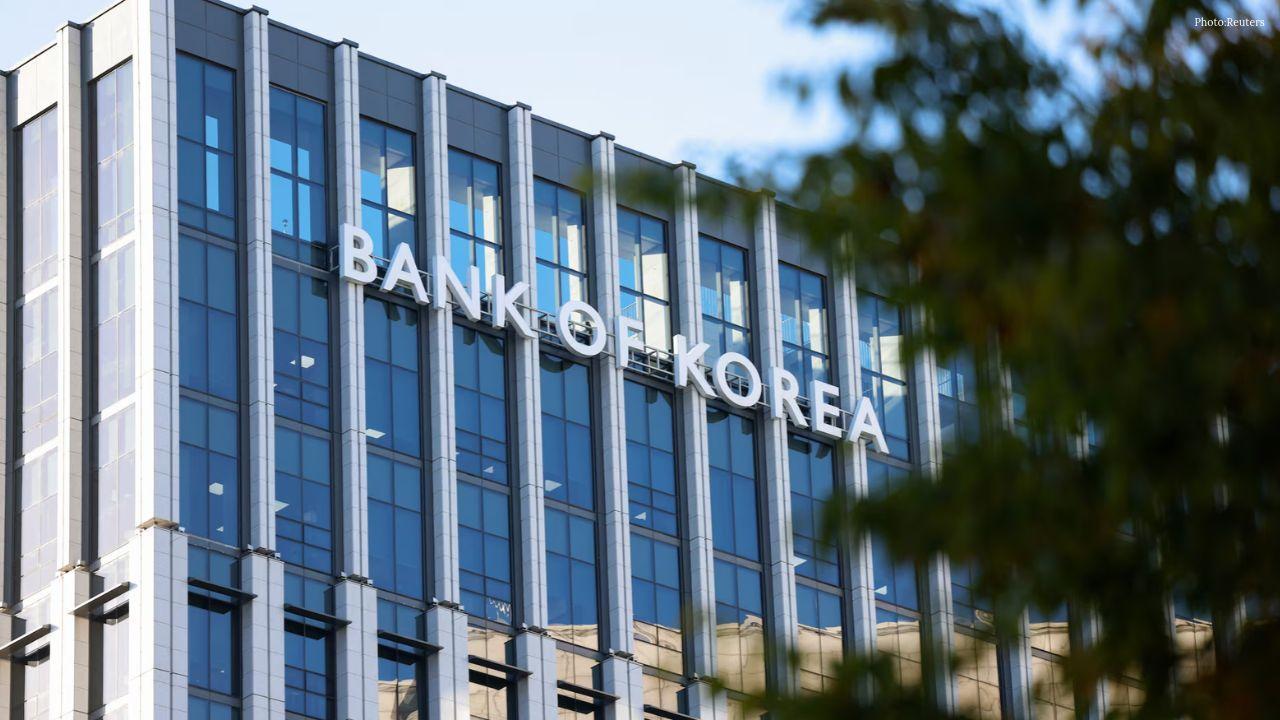
South Korea's central bank is keeping a close watch on the country's currency after the won recorded a sharp appreciation, raising questions about the balance between export competitiveness, inflation management and economic stability. A senior voting member of the Bank of Korea has warned that the speed of recent exchange-rate movements is faster than anticipated, highlighting the need to monitor volatility even as the country's technology exports benefit from strong global demand. Hwang Kunil, a member of the Bank of Korea's seven-member monetary policy board, said the pace of the currency's recent movement deserved particular attention. His remarks indicate that policymakers are concerned not only about the exchange rate itself but also about how quickly it changes and the potential consequences for businesses, trade and financial markets. Speaking to Reuters in his first interview since joining the board in February 2024, Hwang explained that exchange-rate volatility and the speed of currency movements were more important considerations than focusing exclusively on the currency's current value. His comments come at a time when South Korea's export sector is benefiting from growing international investment in artificial intelligence infrastructure. Demand for advanced memory chips from major manufacturers, including SK Hynix and Samsung Electronics, has generated significant export-related dollar inflows, contributing to recent movements in the won.
The recent appreciation of the won has coincided with strong demand for South Korean technology products, particularly memory semiconductors used in advanced computing systems. Global investment in artificial intelligence has increased the need for computing infrastructure, including data centres, specialised processors and high-performance memory. South Korea's semiconductor manufacturers are major suppliers to this market, placing the country in a strong position to benefit from rising technology investment. When overseas buyers purchase South Korean products, international payments can generate demand for the country's currency, depending on how transactions are settled and how exporters manage their foreign-currency earnings. Changes in investment flows can also influence the exchange rate. Hwang attributed the won's recent gains partly to substantial dollar inflows associated with global investment in AI infrastructure and demand for specialised memory chips produced by South Korean companies. The won appreciated by approximately 13% against the US dollar during the third quarter, marking its strongest quarterly increase since the fourth quarter of 1998, according to the report. For South Korea, where international trade remains a central part of economic activity, the direction and speed of the won are particularly important to monitor.
The country's booming semiconductor industry has become a major source of support for its economic outlook. Rising demand for memory products used in AI computing has strengthened the position of South Korean manufacturers in global technology supply chains. SK Hynix and Samsung Electronics are particularly important to this trend because of their roles in the memory semiconductor market. Advanced computing systems require substantial memory capacity, creating opportunities for manufacturers that can supply specialised components. The increase in demand has supported exports and contributed to the inflow of foreign currency associated with international technology sales. This has helped strengthen the broader export outlook even as policymakers remain cautious about the implications of rapid currency appreciation. Hwang expects strong export momentum to continue for the time being, although he acknowledged that South Korea's economic structure is evolving. He emphasised that exports remain fundamental to the country's economy, even if their role is no longer identical to what it was in previous decades.
South Korea's monetary policy decisions remain another important factor influencing the currency and the wider economy. The Bank of Korea kept its benchmark interest rate unchanged at 3.00% in October after raising rates in July and August, according to the report. The decision left further tightening as a possibility amid concerns about inflation and the resilience of economic activity. Interest rates influence borrowing costs, spending decisions and the relative attractiveness of financial assets denominated in different currencies. Changes in the expected path of monetary policy can therefore affect currency demand and exchange-rate expectations. Higher interest rates can help contain inflation by restraining demand, but they can also increase financing costs for households and businesses. Smaller companies, in particular, may face difficulties if their borrowing costs remain elevated while domestic sales are weak.
Hwang expects South Korea's headline consumer price inflation to move closer to the central bank's 2.0% target towards the end of the first half of 2027. He anticipates that inflation could become fully stabilised around the target by the end of 2027 or early 2028. The outlook suggests that price stability remains a central concern for monetary policymakers, even as export growth provides support to the economy. Inflation affects household purchasing power by influencing the cost of everyday goods and services. When prices rise faster than incomes, consumers may have less money available for discretionary spending. Persistent price pressures can also influence business costs, wage negotiations and investment decisions. Exchange-rate movements can affect inflation through import prices. A stronger won may reduce the local-currency cost of imported energy, raw materials and consumer products, assuming other factors remain unchanged. This can provide some relief to businesses and households that depend on imported goods. However, the final effect depends on international commodity prices, domestic distribution costs, contract arrangements and how quickly exchange-rate changes pass through to retail prices.
Read Also: South Korea October Exports Forecast to Surge at Fastest Pace Since 1974
Despite the strength of exports, Hwang expressed concern that the benefits of South Korea's economic recovery were not being shared equally across businesses and households. While technology manufacturers are benefiting from international demand, private consumption is recovering more slowly. Small and medium-sized enterprises are also dealing with elevated delinquency rates and weak domestic demand. This uneven pattern highlights the difference between growth in export-oriented industries and conditions in the wider domestic economy. Large technology companies can benefit directly from international demand for semiconductors and advanced computing products. Smaller businesses that depend primarily on local consumers may not experience the same improvement, particularly when households remain cautious about spending. Hwang noted that high interest rates and elevated prices affect a broad section of the economy, even when the benefits of stronger trade are concentrated among particular groups. The contrast matters because domestic consumption is an important source of demand for businesses operating in retail, services, manufacturing and other sectors.
Hwang also raised concerns about the quality of financing available to smaller companies. According to his comments, delinquency rates among small and medium-sized businesses were increasing, while a substantial portion of their borrowing was being used to cover immediate operating expenses rather than long-term investment. These expenses can include wages, raw materials and other costs required to keep daily operations running. Borrowing for working capital is a normal part of business activity. However, persistent reliance on loans to meet routine expenses can become a concern when sales are weak and repayment obligations continue to rise. Companies facing these conditions may have fewer resources available for expanding production, purchasing equipment, adopting new technology or hiring additional workers. Higher financing costs can add to the pressure, particularly for businesses with limited cash reserves or relatively weak access to affordable credit. The situation also creates challenges for lenders and policymakers. Rising delinquencies can indicate that some businesses are experiencing financial stress, although the scale of the problem depends on the size of overdue loans, repayment patterns and broader economic conditions.
The outlook for South Korea's external accounts has improved alongside the strength of its export sector. Hwang said the country's current account surplus for the year could be revised upward to nearly $500 billion, compared with the Bank of Korea's August forecast of $450 billion. A current account surplus generally indicates that a country receives more from its international transactions in goods, services, income and transfers than it pays out, subject to the accounting components included in the measure. South Korea's strong semiconductor exports and other international sales are important factors supporting its external position. A larger surplus can also influence currency-market expectations because it reflects the relationship between the country's international earnings and payments.





South Korea October Exports Forecast to Surge at Fastest Pace Since 1974
South Korea exports are forecast to surge in October as AI demand, rising memory chip prices and sem

Meta Launches Muse AI Agent in Singapore for Shopping and Travel
Meta Muse AI agent launches in Singapore to help users shop, plan travel and manage emails through c

SpaceX Signs $40 Billion Apollo Deal to Finance AI Chips
SpaceX has entered a $40 billion deal with Apollo for AI chip and data centre hardware financing, su

Rybakina Retains Ningbo Title Ahead of WTA Finals Defence
Elena Rybakina beats Leylah Fernandez to retain the Ningbo Open title, building momentum ahead of he

South Africa Paceman Anrich Nortje Ruled Out of Third Test
Anrich Nortje misses the third Test against Australia with a groin injury as South Africa prepare fo

Mumbai Indians Appoint Kieron Pollard as Head Coach for 2027 IPL
Mumbai Indians appoint Kieron Pollard as head coach for IPL 2027, replacing Mahela Jayawardene as th