You have not yet added any article to your bookmarks!
Join 10k+ people to get notified about new posts, news and tips.
Do not worry we don't spam!
Post by : Rohit Dhiman
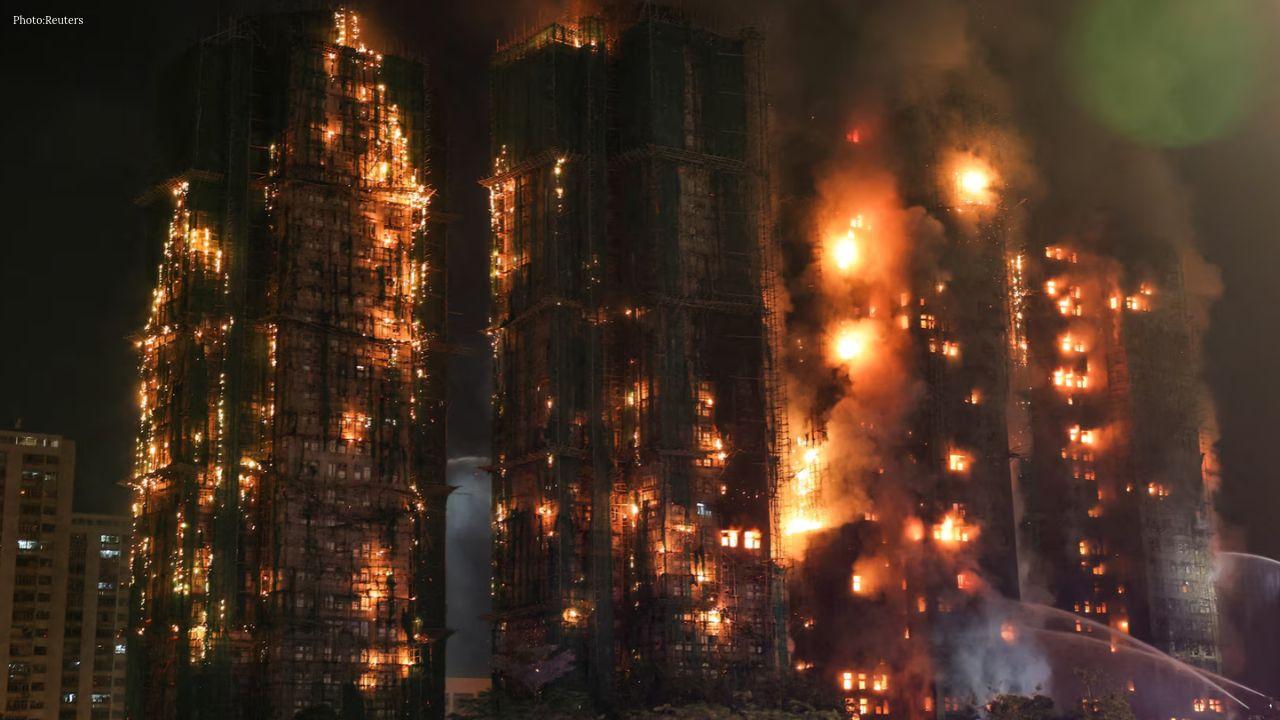
HONG KONG: Housing Secretary Winnie Ho has resigned following an independent investigation into the devastating fire at Wang Fuk Court in Tai Po, Hong Kong, which killed 168 people on November 26, 2025. The resignation marks the first departure of a senior government official directly linked to political accountability for the disaster. Hong Kong Chief Executive John Lee announced the development on October 29, 2026, while publicly apologising to residents affected by the tragedy. He also outlined plans for extensive reforms to the city’s building renovation, inspection and fire safety systems after the release of a major investigation report identifying serious shortcomings across several government departments. The fire swept through seven 31-storey residential blocks at the Wang Fuk Court housing complex while renovation work was underway. The disaster destroyed homes, forced thousands of residents to leave the estate and became Hong Kong’s deadliest fire since 1948. The independent committee’s findings raised concerns about failures in supervision, regulatory gaps, the handling of fire hazards and the responsibilities of both private contractors and government agencies. The report described a wider pattern of problems in the way building maintenance and renovation work was regulated.
The disaster occurred on November 26, 2025, at Wang Fuk Court, a residential estate in Tai Po, an area in Hong Kong’s New Territories. The complex was undergoing extensive renovation work when a fire spread through seven of its eight residential towers. The buildings were 31 storeys high, and the estate housed thousands of residents. The scale of the fire, combined with the difficulties of escaping from the affected buildings, contributed to the enormous loss of life. A total of 168 people died. The estate had more than 4,600 residents, including approximately 1,700 people aged 65 or older. Of those who died, 114 were aged 65 or above, representing roughly 70 per cent of the fatalities. The fire also left thousands of people displaced after their homes became uninhabitable. Residents faced the loss of family members, homes and personal belongings, while authorities had to arrange assistance and longer-term housing support for those affected. The tragedy raised urgent questions about how renovation work was being monitored, whether potentially dangerous materials were being used safely and whether fire hazards had been identified and addressed before the disaster.
Winnie Ho’s resignation followed the publication of findings concerning the government’s oversight of the renovation project. The Housing Bureau’s Independent Checking Unit was identified as the government body bearing the greatest responsibility among the four agencies criticised in the report for weaknesses in supervision. However, Chief Executive John Lee made an important distinction between political accountability and personal wrongdoing. He said that the incident within the unit’s remit did not involve personal fault or misconduct, but he believed the housing secretary should nevertheless take political responsibility. In government, political accountability can involve a minister or senior official accepting responsibility for failures within their policy portfolio, even where investigators have not established that the official personally committed misconduct. Lee said the decision was made after considering the officials’ responsibilities, their respective policy areas and other relevant factors. He also announced that an independent team would examine which officials should be held accountable and whether disciplinary action was appropriate.
The decision is significant because the investigation did not focus exclusively on the actions of contractors or the immediate circumstances in which the fire started. It also examined how public agencies supervised building renovation work, responded to risks and ensured that existing safety rules were followed. The resignation is therefore part of a broader response to the inquiry’s findings. It does not, on its own, establish personal criminal liability or mean that all questions about the responsibilities of individual officials have been resolved. The government’s further investigations are expected to examine the administrative and regulatory failures identified by the committee and determine what additional action may be required.
During the October 29 announcement, Chief Executive John Lee apologised to the residents affected by the disaster and to the wider public. He acknowledged the seriousness of the findings and said the government would pursue extensive reforms in response to the failures identified by the independent committee. The investigation report, which ran to more than 1,000 pages, examined the circumstances of the fire and the way building renovation work was regulated. Its findings raised concerns about inadequate oversight, unclear responsibility and the failure to address foreseeable safety risks. Lee said that the government would work to ensure that the problems identified in the investigation were addressed rather than treated as isolated administrative errors. The reform process is expected to cover multiple areas, including building maintenance supervision, contractor oversight, fire safety arrangements and the handling of complaints about dangerous conditions.
Read Also: South Korea October Exports Forecast to Surge at Fastest Pace Since 1974
The independent committee identified shortcomings involving four government bodies. These included the Housing Bureau’s Independent Checking Unit, the Buildings Department, the Fire Services Department and the Labour Department. Each body has different responsibilities, but the inquiry found that weaknesses across the regulatory system contributed to the circumstances surrounding the disaster.
1. Housing Bureau’s Independent Checking Unit
The Independent Checking Unit was identified as the government body bearing the greatest responsibility among the four agencies criticised in the report for shortcomings in oversight. The unit’s role in monitoring relevant housing renovation work became a central issue in the investigation. The report raised concerns about the supervision of the project and the way risks were assessed. The government has announced that the unit will be abolished and replaced by a new public housing control unit.
2. Buildings Department
The Buildings Department was also criticised over aspects of building renovation oversight and the enforcement of applicable requirements. The investigation highlighted broader weaknesses in how renovation work and potential hazards were monitored. Stronger oversight of contractors and building maintenance practices is expected to form part of the reform process.
3. Fire Services Department
The Fire Services Department was among the agencies whose responsibilities were examined by the committee. The disaster raised questions about fire prevention, the handling of hazards and whether existing arrangements were sufficient to manage the risks associated with large-scale renovation work. Authorities have announced plans for a new, large-scale fire prevention region within the department, intended to focus on contingency planning for high-risk scenarios.
4. Labour Department
The Labour Department was also identified as bearing partial responsibility in the wider regulatory failures described in the report. The investigation examined the conditions surrounding renovation work and the effectiveness of oversight arrangements. The broader reform agenda is intended to address weaknesses in the monitoring and enforcement of safety requirements. The report’s findings do not mean that every official within these departments has been found personally responsible. Further examination is expected to determine whether specific individuals or agencies should face additional administrative or disciplinary consequences.
One of the most significant institutional changes announced after the investigation is the planned abolition of the Independent Checking Unit. Deputy Financial Secretary Michael Wong, who is also acting secretary for housing, said a new public housing control unit would take its place. The replacement unit is intended to cover public rental housing and subsidised-sale housing. Its work will be organised around individual projects, with the aim of improving communication between the organisations involved in housing construction, maintenance and renovation. The proposed structure is intended to make responsibilities clearer and reduce the risk of safety concerns being overlooked because multiple agencies or contractors are involved. The need for such a change emerged from the committee’s wider findings about fragmented supervision and the failure of government bodies to take effective ownership of fire safety concerns. Under the new approach, project-based oversight is expected to help officials coordinate information, monitor renovation activity and identify problems that require action.
The independent investigation examined both the likely source of the fire and the conditions that allowed it to spread across multiple residential towers. According to reporting on the committee’s findings, a discarded cigarette was identified as the likely ignition source. The investigation also highlighted the role of combustible materials used during renovation work, including polystyrene foam boards and scaffolding netting. These materials raised concerns because they could contribute to the rapid spread of flames when used or installed in unsafe conditions. The report identified regulatory gaps that had allowed serious risks to remain insufficiently controlled. These included the absence of a construction-site smoking ban at the time of the fire and inadequate standards or enforcement relating to certain temporary combustible materials.
The independent committee described the disaster as the result of systemic problems across several areas of building renovation and regulation. The report identified what it characterised as a widespread lack of urgency in responding to foreseeable risks. It also found that no government department had taken effective ownership of various fire safety issues, leaving complaints about hazards without an effective response. This finding raises questions about how government departments communicate, share information and determine which agency must act when a safety problem crosses administrative boundaries. A fragmented system can make it difficult to establish responsibility. If one agency assumes another is dealing with a complaint, a dangerous condition may remain unresolved. The committee’s findings suggest that such weaknesses were among the broader problems exposed by the disaster. The investigation also considered the role of private contractors, consultants and other participants in the renovation process. It described a wider environment of unlawful and questionable construction practices, including alleged bid-rigging and links between some participants and organised crime groups.
The investigation identified Prestige Construction & Engineering Co Ltd, the main contractor, and Will Power Architects Co Ltd, the project consultant, as bearing primary responsibility for the renovation-related failures described in the report. Authorities have brought legal proceedings involving the two companies and seven individuals. Reported charges include manslaughter, conspiracy to defraud, money laundering and tax evasion. The allegations are serious, but charges are not the same as convictions. The accused parties’ criminal liability must be determined through the relevant legal proceedings. Government departments have also pursued enforcement action relating to renovation work and workplace safety. Official information published in September 2026 reported a total of 284 prosecutions connected with the Wang Fuk Court incident, comprising 259 repair-work-related offences and 25 occupational safety charges. The legal proceedings form one part of the response to the disaster. The independent committee’s work examined broader systemic issues, while prosecutors and relevant authorities are responsible for pursuing alleged offences through the legal process.
One of the major recommendations highlighted in the inquiry concerns the alleged manipulation of construction and renovation tenders. Bid-rigging occurs when participants in a tender process coordinate their actions to undermine genuine competition. Such arrangements can affect which contractor wins a project, the price paid for the work and the quality of services delivered. The committee’s report described alleged unlawful practices within parts of the renovation sector as a wider, entrenched problem. It also referred to possible links between some participants and organised crime groups. The report recommended legislation to criminalise bid-rigging in the construction industry, with proposed penalties of up to HK$10 million in fines and 10 years’ imprisonment. These are proposed legal measures, rather than penalties that should be assumed to apply automatically to every case. Any new legislation would need to be enacted through the appropriate legal process, and specific liability would depend on the facts and the law. The recommendation reflects concerns that weak competition and questionable contracting practices can undermine public safety when they affect the quality, supervision or execution of building work.
Alongside changes to housing oversight, the government has announced additional steps to strengthen fire prevention. Secretary for Security Chris Tang said a new large-scale fire prevention region would be established within the Fire Services Department. The new arrangement is intended to focus on contingency planning for high-risk situations. The initiative reflects the need to prepare for emergencies in densely populated residential areas, particularly where major renovation work or other conditions could increase the danger of a fire. Authorities are also exploring the development of a mobile application that could alert residents when a fire breaks out. Such a system could potentially help people receive emergency information more quickly, although the details and implementation arrangements would need to be confirmed. The investigation’s findings have drawn attention to the importance of effective warnings, reliable fire alarms and clear evacuation procedures.
The independent committee undertook an extensive review of the fire, the renovation project and the regulatory framework governing building maintenance. During its work, the panel held 30 days of hearings and heard from 80 witnesses. Those who provided evidence included residents, property management representatives, renovation personnel, engineers, fire safety specialists, government officials and regulators. The committee also examined a substantial volume of written submissions, technical material and other records. Reports stated that the investigation involved more than one million files and submissions. This evidence-gathering process was intended to establish what happened, identify the factors that contributed to the disaster and determine whether existing procedures had been adequate. The committee’s findings covered the immediate fire risks as well as wider questions about regulation, supervision and accountability.
Winnie Ho’s departure is an important development, but it does not mark the end of the government’s response to the disaster. An independent team is expected to examine which officials should be held accountable and whether disciplinary action is warranted. The review will consider responsibilities across the agencies identified in the committee’s report. At the same time, the steering committee led by Eric Chan will oversee the government’s reform programme. The proposed changes include replacing the Independent Checking Unit, improving the supervision of renovation work, strengthening fire prevention and addressing alleged bid-rigging in the construction industry.





South Korea October Exports Forecast to Surge at Fastest Pace Since 1974
South Korea exports are forecast to surge in October as AI demand, rising memory chip prices and sem

Meta Launches Muse AI Agent in Singapore for Shopping and Travel
Meta Muse AI agent launches in Singapore to help users shop, plan travel and manage emails through c

SpaceX Signs $40 Billion Apollo Deal to Finance AI Chips
SpaceX has entered a $40 billion deal with Apollo for AI chip and data centre hardware financing, su

Rybakina Retains Ningbo Title Ahead of WTA Finals Defence
Elena Rybakina beats Leylah Fernandez to retain the Ningbo Open title, building momentum ahead of he

South Africa Paceman Anrich Nortje Ruled Out of Third Test
Anrich Nortje misses the third Test against Australia with a groin injury as South Africa prepare fo

Mumbai Indians Appoint Kieron Pollard as Head Coach for 2027 IPL
Mumbai Indians appoint Kieron Pollard as head coach for IPL 2027, replacing Mahela Jayawardene as th