You have not yet added any article to your bookmarks!
Join 10k+ people to get notified about new posts, news and tips.
Do not worry we don't spam!
Post by : Saif Rahman
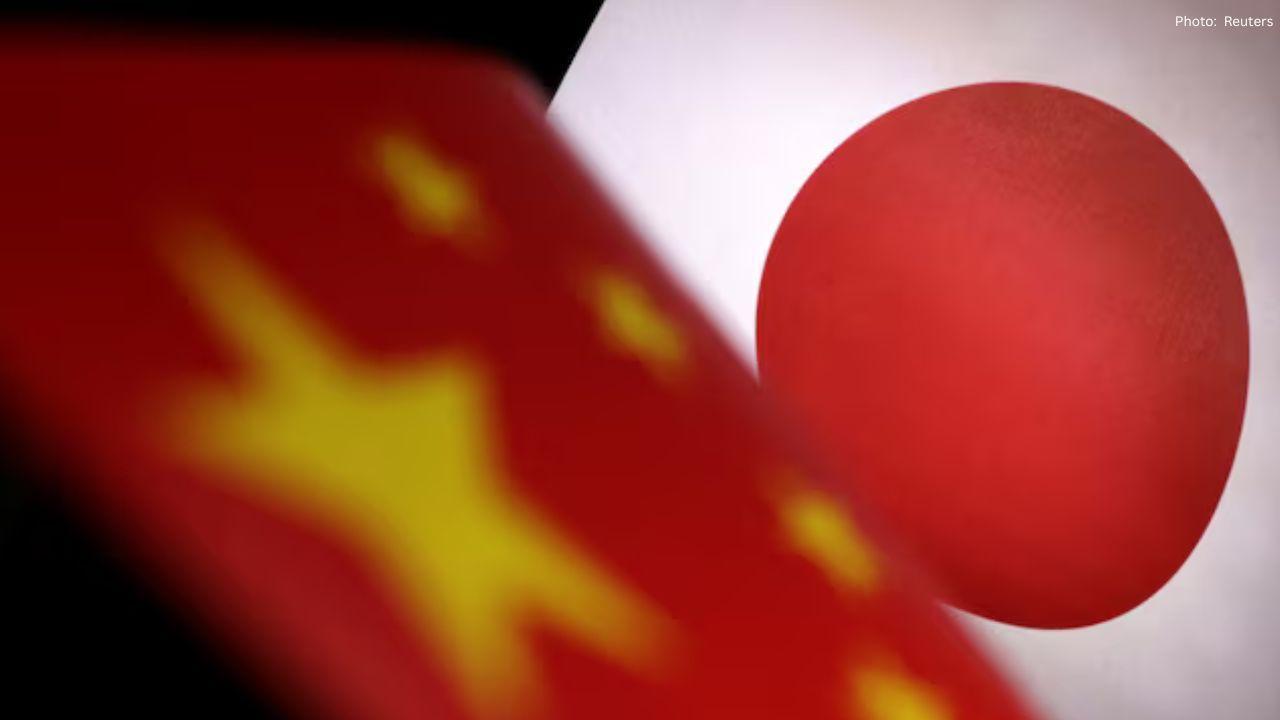
In a notable move, China has prohibited the export of certain dual-use items to Japan that could be utilized for civilian and military applications. This decision arises amidst escalating tensions regarding Taiwan, primarily influenced by comments made by Japanese Prime Minister Sanae Takaichi.
The banned “dual-use” items encompass goods, technologies, and software that are applicable in both civilian and military contexts. Rare earth elements, essential for the production of drones and computer chips, are key examples. As reported by China's commerce ministry, this ban specifically targets military applications that may enhance Japan’s defense capabilities. Those infringing upon this regulation will encounter legal repercussions.
This restriction follows Prime Minister Takaichi's remarks, which hinted that a Chinese aggression towards Taiwan could represent a significant threat to Japan. Beijing condemned these statements as “provocative,” questioning Japan’s motives and suggesting they might serve as justification for bolstering Japan's military forces and overseas endeavors.
The relationship between China and Japan has been strained, especially after Japan ratified a record defense expenditure plan in December, escalating its military budget by 3.8% to reach 9 trillion yen (approximately $57.7 billion). Additionally, Japan has eased arms export limitations, pursued the development of offensive weaponry, and is making adjustments to its long-held non-nuclear policies.
Historically, China has employed export restrictions as a diplomatic strategy. Over ten years ago, it limited rare earth exports to Japan during a similar conflict. Recent customs statistics indicate that rare earth exports to Japan have not yet diminished; in fact, November 2025 saw a 35% spike, hitting a monthly record at 305 metric tons.
Analysts believe this ban serves as a warning from China, intended to exert pressure on Japan while deterring actions Beijing perceives as threatening to its sovereignty over Taiwan. Concurrently, it could affect Japan’s access to critical resources vital for technological and defense production.
This development underscores the tenuous equilibrium in East Asia, where diplomatic discourse, defense expenditures, and trade restrictions are significantly interconnected. The international community will closely monitor Japan's reaction to the ban and the potential for further deterioration in relations between the two countries.









PSG Coach Luis Enrique Urges Players to Step Outside Comfort Zone
PSG coach Luis Enrique says players must leave their comfort zone and keep improving as the club tar

China’s Tiangong Sets New 400m Record at Robot Olympics
China’s Tiangong robot sets a new 400m record at the Robot Olympics, beating a South African robot i

George Russell Wins Dutch GP Sprint, Boosts Mercedes Morale
George Russell wins the Dutch GP Sprint from pole as Mercedes teammate Kimi Antonelli extends his F1

Australia 50/3 After Bangladesh Bowled Out for 64 in Second Test
Australia reached 50/3 after Bangladesh were bowled out for 64 in the second Test, with Mitchell Sta

Jordan Burroughs Returns to Wrestling with 2028 Olympic Dream
Jordan Burroughs returns to wrestling with Real American Freestyle as the Olympic champion eyes a po

Lamborghini Catches Fire on Singapore's ECP, Causing Heavy Traffic
A Lamborghini caught fire on Singapore's ECP, causing heavy traffic and bus delays. No injuries were