
You have not yet added any article to your bookmarks!
Join 10k+ people to get notified about new posts, news and tips.
Do not worry we don't spam!
Post by : Shakul
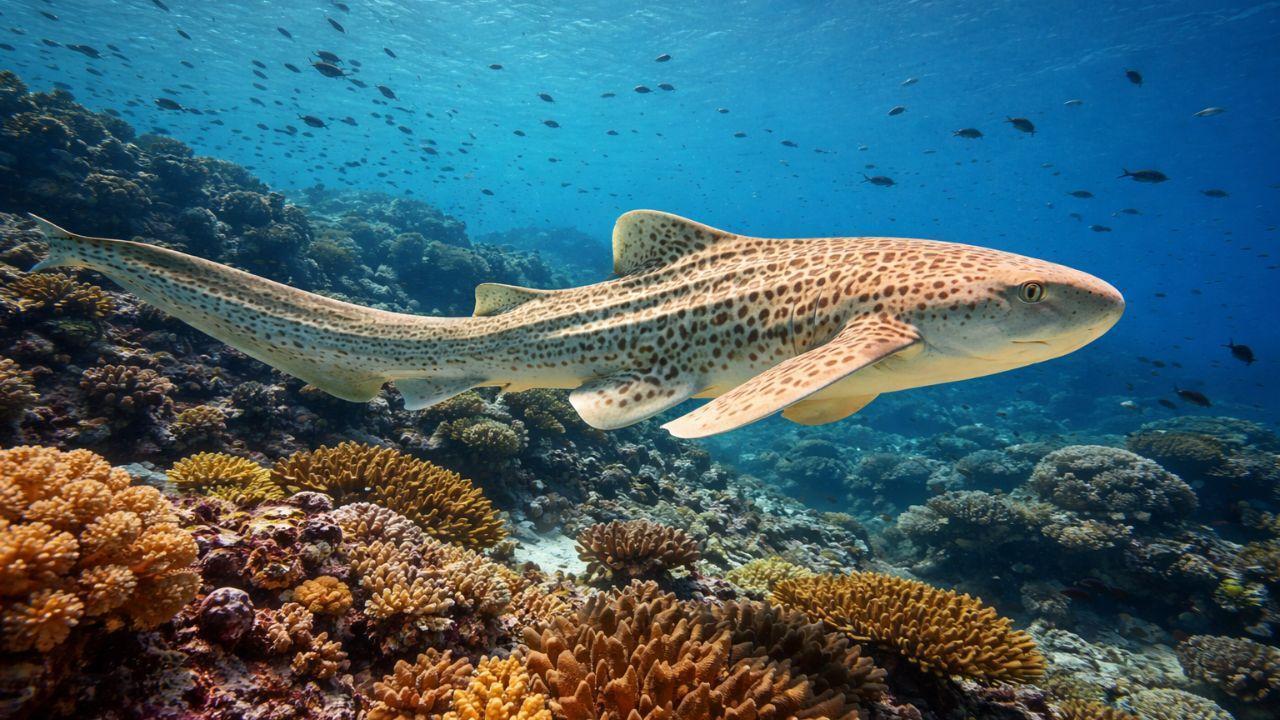
Raja Ampat — Conservationists in Indonesia are accelerating efforts to restore the once‑common zebra shark (Stegostoma tigrinum) to the waters of the Raja Ampat Islands, where the species had declined to near extinction due to overfishing and habitat pressures.
The Coral Triangle region, celebrated for hosting about 75 % of the world’s coral species, also supported vibrant zebra shark populations in its reefs. However, decades of destructive fishing practices — including blast fishing, targeted hunting for meat, fins, and skins — drove sightings down to almost zero. Long‑term monitoring by Conservation International revealed only three individual zebra sharks during more than 15,000 hours of underwater surveys conducted between 2001 and 2021, indicating a functional disappearance of the species from these waters.
To reverse this decline, a global coalition of scientists and conservation organizations have joined the Stegostoma tigrinum Augmentation and Recovery (StAR) project led by the international ReShark group. The initiative represents a globally unprecedented effort to rewild sharks by sourcing zebra shark eggs from accredited aquariums worldwide — including facilities in Australia, the United States and Europe — and rearing them to release size in specially designed hatcheries on Kri Island.
At the Raja Ampat Research and Conservation Centre (RARCC), zebra shark eggs are carefully incubated until they hatch. After hatching, the juvenile sharks are moved into nursery pens where they learn essential survival skills like foraging. Their growth and health are continuously monitored, and each shark is fitted with tracking tags prior to release.
As of late January 2026, 57 zebra sharks have been successfully released into Raja Ampat’s protected waters. The most recent release — of a shark named Morin — was conducted by the Governor of Southwest Papua, highlighting the increasing involvement of regional authorities in conservation efforts.
Beyond rewilding, community engagement forms a central pillar of the project. Local educators are spreading awareness about the ecological significance of zebra sharks, especially among schoolchildren and fishing communities — groups historically involved in shark consumption. Early signs suggest that villagers are not only reporting sightings but also advocating for protection among their peers and families.
Conservation leaders emphasize that protecting zebra sharks requires long‑term, science‑based strategies that extend beyond rearing and release. This includes safeguarding coral reefs and seagrass meadows — the essential habitats of many marine species — from threats posed by tourism infrastructure and unregulated anchoring. To that end, regulations mandating mooring usage and fees in Marine Protected Areas are now in place to reduce reef damage and directly fund local conservation management.
The combined efforts of scientists, governments, local communities, and international partners signal hopeful progress for one of the Coral Triangle’s most iconic predators — a species on the cusp of returning home.










PM Modi Pays Tribute to Mahatma Gandhi, Urges People to Support Khadi
PM Modi pays tribute to Mahatma Gandhi on Gandhi Jayanti and urges citizens to support Khadi and the

Amazon Seeks to Offload $8 Billion in Nvidia Chips to Investors
Amazon plans to move $8 billion in Nvidia chips to investors, using a new financing model to strengt

Samsung Raises Galaxy S26 Prices as Memory Chip Costs Rise
Samsung raises Galaxy S26 prices in South Korea as rising memory chip costs put pressure on smartpho

Lewis Hamilton Calls Singapore Grand Prix One of F1's Toughest Races
Lewis Hamilton discusses the demanding Singapore Grand Prix and brings Plus44 and Almave to Singapor

Denmark's Pandora Opens World's Largest Jewellery Factory in Vietnam
Pandora opens its largest jewellery factory in Vietnam, expanding global production, strengthening s

Gautam Gambhir Questions Batting-Friendly Pitches After India's Record ODI Chase
Gautam Gambhir questions batting-friendly ODI pitches after India’s record chase, calling for a bett

