You have not yet added any article to your bookmarks!
Join 10k+ people to get notified about new posts, news and tips.
Do not worry we don't spam!

Post by : Meena Ariff
The long-standing debate of which Indian metropolis offers better safety for women — Delhi or Mumbai — continues to spark discussions. Seasoned residents express strong views based on their unique experiences. This dialogue has gained momentum with the launch of Delhi Crime 3, where cast members Shefali Shah, Rasika Dugal, and Sayani Gupta shared their thoughts on safety in urban settings, gender dynamics, and structural factors.
Concerns Over Delhi’s Safety
Delhi has consistently come under fire regarding safety aspects, especially for women moving through public areas after dark. Early closing times for areas contribute to a feeling of exposure, even for locals. Shefali Shah, portraying DCP Vartika Chaturvedi, revealed her limited comfort navigating Delhi.
“Unless I'm working, I hesitate to venture out. Even invitations for dinner from close friends are typically met with refusal. Leisure outings in Delhi are rare for me,” she detailed.
She emphasized that the stigma surrounding Delhi's safety is amplifying cultural factors. Shah highlighted issues related to personal boundaries, intensifying unease during interactions with strangers in public places.
“It's beyond just crime. People often overlook personal space. A small incident can escalate into something serious quite rapidly,” she added.
Despite its reputation, she clarified that criminal activities are not exclusive to Delhi. “This is not just a Delhi issue. Unfortunately, this occurs everywhere. While Delhi Crime portrays stories rooted here, crime networks extend nationwide,” Shah remarked.
Contrast Between Youthful Naivety and Adult Realism
Sayani Gupta, who has both studied and lived in Delhi, reminisced about the difference between youthful bravery and the awakening of adult consciousness. She recalled feeling secure roaming areas like Pragati Maidan in her teens, yet acknowledged the insights that come with age.
“At 20, I felt invincible, but now I recognize the risks I took blithely. Youth breeds bravery but doesn’t eliminate fear,” she noted.
Gupta asserted that Mumbai delivers a stronger sense of safety and independence for women. The city’s vibrant life and focus on individualism allow women to engage without the continual need for caution.
“Mumbai stands out as the safest city for women. The worries about timing or attire are absent. People concentrate on their own pursuits instead of watching others,” Gupta explained.
Rasika Dugal on Urban Infrastructure and Safety
Rasika Dugal, who plays IPS Neeti Singh, emphasized that a city’s infrastructure often defines safety over the mindset of its residents. Her university years in Delhi were characterized by caution and vigilance.
“I found it essential to remain alert at every turn. The prevailing image of the city limited my options for social engagement. It wasn't merely my own feelings; the narration around Delhi shaped my experiences,” Dugal said.
She expressed that Mumbai's perceived safety is due to practical elements: trustworthy public transport, 24/7 activity, and busy streets create a natural layer of security, minimizing harassment chances.
“Mumbai feels more secure because it’s always alive, with people watching from the streets, and a solid public transport system. Altering these factors would likely shift this perception,” she explained.
The Multifaceted Notion of Safety
All three actors agreed that safety comprises various aspects, including social norms, infrastructure, and personal awareness. Although Delhi is often labeled as unsafe, it doesn’t mean it is inherently riskier than other urban environments. On the other hand, Mumbai’s image of safety is bolstered by its planning and lifestyle, rather than just its inhabitants.
“Delhi Crime 3 transcends the narrative specific to Delhi. Criminal incidents are widespread across India, reminding us that urban safety is an intricate issue, not confined to a single city.”
The upcoming season of this highly regarded series, directed by Tanuj Chopra, dives into key societal challenges, such as human trafficking and gender-based violence. Featuring Shefali Shah, Rasika Dugal, Sayani Gupta, and Huma Qureshi, the series continues to scrutinize the struggles law enforcement faces while tackling systemic crimes nationwide. Viewers can catch Delhi Crime 3 on Netflix starting November 13.









Lamborghini Catches Fire on Singapore's ECP, Causing Heavy Traffic
A Lamborghini caught fire on Singapore's ECP, causing heavy traffic and bus delays. No injuries were

Bangkok Airport Duty-Free Area Flooded by Pipe Burst
A burst water pipe flooded the duty-free shopping area at Bangkok's Suvarnabhumi Airport on July 16,
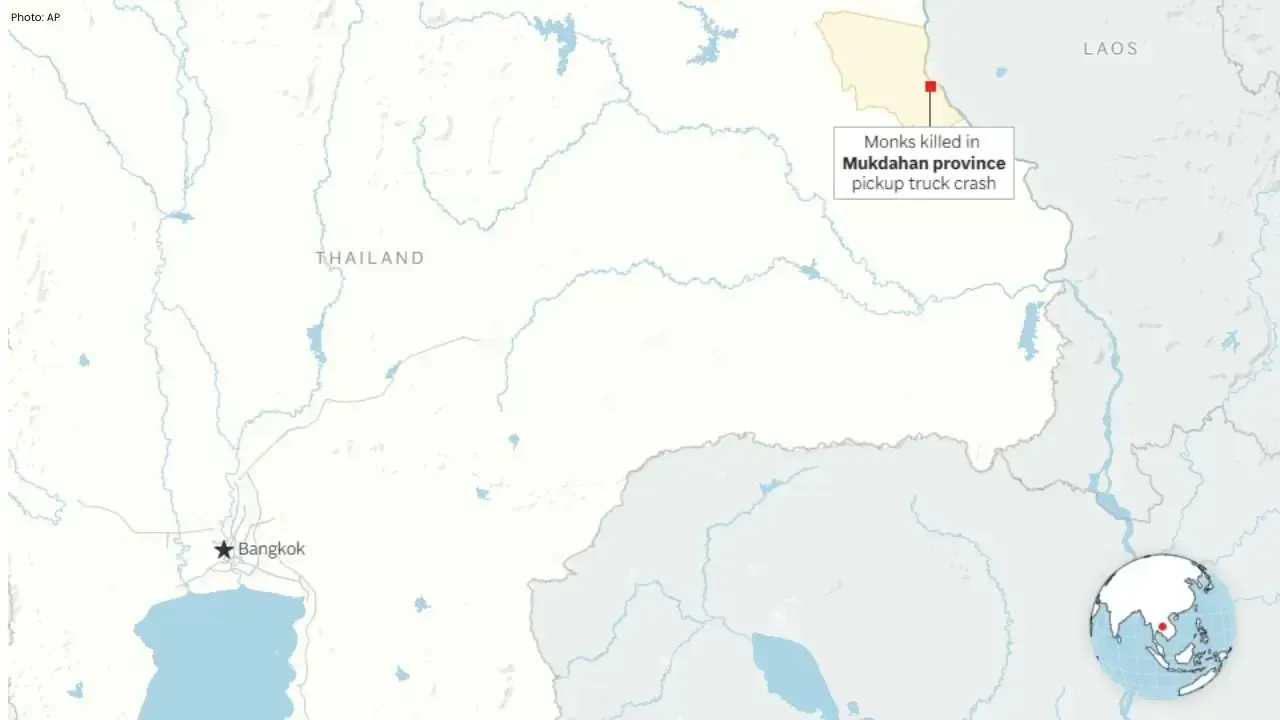
Nine Monks Killed in Thailand Pickup Truck Tragedy
An 11-year-old boy driving a pickup truck crashed into monks during a pilgrimage in northeastern Tha

Anwar Congratulates Xi on CPC's 105th Anniversary
Malaysia reaffirms strong ties with China as PM Anwar Ibrahim sends a congratulatory letter to Presi

Thai Agriculture Team Reviews 2026 Farm Development Plans
Agriculture Ministry officials inspected livestock and organic rice projects in Nakhon Sawan to moni

Thailand, Canada Boost Ties in PM-Level Phone Talks
Thailand and Canada agreed to strengthen trade, security, OECD cooperation and ASEAN-Canada FTA talk