
You have not yet added any article to your bookmarks!
Join 10k+ people to get notified about new posts, news and tips.
Do not worry we don't spam!
Post by : Anis Farhan
For centuries, human beings have traveled to witness wonders—natural landscapes shaped over millennia and cultural landmarks forged through generations. Yet, in the early decades of the 21st century, a sobering reality has emerged: some places may not survive long enough for future travelers to experience them. Climate change, environmental degradation, political instability, rising sea levels, and unchecked tourism are converging to threaten destinations across continents.
By 2030, several iconic locations may be permanently altered, severely restricted, or entirely inaccessible. Some may vanish beneath the ocean, others may close to protect fragile ecosystems, while a few could be lost due to war or irreversible decay. This article examines places that the world may lose—not as distant hypotheticals, but as urgent warnings unfolding in real time.
A Natural Wonder Under Extreme Stress
The Great Barrier Reef, the largest coral reef system on Earth, stretches over 2,300 kilometers and is visible from space. It supports thousands of marine species and is vital to Australia’s ecology and economy. However, it is also one of the most climate-vulnerable ecosystems on the planet.
Repeated marine heatwaves have caused mass coral bleaching events, with scientists warning that most living coral could disappear within a decade if warming trends continue. Even now, large sections of the reef are considered ecologically collapsed. While conservation efforts exist, recovery may not keep pace with rising ocean temperatures.
A City Slowly Sinking
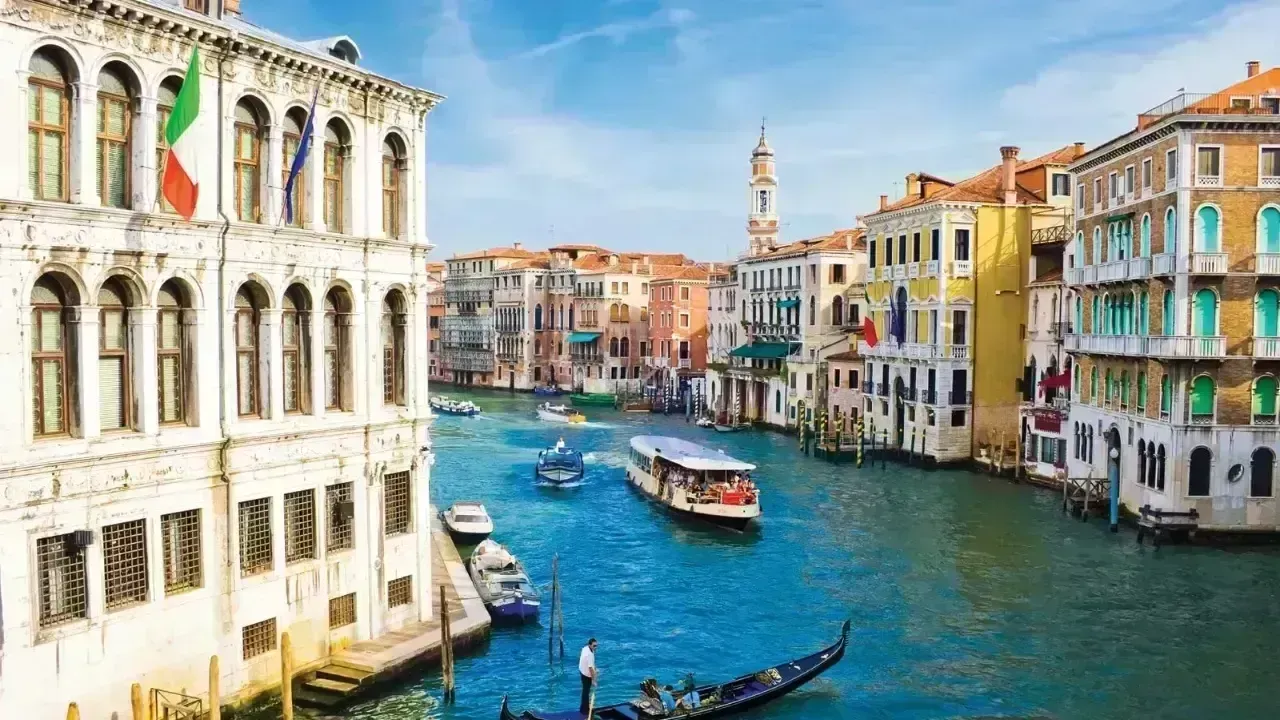
Built on wooden piles driven into a lagoon, Venice has defied gravity and time for centuries. Today, it faces its greatest challenge yet: rising sea levels combined with land subsidence.
Frequent flooding events, known as acqua alta, already inundate major landmarks. While flood barrier systems have reduced some risks, scientists warn they may not be sufficient long-term. Authorities have introduced tourist caps and entry fees, and by 2030, Venice could become a highly restricted city, accessible only to residents and limited visitors.
A Nation at Risk of Disappearing
The Maldives is composed of over 1,000 coral islands, most rising barely one meter above sea level. It is considered the world’s lowest-lying country.
Sea-level rise, coastal erosion, and saltwater intrusion threaten both infrastructure and freshwater supplies. Some islands have already been abandoned. By 2030, parts of the Maldives may be uninhabitable, with tourism restricted to artificial islands or luxury developments engineered to resist flooding.
A Park Losing Its Namesake
When Glacier National Park was established in 1910, it contained more than 150 glaciers. Today, fewer than 25 remain.
Climate scientists estimate that most remaining glaciers could vanish within the next few years. While the park itself will remain open, the very landscapes that define it may disappear, permanently altering hiking routes, ecosystems, and visitor experiences.
A Sea That Is Literally Dying
Bordering Israel and Jordan, the Dead Sea is famous for its extreme salinity and buoyancy. It is also shrinking at an alarming rate—nearly one meter per year.
Water diversion from the Jordan River and climate evaporation have caused massive sinkholes along the shoreline. Resorts and beaches have closed as land collapses unpredictably. By 2030, large portions of the Dead Sea may be inaccessible or unsafe for visitors.
A Country Preparing for Exile
The Pacific island nation of Tuvalu sits just above sea level. Unlike tourist-heavy Maldives, Tuvalu lacks resources for massive engineering solutions.
The government has openly discussed digital nationhood—preserving sovereignty online as land disappears. By 2030, much of Tuvalu may be permanently flooded, forcing mass relocation and ending tourism altogether.
A Victim of Its Own Fame
The ancient Incan city of Machu Picchu draws millions of visitors annually. However, its mountain setting makes it extremely vulnerable to erosion and landslides.
Authorities have already limited daily visitors and temporarily closed trails. Climate-driven rainfall intensifies structural risk. By 2030, access may be far more restricted—or suspended entirely during long conservation periods.
A Vanishing Landscape
The Arctic is warming nearly four times faster than the global average. Sea ice that once defined polar travel routes is thinning rapidly.
By 2030, traditional ice landscapes, polar wildlife habitats, and seasonal ice roads may disappear. Arctic tourism may shift to ships only, while many land-based experiences vanish completely.
Culture Lost to Conflict
Historic sites such as Palmyra once stood as monuments to early civilization. Years of war have devastated many of them.
Beyond physical destruction, unexploded ordnance, political instability, and lack of restoration resources make many areas unsafe. By 2030, some sites may exist only in photographs and archives.
Approaching a Tipping Point
The Amazon Rainforest is often called the “lungs of the Earth.” Scientists warn that deforestation could push it past a point of no return.
As ecosystems collapse and indigenous lands are threatened, governments may restrict access to prevent further damage. By 2030, large tracts may be closed to tourism—or transformed into degraded savannah.
These locations are not just travel highlights; they are ecological anchors, cultural archives, and living systems. Their loss represents not only missed vacations but irreversible damage to planetary heritage.
Most threats described are human-driven. Policy decisions made today—about emissions, conservation, tourism, and conflict—will determine whether these places survive or vanish.
The idea that iconic places may disappear within a single generation is no longer alarmist—it is realistic. By 2030, some destinations may be underwater, off-limits, or fundamentally altered. Travel, once seen as harmless exploration, now carries responsibility.
Seeing the world has never been more meaningful—or more urgent. The question is no longer where we want to go, but whether those places will still exist when we get there.
Disclaimer:
This article is based on current scientific research, environmental assessments, and policy trends. Projections may vary depending on global action, conservation success, and geopolitical developments.








Google Signs 3.6-GW Power Deal With Constellation Energy in US
Google signs a 3.6-GW power deal with Constellation Energy, including nuclear power upgrades to supp

Harmanpreet Kaur Steps Down as India Captain Across All Formats
Harmanpreet Kaur steps down as India captain across all formats after a remarkable leadership journe

Michael Bracewell Chooses Casual Contract, Targets BBL Opportunity
Michael Bracewell moves to a casual contract as he eyes a BBL opportunity while remaining available

Tuchel Says Alex Scott Can Challenge Declan Rice for England Midfield Spot
Thomas Tuchel says Alex Scott can challenge Declan Rice for an England midfield place after his impr
Air Quality Turns Unhealthy in Central and Western Singapore Amid Haze
Singapore haze pushes PSI above 100 in central and western areas as smoke from regional hotspots rai

PM Modi Pays Tribute to Mahatma Gandhi, Urges People to Support Khadi
PM Modi pays tribute to Mahatma Gandhi on Gandhi Jayanti and urges citizens to support Khadi and the

