You have not yet added any article to your bookmarks!
Join 10k+ people to get notified about new posts, news and tips.
Do not worry we don't spam!
Post by : Anis Farhan
For generations, coastal communities have lived in harmony with the sea. It provided food, trade routes, livelihoods, and cultural identity. Today, that same sea is becoming a source of fear. Across Asia’s coastlines, the water is no longer predictable. It arrives earlier, rises higher, and leaves behind devastation instead of sustenance.
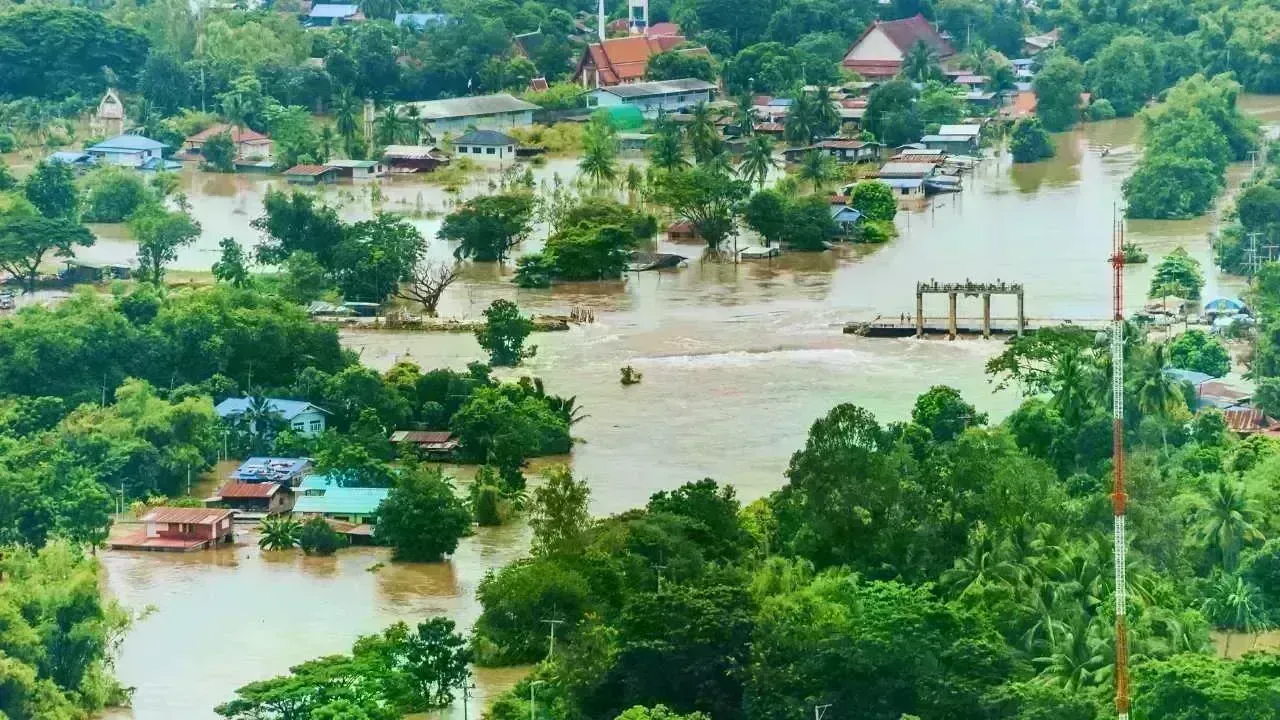
From Sri Lanka’s submerged villages to Indonesia’s flooded cities, the story is repeating itself. Torrential rain, swollen rivers, and rising tides are overwhelming outdated infrastructure and fragile housing. The images are familiar — overturned buses, knee-deep streets, rescue boats where cars once drove — but the pattern is alarming.
What was once called “rare” is now routine.
India, with its massive coastline and millions living just metres above sea level, stands in the path of the same threat. The lessons emerging from neighbouring countries are not theoretical. They are paid for with lives, livelihoods, and years of lost progress.
The question is no longer whether flooding will get worse.
It is whether we will be ready when it does.
Floods are no longer isolated incidents. They are part of a larger crisis gripping the entire region.
Monsoon systems and tropical storms now behave unpredictably. Rain remains concentrated instead of spreading evenly. Storm systems linger instead of dispersing. Tides rise in response to melting ice thousands of kilometres away.
Nothing responds as it used to.
Coastal regions are experiencing:
Longer rain spells
More intense storm surges
Higher tides pushing inland
Faster erosion of shorelines
Overflowing rivers without warning
The geography hasn’t changed.
The climate has.
Cities expanded rapidly along coastlines. Homes, factories, ports and highways were built without accounting for flooding patterns.
Construction often:
Blocked natural drainage
Narrowed river passages
Destroyed mangroves
Replaced wetlands with concrete
Floodwater now has nowhere to go.
When the rain comes, the streets become rivers.
Sri Lanka’s recent flood experience exposed dangerous weaknesses hiding beneath the surface.
Weather alerts reached authorities, but evacuation struggled. Villages lacked shelters. Transport networks collapsed. Emergency supplies failed to reach flooded zones quickly.
Information existed.
Preparedness did not.
Sirens do not save lives if roads collapse.
Thousands lived in flood-prone areas with:
Weak walls
Tin roofs
Poor drainage
Ground-level floors
Floodwater damaged everything within hours — documents, electronics, crops, furniture.
Recovery was not just emotional.
It was financial collapse.
Relief did not flow smoothly. Logistics were choked by destroyed roads and displaced communities.
The lesson was brutal:
Infrastructure is relief’s lifeline.
Without strong roads, evacuation centres and storage systems, no rescue plan survives reality.
Indonesia’s experience was different — but equally alarming.
Urban centres built on low-lying land are experiencing:
Land subsidence
Rising sea levels
Groundwater collapse
Erosion
Buildings lean. Roads crack. Harbours flood under normal tides.
In some areas, the sea is already reclaiming what humans built.
Drainage designs built decades ago cannot handle modern rainfall volumes.
Water has:
Nowhere to drain
Too many blocked outlets
No natural floodplains
Urban floods now arrive within minutes of rain.
By the time umbrellas open, basements are underwater.
Entire neighbourhoods are being moved away from drowned zones.
Relocation was once a theory.
Now it is happening.
Governments are learning that rebuilding in the same vulnerable locations is not recovery.
It is repetition.
India shares geography, climate exposure and economic pressure with its Asian neighbours.
The same flood risks exist here.
The same mistakes are being made.
Weather departments may predict rain accurately — but preparedness determines survival.
India must move beyond forecasting.
It must implement:
Local evacuation maps
Flood safe shelters
Emergency medical teams
Resource mapping
Ground-level contact systems
Numbers on screens do not move people.
Planning does.
Slum communities and coastal housing clusters face the greatest damage. Homes are built in flood basins, beside rivers, or on reclaimed land.
A floodproof policy means:
Regulating construction zones
Building elevated foundations
Promoting flood-resistant materials
Incentivising safe redesign
Prevention costs less than reconstruction.
Sri Lanka and Indonesia both learned this painfully:
Where mangroves were preserved, floods hit softer.
Where they were erased, destruction was total.
India must prioritize:
Replanting mangrove forests
Protecting coastal wetlands
Regulating beachfront development
Nature reduces the force of disaster better than concrete alone.
Cities must:
Redesign stormwater systems
Clear water channels
Adopt permeable roads
Protect river beds from encroachment
Water cannot be wished away.
It must be guided.
People do not evacuate without:
Clear instructions
Safe routes
Trust in authorities
Supplies on arrival
Sri Lanka’s experience proved something crucial:
People flee disaster only when safety feels guaranteed.
India must build not just infrastructure —
But confidence.
Coastal families are altering routines:
Stocking emergency supplies
Elevating furniture
Avoiding night travel
Monitoring alerts daily
Investing in insurance
Flood season now changes behaviour.
Not planning is no longer an option.
Floods destroy more than buildings.
They crush:
Local economies
Fisheries
Agriculture
Tourism
Employment
Recovery is slow when entire industries stall.
Currency cannot replace livelihood.
Floods leave behind:
Contaminated water
Mosquito outbreaks
Injuries
Infections
Emotional trauma
The disaster continues weeks after skies clear.
Cleaning is only half the problem.
Healing takes far longer.
The instinct after disaster is to rebuild quickly.
But rebuilding identically recreates risk.
Real recovery:
Relocates danger zones
Redesigns cities
Elevates infrastructure
Reinvents construction policy
Rebuild smarter, not faster.
Neighbourhood networks save lives.
Local volunteers saved more people than distant agencies ever could.
India must empower:
Community rescue groups
Local response training
Volunteer leadership
Disaster education in schools
Prepared citizens outperform slow systems.
Apps, sensors and satellites help.
But they cannot rescue.
Real safety depends on:
Roads
Shelters
Boats
Medical teams
Logistics
Technology supports.
Infrastructure saves.
India is developing faster than its disaster resilience.
Ports expand.
Cities rise.
Housing spreads.
But safety lags.
Every new structure built today becomes:
Either a refuge.
Or a future casualty.
Citizens must insist on:
Transparent risk mapping
Safer housing incentives
Insurance accessibility
Emergency response drills
Sustainable shoreline management
Silence builds disasters silently.
From Sri Lanka to Indonesia, the pattern is clear:
Flooding no longer respects geography, economy or planning documents.
It tests leadership.
It tests cooperation.
It tests preparedness.
Coastal India is not exempt.
It is next in line unless action begins now.
Floods across Asia tell a single story spelled in water and ruin:
Adapt — or drown in denial.
Governments must change.
Developers must change.
Communities must prepare.
The sea is not patient.
And neither is the climate.
Disclaimer:
This article is for informational purposes only and does not constitute legal, medical, or disaster-management advice. Readers should follow official government advisories and local emergency authority guidance during natural disasters.








Jacob Bethell Returns as England Name Squads for Australia Tour
England name ODI and T20 squads for the Australia tour, with Jacob Bethell returning from injury and

Beauden Barrett Opens Up About Mental Struggles During All Blacks Exile
Beauden Barrett discusses his confidence struggles after missing six tests, his return against Austr

IMF Says AI Investment Supports Global Growth Despite Energy Shock
IMF says AI investment is supporting global growth near 3%, with Asian economies benefiting from ris

Will O'Rourke Ruled Out of New Zealand's India Series
New Zealand fast bowler Will O'Rourke will miss the India series with hamstring and calf injuries as

AI Companies Expected to Drive Most US Earnings Growth in Q3
AI companies are expected to drive US third-quarter earnings growth as investors assess tech profits

Money Market Funds See Record Inflows as Global Bond Selloff Intensifies
Global money market funds attract $153.81 billion as bond yields rise, inflation fears persist and i