
You have not yet added any article to your bookmarks!
Join 10k+ people to get notified about new posts, news and tips.
Do not worry we don't spam!
Post by : Shakul
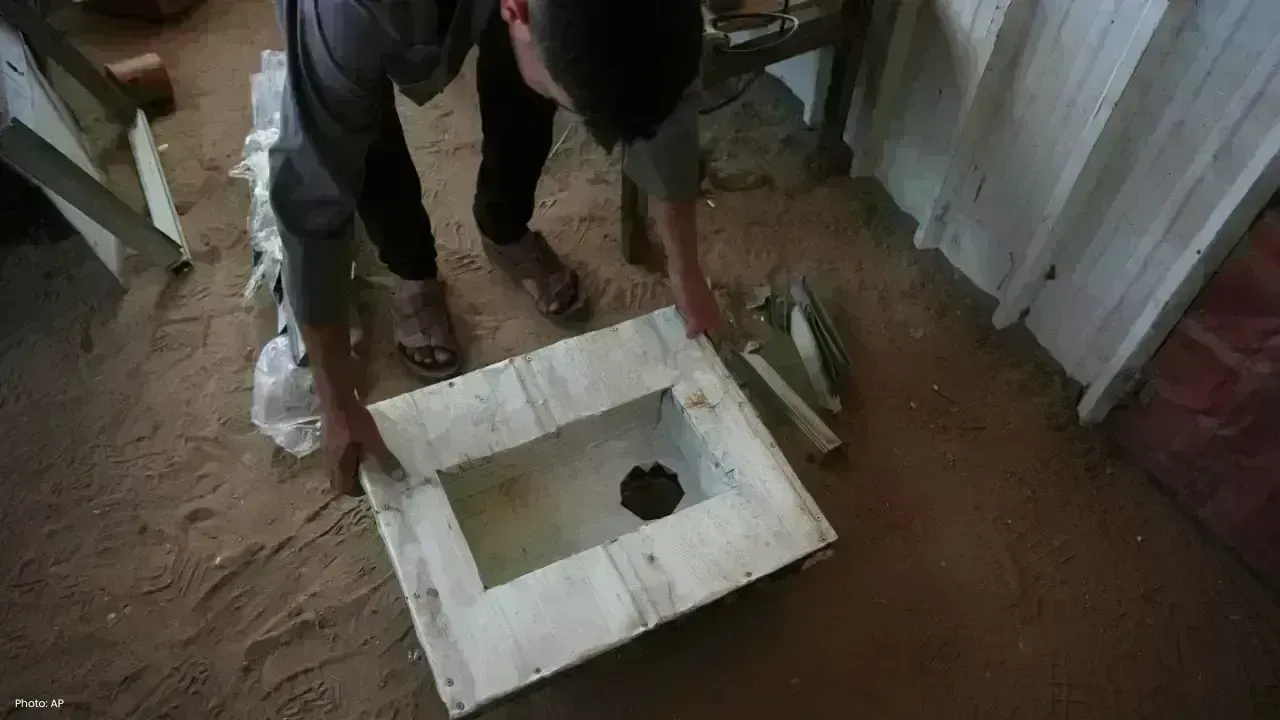
Thousands of displaced Palestinian families living in Gaza's sprawling tent camps are facing increasingly difficult conditions due to the severe lack of proper sanitation facilities. With much of the territory's infrastructure damaged after years of conflict, families are being forced to build makeshift toilets near their shelters, creating major health and hygiene concerns.
In Khan Younis and other displacement camps across southern Gaza, residents have resorted to digging shallow pits in the ground and covering them with improvised toilet seats made from buckets, plastic materials, and scrap metal. These makeshift facilities often sit only a few feet away from living and cooking areas, exposing families to foul odors, insects, and potential disease.
Many displaced residents say they prefer constructing private toilets despite the challenges because communal facilities offer little privacy and are often overcrowded. Women and children face additional difficulties, particularly at night, when accessing shared toilets can become unsafe and uncomfortable. Long queues and unsanitary conditions have become a daily reality for thousands of camp residents.
The sanitation situation has worsened due to widespread damage to Gaza’s sewage infrastructure. Aid organizations report that a large portion of sewage pumping stations and wastewater systems have either been destroyed or severely damaged, causing untreated wastewater to accumulate around residential areas. Pools of sewage and contaminated water have become common sights throughout several camps.
Humanitarian agencies have attempted to improve sanitation conditions by providing limited support for family latrines and hygiene facilities. However, ongoing resource shortages and restrictions on reconstruction efforts have limited the scale of assistance. Many families continue to rely on self-built structures that offer only basic functionality.
The financial burden of building even a simple toilet remains significant for displaced households already struggling with economic hardship. Construction materials such as pipes, cement, and sanitation equipment are expensive and often difficult to obtain. As a result, many residents are forced to use unsafe alternatives that provide minimal protection from contamination.
Aid workers warn that the sanitation crisis poses serious public health risks, particularly for children, pregnant women, and elderly residents. With summer temperatures rising and crowded living conditions persisting, humanitarian organizations continue to call for greater support to improve water, sanitation, and hygiene services across Gaza’s displacement camps.
#Gaza Updates #Middle East Crisis #Middle East Humanitarian Crisis #World News









PM Modi Pays Tribute to Mahatma Gandhi, Urges People to Support Khadi
PM Modi pays tribute to Mahatma Gandhi on Gandhi Jayanti and urges citizens to support Khadi and the

Amazon Seeks to Offload $8 Billion in Nvidia Chips to Investors
Amazon plans to move $8 billion in Nvidia chips to investors, using a new financing model to strengt

Samsung Raises Galaxy S26 Prices as Memory Chip Costs Rise
Samsung raises Galaxy S26 prices in South Korea as rising memory chip costs put pressure on smartpho

Lewis Hamilton Calls Singapore Grand Prix One of F1's Toughest Races
Lewis Hamilton discusses the demanding Singapore Grand Prix and brings Plus44 and Almave to Singapor

Denmark's Pandora Opens World's Largest Jewellery Factory in Vietnam
Pandora opens its largest jewellery factory in Vietnam, expanding global production, strengthening s

Gautam Gambhir Questions Batting-Friendly Pitches After India's Record ODI Chase
Gautam Gambhir questions batting-friendly ODI pitches after India’s record chase, calling for a bett

