You have not yet added any article to your bookmarks!
Join 10k+ people to get notified about new posts, news and tips.
Do not worry we don't spam!
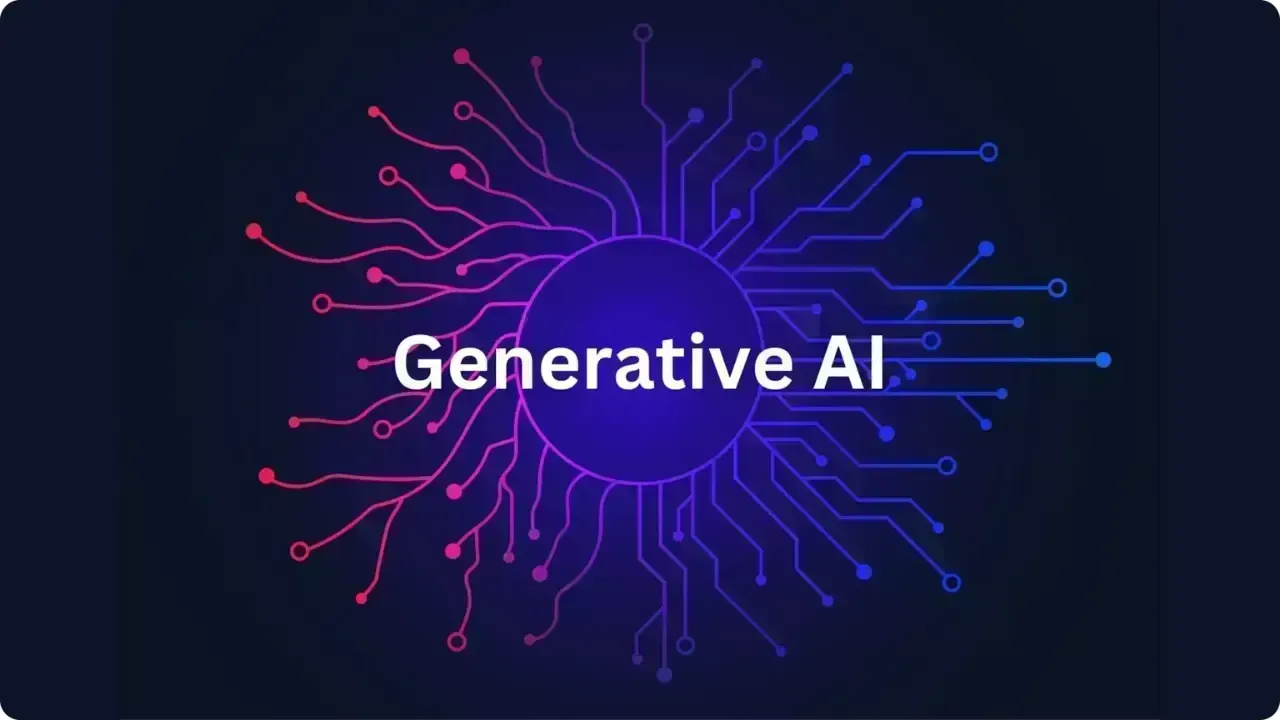
Post by : Anis Farhan
Historically, business growth relied on three main pillars: workforce, processes, and financial resources. Yet, technological advancements introduced a new dimension, with generative AI now taking on an even more substantial role. It's not merely a facilitator of growth; it actively drives it.
Generative AI capabilities extend to writing, designing, analyzing, simulating, and personalizing at scale. Unlike previous automation solutions that adhered strictly to pre-defined instructions, these AI systems learn from patterns, adapt to various contexts, and generate unique outputs. This evolution is altering how companies envision, market, sell, and strategize for their futures.
By 2026, generative AI integrates seamlessly into essential business functions, affecting revenue generation, cost efficiency, and long-haul strategies.
Initially, the focus for businesses was on utilizing AI for cost reduction and improved productivity. However, generative AI has redefined that role. It doesn't just enhance the speed of tasks; it empowers businesses to undertake entirely new initiatives or significantly improve existing processes.
Today’s growth narrative emphasizes flexibility as much as expansion. Generative AI equips organizations with tools to swiftly adapt to market fluctuations, changing consumer behaviors, and competitive pressures, resulting in accelerated learning and agile responses.
One of the most groundbreaking repercussions of generative AI lies in product and service innovation. Historically, product development processes have been lengthy, resource-intensive, and dependent on expert teams. Now, generative AI has drastically expedited these timelines.
Companies leverage AI to devise product concepts, simulate user interactions, test variations, and even create virtual prototypes. This approach encourages broader ideation at reduced costs, enabling early identification of successful concepts.
Innovation is no longer the domain of just large enterprises, as smaller businesses can now harness AI-driven creativity to compete effectively.
Speed to market stands as a key growth influencer, with generative AI redefining this dynamic. Marketing teams leverage AI to design campaigns, adapt messaging for various regions, personalize communications, and conduct real-time testing.
Rather than launching singular campaigns and waiting for weeks to gauge success, businesses can now execute numerous micro-experiments concurrently. AI assesses performance, learns from engagement data, and refines content autonomously.
This paradigm transforms marketing from an episodic task into an evolving system responsive to customer behaviors.
Consumer expectations have transformed. Generic interactions no longer foster loyalty. Generative AI enables hyper-personalization at a previously unattainable scale—previously possible only through manual effort or limited segmentation.
Businesses tailor product recommendations, pricing approaches, onboarding processes, and customer communications according to individual behaviors and preferences. AI-crafted content adjusts its tone, format, and timing automatically.
Such degrees of personalization significantly enhance conversion rates, retention, and lifetime customer value—key components of sustainable growth.
Generative AI is reshaping sales operations. Instead of relying solely on instinct and experience, sales professionals harness AI-generated insights to guide their outreach, negotiation, and follow-ups.
AI systems scrutinize customer data, propose optimal messaging, predict purchase intents, and even generate tailored proposals. This method enables sales teams to concentrate on relationship building over administrative tasks.
This evolution not only accelerates sales cycles but makes them smarter, focusing on high-impact prospects.
Traditionally, scaling businesses meant increasing workforce and overhead. Generative AI disrupts this norm, allowing businesses to scale up without corresponding cost increases.
AI systems manage documentation, customer inquiries, internal communications, and routine analytics, enabling organizations to elevate output while maintaining lean teams.
For fast-growing entities, this shift is nothing short of transformative. Growth now hinges less on hiring but on maximizing existing capabilities.
Rather than replacing human talent, generative AI is reshaping its nature. Routine tasks are being automated, allowing employees to focus on higher-level thinking, creativity, and strategic initiatives.
Roles are changing; employees are becoming supervisors, editors, and decision-makers rather than mere task executors. This trend fosters greater productivity and job fulfillment for those willing to adapt.
Nevertheless, new skills are essential. Organizations prioritizing AI literacy and human-AI collaboration witness accelerated and more resilient growth.
Generative AI has heightened the value of data. Companies now regard data not merely as a byproduct of operations but as a pivotal strategic asset for growth.
AI systems learn from consumer interactions, internal workflows, and market cues. The greater the volume of quality data a business gathers, the more intelligent its AI becomes.
This results in an advantageous compounding effect. Organizations with robust data frameworks can grow quicker due to their AI's enhanced decision-making capabilities and prediction accuracy.
Traditional business strategies typically relied on historical data, predictive models, and executive intuition. Generative AI introduces simulation as a new dimension.
Organizations can now create models for various future scenarios, virtually test decisions, and evaluate potential outcomes before mobilizing resources. AI-driven simulations enable leaders to assess risks, pinpoint opportunities, and validate assumptions.
This approach diminishes uncertainty and encourages bolder, well-informed growth strategies.
Customer support has historically been seen as a cost center. Generative AI is evolving it into a key growth facilitator.
AI-enabled support systems address inquiries quickly, operate around the clock, and ensure consistent quality. Crucially, they also learn from interactions, identifying repeated issues and opportunities for enhancement.
Happy customers lead to longer retention patterns, increased spending, and brand recommendations, thus making quality support a vital growth asset.
Enterprises venturing into new markets have traditionally required extensive local knowledge, significant investment, and lengthy lead times. Generative AI mitigates these challenges.
AI tools facilitate localization, regulatory research, cultural adjustments, and customer insights, allowing businesses to explore new markets virtually before any significant financial commitment.
This approach paves the way for faster, lower-risk international expansion, even for medium-sized companies.
In an AI-centric business world, competitive edges are becoming more transient. What sets companies apart today may be commoditized tomorrow.
Generative AI quickens this transformation. Firms that adapt rapidly, prioritize continuous learning, and integrate AI effectively secure temporary advantages but must keep innovating.
Growth now focuses not on achieving a stable state, but on sustaining momentum.
As generative AI gains prominence, trust emerges as a critical growth factor. Stakeholders, including customers and regulators, are increasingly attentive to how businesses deploy AI.
Transparency, ethical guidelines, and responsible usage are crucial. Companies that misuse AI face reputational risks that could hinder growth.
Trust, once considered a soft factor, is now quantifiable as a vital business asset.
Despite its promise, generative AI introduces challenges. Data quality concerns, bias, excessive dependence, and security vulnerabilities can hinder progress if left unaddressed.
Additionally, the risk of uniformity arises as many companies implement similar AI tools, complicating differentiation. Human ingenuity and strategic foresight remain irreplaceable.
Sustained growth hinges on harmonizing AI efficiency with human insight.
Generative AI is democratizing growth opportunities. Tools that were once exclusively available to large companies are now within reach for startups and small businesses.
SMEs are utilizing AI for branding, content production, financial planning, customer interaction, and product innovation, leveling the competitive field across sectors.
Growth is evolving to become more inclusive, driven by ideas rather than sheer size.
Generative AI isn't just enhancing current models; it's creating new ones. Subscription services, AI-focused consulting, customized products, and data-centric platforms are rapidly emerging.
Organizations are reevaluating how they create value, shifting from high volume to high intelligence—from doing more to doing smarter.
In the long run, businesses that embed AI into their core principles will outperform those that view it merely as a temporary solution.
In an AI-centric world, growth becomes perpetual, adaptable, and driven by data. Decision-making accelerates, feedback becomes immediate, and innovation remains constant.
Leadership transforms from control to orchestration, emphasizing guidance over micromanagement.
Successful outcomes depend on the collaboration of humans and machines.
Generative AI is not supplanting established factors of business growth; rather, it is enhancing them. Creativity, strategic planning, customer insight, and execution continue to hold significance. The changes lie in speed, scale, and potential.
Organizations that thoughtfully embrace generative AI are witnessing accelerated, smarter, and more resilient growth. Those resistant to adapt risk being left behind—not due to AI's infallibility but because competitors are evolving more quickly.
As we enter 2026 and beyond, business growth will increasingly reflect organizations that perceive generative AI not just as a tool, but as a partner in their journey.
Disclaimer: This article provides an analytical overview based on observed trends and the evolving landscape of generative AI. Actual outcomes may differ based on industry specifics, implementation strategies, regulations, and organizational preparedness.









Danaher to Launch AI-Powered Autonomous Research Lab in 2027
Danaher plans an AI research lab for 2027, combining robotics and automation to speed up drug discov

Musk Welcomes German Support for Tesla Driver Assistance Tech as EU Approval Push Continues
Elon Musk welcomes Germany's backing for Tesla FSD as the company seeks EU approval amid speed, safe

Microsoft and Nvidia CEOs to Unveil AI Laptop at San Francisco Event
Microsoft and Nvidia showcase a new AI laptop with RTX Spark chips as they push powerful local AI co

Man to face charges over perfume thefts at Changi Airport
A 47-year-old man faces charges over perfume theft at Changi Airport after six items worth nearly S$

Google Signs 3.6-GW Power Deal With Constellation Energy in US
Google signs a 3.6-GW power deal with Constellation Energy, including nuclear power upgrades to supp

Harmanpreet Kaur Steps Down as India Captain Across All Formats
Harmanpreet Kaur steps down as India captain across all formats after a remarkable leadership journe