
You have not yet added any article to your bookmarks!
Join 10k+ people to get notified about new posts, news and tips.
Do not worry we don't spam!
Post by : Rameen Ariff
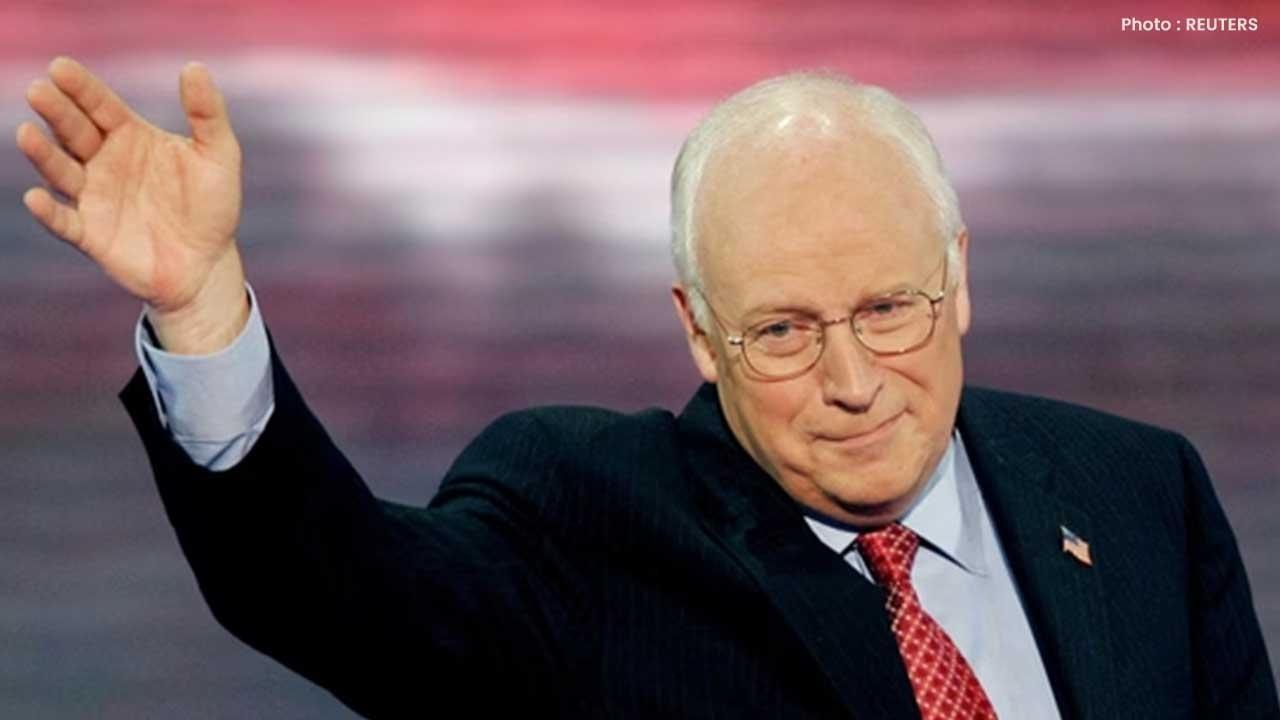
Former vice president Dick Cheney, a prominent figure in recent American foreign and security policy, died Monday night at age 84. His family said the cause was complications from pneumonia alongside long‑standing cardiac and vascular conditions.
The announcement drew responses from across the political spectrum. Former president George W. Bush said Cheney’s passing represented a loss for the country and sorrow for his friends, commending him as a committed public servant who brought intelligence and integrity to his roles and who prioritized Americans’ freedom and safety.
Former Secretary of State Condoleezza Rice lauded Cheney’s integrity and his role as a mentor in public life. Bill Clinton, despite political differences, acknowledged Cheney’s sense of duty, while Republican House Speaker Mike Johnson urged recognition of Cheney’s contributions to national affairs.
Born in Lincoln, Nebraska, in 1941, Cheney attended Yale University on scholarship but did not complete a degree there; he later earned a master’s in political science from the University of Wyoming. He entered Washington politics in 1968 and rose quickly, becoming White House chief of staff to President Gerald Ford at 34. He went on to serve as Secretary of Defense under President George H.W. Bush, overseeing the Pentagon during the 1990–91 Gulf War.
As vice president from 2001 to 2009, Cheney shaped a more influential role for the office, especially on national security and foreign policy. He was a leading architect of the US response to the September 11 attacks, advocating military campaigns in Afghanistan and Iraq. His insistence on Iraq’s alleged weapons of mass destruction and ties to al‑Qaeda played a central part in the 2003 invasion—decisions that remain deeply contested because of their human and geopolitical consequences.
In later years Cheney broke with some in his party, criticizing former president Donald Trump over concerns about foreign interference and institutional safeguards. In 2024 he publicly supported Democratic vice president Kamala Harris, warning of what he saw as risks to the republic.
Cheney’s health had been fragile for decades: he suffered his first heart attack in 1978, endured multiple cardiac episodes, and received a full heart transplant in 2012. He is survived by his wife, Lynne Cheney; daughters Liz and Mary; and seven grandchildren.
Cheney leaves a complex legacy—marked by significant influence on US policy and enduring controversy over the Iraq War and the broader "war on terror"—prompting reflection on his leadership, decisions, and years of public service.










PM Modi Pays Tribute to Mahatma Gandhi, Urges People to Support Khadi
PM Modi pays tribute to Mahatma Gandhi on Gandhi Jayanti and urges citizens to support Khadi and the

Amazon Seeks to Offload $8 Billion in Nvidia Chips to Investors
Amazon plans to move $8 billion in Nvidia chips to investors, using a new financing model to strengt

Samsung Raises Galaxy S26 Prices as Memory Chip Costs Rise
Samsung raises Galaxy S26 prices in South Korea as rising memory chip costs put pressure on smartpho

Lewis Hamilton Calls Singapore Grand Prix One of F1's Toughest Races
Lewis Hamilton discusses the demanding Singapore Grand Prix and brings Plus44 and Almave to Singapor

Denmark's Pandora Opens World's Largest Jewellery Factory in Vietnam
Pandora opens its largest jewellery factory in Vietnam, expanding global production, strengthening s

Gautam Gambhir Questions Batting-Friendly Pitches After India's Record ODI Chase
Gautam Gambhir questions batting-friendly ODI pitches after India’s record chase, calling for a bett

