
You have not yet added any article to your bookmarks!
Join 10k+ people to get notified about new posts, news and tips.
Do not worry we don't spam!
Post by : Samjeet Ariff
In times of global conflict or fuel supply disruptions, it becomes clear how precarious our reliance on existing energy systems is. A shock in one area can spiral into increased fuel charges and heightened living costs for countless individuals.
Recent years have seen a rise in geopolitical tensions and supply challenges, illustrating the fragility within an energy-dependent economy that is heavily reliant on fossil fuels such as oil, coal, and natural gas. Countries reliant on fuel imports often bear the brunt of these fluctuations, becoming vulnerable to turmoil in international markets amid conflicts or sanctions.
As a result, the conversation around renewable energy is shifting from merely an environmental consideration to a crucial aspect of long-term energy security, economic resilience, and a safeguard against forthcoming energy crises.
Sources of renewable energy, including solar, wind, hydroelectric, and geothermal, are transforming energy production. Unlike fossil fuels that are tied to limited underground reserves and uncertain shipping pathways, renewable energy can often be generated locally after infrastructure is established, providing a more stable output.
This distinction holds greater significance now than ever.
Energy crises typically arise due to a global over-reliance on fossil fuels, which are concentrated in specific regions.
The journey of oil and gas through international supply chains includes pipelines, shipping routes, refineries, and diplomatic agreements. An interruption in these networks—caused by conflicts, sanctions, or natural catastrophes—can lead to rapid price surges.
Modern economies are intertwined with energy in nearly all aspects:
As fuel prices soar, living costs rise, affecting everything from petrol and food services to air travel and grocery bills, all due to the inflated energy expenses.
This often triggers inflation on a global scale.
Renewable energy introduces a paradigm shift compared to conventional fossil fuel frameworks.
By exploiting local resources such as sun, wind, and water, nations can minimize reliance on foreign fuel, significantly reducing their vulnerability during global upheavals.
For instance:
These resources are self-renewing, ensuring ongoing energy supply.
This fosters a more consistent energy landscape.
A key benefit of renewable energy is its promotion of energy independence.
Nations generating more local electricity become insulated from:
This is particularly vital for developing nations burdened by heavy expenditures on oil imports.
By cutting down on fuel imports, countries can alleviate pressure on their national finances and foreign reserves.
In essence, renewable energy grants nations greater control over their energy destiny.
Many still perceive renewable energy as costly, yet the reality has shifted dramatically in recent years.
Advancements in solar and wind technologies have made them more economical, attributed to:
While initiating renewable infrastructure requires investment, ongoing operational costs tend to be lower since sunlight and wind are inherently free.
In contrast to fossil fuels, renewable energy prices are less influenced by global oil market fluctuations, suggesting that countries embracing renewables may benefit from more stable electricity rates in the long run.
Discussions around renewable energy often lean towards climate change, yet the economic and geopolitical angles are proving increasingly essential.
Recent global challenges illustrate that renewable energy encompasses not only the reduction of carbon footprints but also serves as a buffer for economies against instability.
Nations fortified with renewable systems may navigate:
This positions renewable energy as a strategic asset extending beyond mere environmental policy.
Solar energy stands out as one of the fastest-expanding renewable sources globally.
Access to abundant sunshine makes it practical for residences, enterprises, and large power plants alike. Furthermore, solar technology is becoming increasingly affordable for everyday consumers.
In various areas, homes are already witnessing reduced energy bills through rooftop solar installations that allow for partial energy self-sufficiency.
With advancements in battery technology, solar energy could emerge as an even more dependable option during outages or disruptions.
Wind energy contributes significantly to the renewable transition.
Large-scale wind farms can produce considerable electricity without dependency on foreign fuel. Offshore wind initiatives are gaining traction since coastal areas often provide more robust and reliable winds.
While wind energy does rely on weather conditions, innovations in energy storage and management are enhancing supply balance.
Many governments view wind energy as a key long-term investment in energy assurance.
Although renewable energy offers numerous benefits, it is not a flawless or immediate fix.
The sector faces significant challenges:
Solar and wind production can fluctuate with weather, necessitating reliable storage and backup infrastructures.
Shifting from fossil fuels to renewable energy is a gradual process, as current industries and transport networks remain intertwined with oil and gas.
However, many experts believe that technological advancements are progressively addressing these challenges.
An increasing number of governments are boosting investments in renewable energy, driven not only by environmental motives but also by the need for economic security.
Countries are keen to:
The renewable sector is already generating millions of jobs globally across fields such as manufacturing, installation, engineering, and energy oversight.
This economic potential is one compelling reason behind the accelerated growth in the renewable energy sector.
While renewable energy may not entirely eradicate global energy crises, it can substantially lessen their impact.
A world with enhanced renewable infrastructure is likely to be:
The more diversified a country's energy framework, the less exposed it becomes to abrupt international issues.
This transition won’t occur overnight, but the momentum is already garnering traction.
The upsurge in fuel prices and overall energy instability highlights how fragile existing energy frameworks are. A heavy dependence on fossil fuels leaves nations open to conflicts and supply chain disruptions that quickly reverberate throughout daily life.
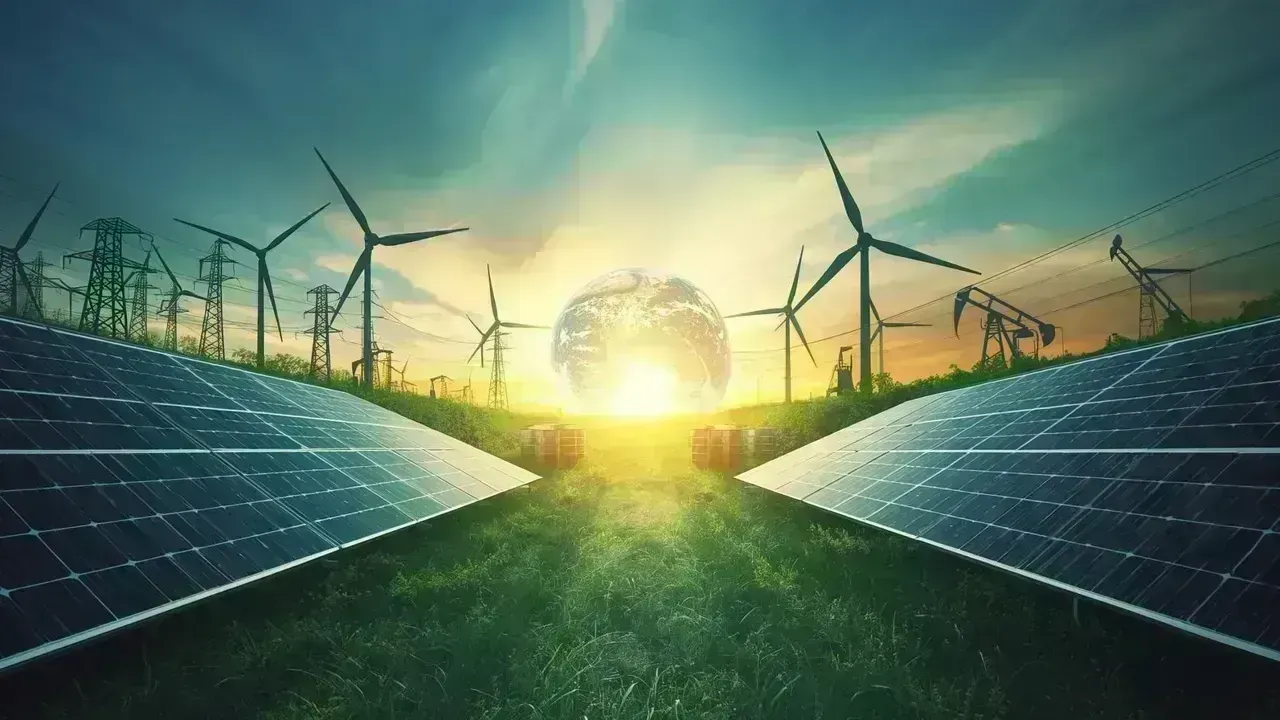
Renewable energy presents an alternative path focused on local generation, sustained stability, and decreased reliance on volatile global fuel markets.
Although renewable energy continues facing obstacles, it is becoming one of the most effective tools at our disposal to alleviate future energy crises and foster a more stable global economy.
This shift toward renewable sources is not merely about protecting the environment; it also centers on shielding economies, easing financial burdens on families, and securing a reliable future energy landscape.
This article is intended for informational purposes only. Energy methodologies, technologies, and market conditions may evolve over time due to governmental changes, innovations, and global developments.
#Global News #Global Economy #Global Updates #Energy Innovation #Renewable Energy










PM Modi Pays Tribute to Mahatma Gandhi, Urges People to Support Khadi
PM Modi pays tribute to Mahatma Gandhi on Gandhi Jayanti and urges citizens to support Khadi and the

Amazon Seeks to Offload $8 Billion in Nvidia Chips to Investors
Amazon plans to move $8 billion in Nvidia chips to investors, using a new financing model to strengt

Samsung Raises Galaxy S26 Prices as Memory Chip Costs Rise
Samsung raises Galaxy S26 prices in South Korea as rising memory chip costs put pressure on smartpho

Lewis Hamilton Calls Singapore Grand Prix One of F1's Toughest Races
Lewis Hamilton discusses the demanding Singapore Grand Prix and brings Plus44 and Almave to Singapor

Denmark's Pandora Opens World's Largest Jewellery Factory in Vietnam
Pandora opens its largest jewellery factory in Vietnam, expanding global production, strengthening s

Gautam Gambhir Questions Batting-Friendly Pitches After India's Record ODI Chase
Gautam Gambhir questions batting-friendly ODI pitches after India’s record chase, calling for a bett

