
You have not yet added any article to your bookmarks!
Join 10k+ people to get notified about new posts, news and tips.
Do not worry we don't spam!
Post by : Saif Rahman
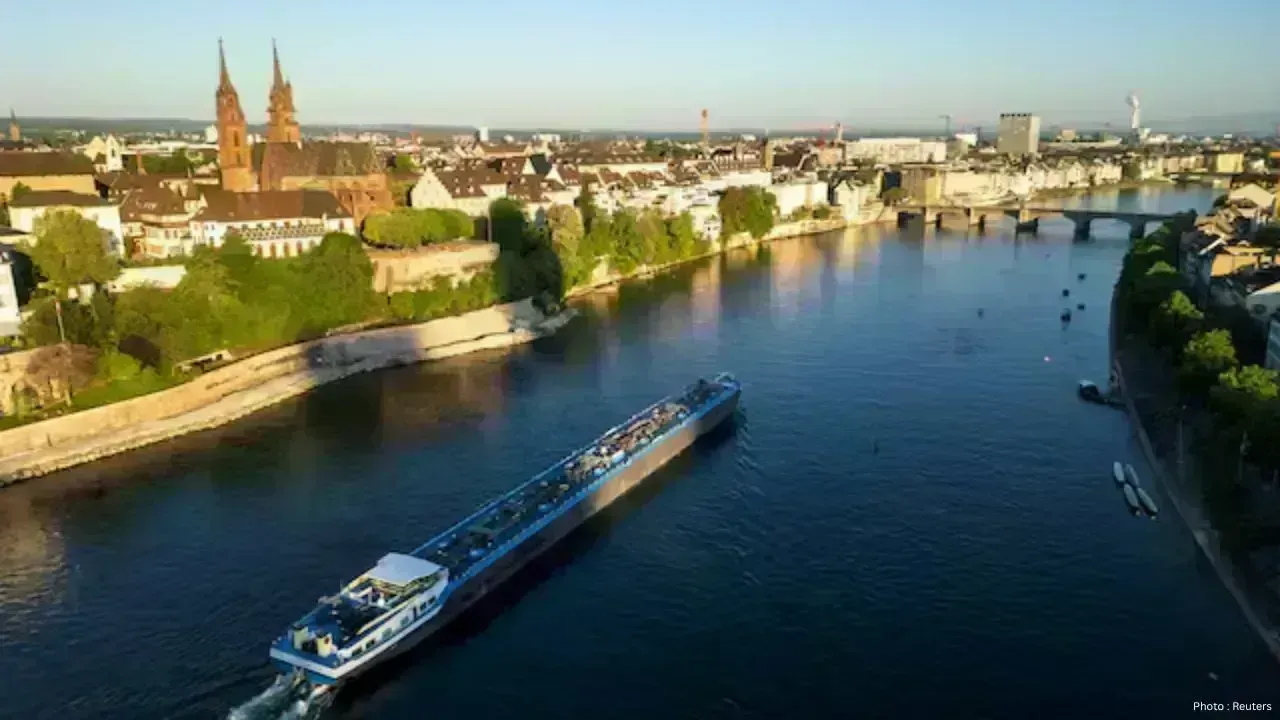
In Germany, the Rhine River has seen a significant increase in water levels following recent rainfall, providing much-needed relief for shipping companies and industries reliant on this vital European trade route. This positive shift comes after an extended period of dry weather that had hampered transport and sparked worries regarding supply chain interruptions across Germany.
The Rhine River serves as a key artery for European trade, facilitating the transport of various goods such as coal, oil products, chemicals, grains, minerals, and industrial materials. Numerous industries in Germany are heavily dependent on this river for their day-to-day operations and overall supply chain functionality.
Earlier this month, unusual drought conditions severely reduced water levels in various sections of the Rhine. The diminished depth made it unsafe for cargo vessels to operate at full capacity, with many boats only able to transport half of their usual loads.
This low water situation had led to increased transportation costs, forcing companies to deploy additional vessels to carry the same amount of cargo. Shipping operators also raised freight rates to offset losses from the curtailed carrying capacity. Businesses were apprehensive that extended low levels could adversely affect industrial production and energy supplies.
Fortunately, rainfall across Germany and adjacent river regions has alleviated the situation. According to commodity traders, vessels can now carry between 70% to 90% of their normal cargo loads, compared to just 50% last week. Operations in northern areas, especially around Duisburg and Cologne, are reportedly nearing normal activity levels.
Nonetheless, challenges persist near Kaub, a critical chokepoint on the Rhine. Ships navigating this section are still restricted in their carrying capacity due to below-normal water levels. Experts anticipate that conditions may further stabilize later in the week as additional rain flows into the river system.
This isn’t the first time the Rhine has faced such difficulties. In 2022, extreme droughts and intense heat led to significant supply chain upheavals in Germany. Low water levels impacted factories, fuel deliveries, and industrial output, vividly illustrating how climate phenomena can threaten Europe’s economic stability.
Industry experts underscore that the current situation serves as a critical reminder of the increasing influence of shifting weather patterns on trade and transportation infrastructures. Rivers like the Rhine are indispensable to Europe's economy, yet droughts and climate-related disruptions are surging in frequency.
For the time being, the recent rainfall has granted temporary relief to both businesses and shipping enterprises. If favorable weather trends continue, cargo activities on the Rhine may fully normalize in the upcoming days.










PM Modi Pays Tribute to Mahatma Gandhi, Urges People to Support Khadi
PM Modi pays tribute to Mahatma Gandhi on Gandhi Jayanti and urges citizens to support Khadi and the

Amazon Seeks to Offload $8 Billion in Nvidia Chips to Investors
Amazon plans to move $8 billion in Nvidia chips to investors, using a new financing model to strengt

Samsung Raises Galaxy S26 Prices as Memory Chip Costs Rise
Samsung raises Galaxy S26 prices in South Korea as rising memory chip costs put pressure on smartpho

Lewis Hamilton Calls Singapore Grand Prix One of F1's Toughest Races
Lewis Hamilton discusses the demanding Singapore Grand Prix and brings Plus44 and Almave to Singapor

Denmark's Pandora Opens World's Largest Jewellery Factory in Vietnam
Pandora opens its largest jewellery factory in Vietnam, expanding global production, strengthening s

Gautam Gambhir Questions Batting-Friendly Pitches After India's Record ODI Chase
Gautam Gambhir questions batting-friendly ODI pitches after India’s record chase, calling for a bett

