
You have not yet added any article to your bookmarks!
Join 10k+ people to get notified about new posts, news and tips.
Do not worry we don't spam!
Post by : Anis Farhan
The global shift toward sustainable energy is no longer a distant vision — it is a rapidly unfolding reality. Electric vehicles, once considered niche, are now moving into mainstream markets. Battery technology, which underpins everything from EVs to home energy systems, is undergoing dramatic improvements. Renewable energy sources such as solar and wind are growing faster than predicted.
In 2025, these three sectors have begun merging with unprecedented coordination. The intersection of EV adoption, battery innovation, and renewable energy expansion is reshaping transportation, electricity grids, manufacturing, and household energy consumption.
This convergence signals a major transformation: the world is moving from fossil-fuel dependence to a more electrified, decentralised, and sustainable energy model.
Electric vehicles continue to break sales records in 2025. Consumers are increasingly attracted to EVs due to:
falling vehicle prices
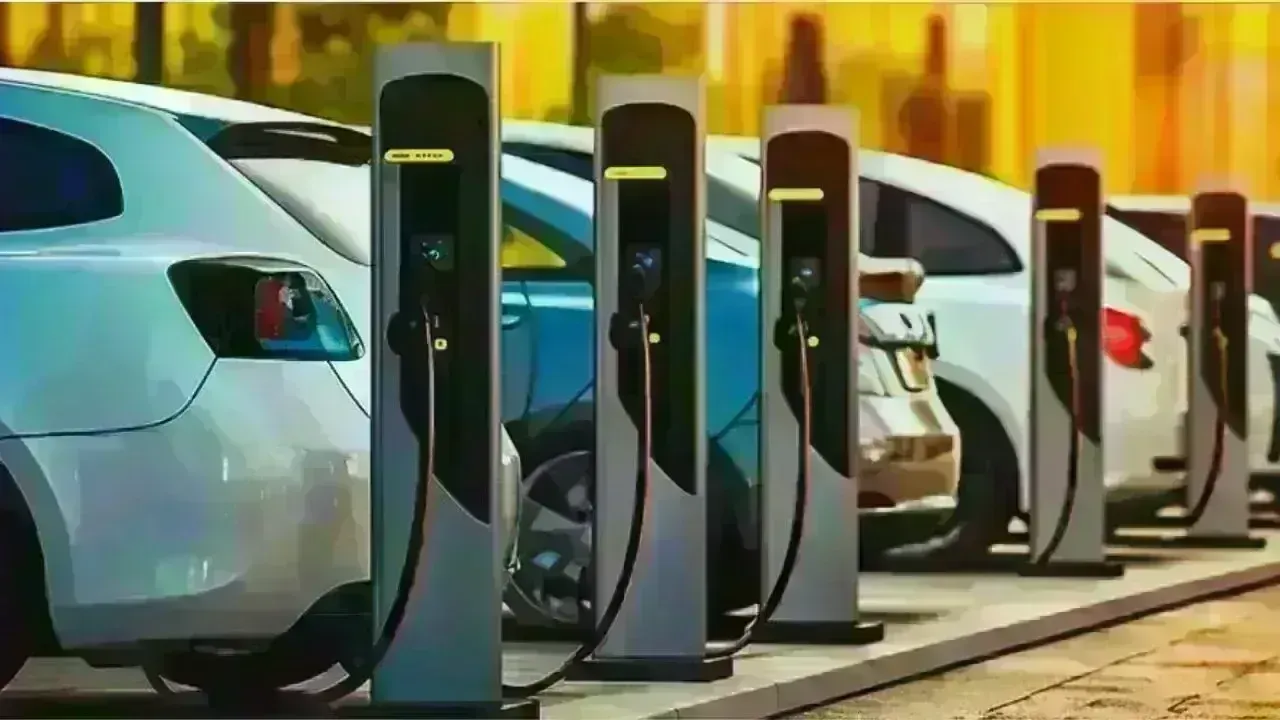
expanding charging networks
government incentives
higher fuel costs
rising environmental awareness
EVs are no longer limited to high-end buyers. Mass-market models across multiple segments — compact cars, SUVs, delivery vans, and two-wheelers — are becoming accessible to middle-income households.
EVs are evolving into more than just transportation tools. They are now part of smart-energy ecosystems because:
their batteries can store renewable power
they can supply electricity back to homes or grids
they help balance energy demand during peak hours
These capabilities turn EVs into mobile storage units that support renewable energy adoption and strengthen grid stability.
Logistics companies, delivery services, and public-transport fleets are transitioning to electric mobility due to lower operating costs. Fleet electrification accelerates infrastructure development and increases demand for reliable charging networks.
Battery innovations are defining 2025. Researchers and manufacturers are pushing boundaries in:
solid-state batteries
sodium-ion batteries
silicon-based anodes
ultra-fast charging cells
These advancements deliver longer ranges, greater safety, faster charging, and lower production costs.
Solid-state batteries replace traditional liquid electrolytes with solid materials, offering:
reduced fire risks
higher energy density
longer lifespan
While mass production is still developing, early integration into premium EVs is underway. As costs drop, solid-state cells may redefine consumer expectations.
Sodium-ion batteries are emerging as an affordable alternative to lithium-based chemistries. Although they offer lower energy density, they boast:
cheaper raw materials
better performance in cold weather
reduced reliance on critical minerals
They are ideal for grid-scale storage and budget EVs.
Solar and wind installations have soared in 2025. Falling equipment prices, government backing, and rising investor interest have made renewables the fastest-growing energy sources worldwide.
Renewable power is crucial for EV adoption. Charging an EV with coal-based electricity reduces climate benefits. As grids become greener, EVs become genuinely clean.
While renewables are growing rapidly, intermittent energy supply remains a challenge. That is why battery storage is essential. The synergy between renewables and advanced batteries makes large-scale clean-energy systems viable.
Households and businesses now install rooftop solar paired with home batteries. This supports:
energy independence
reduced electricity bills
cleaner charging for EVs
This decentralised model is a cornerstone of future energy systems.
EVs equipped with bidirectional charging link vehicles to the energy grid. These systems allow EVs to:
charge when renewable electricity is abundant
discharge electricity back during shortages
help stabilise local grids
This transforms EVs into essential grid assets rather than passive consumers.
Advanced batteries store excess renewable power generated during sunny or windy periods. This stored energy can be used during peak hours or low-production periods.
The more battery storage the world deploys, the more renewables it can integrate — creating a feedback loop of clean-energy growth.
Smart chargers monitor energy demand, electricity prices, and renewable availability. They direct EV charging to optimal periods, reducing strain on power systems.
Major manufacturers are building gigafactories to secure battery supply and reduce dependency on external providers. Vertical integration helps control costs and ensures consistent production.
Power companies see EV charging as a new source of demand. They are investing in grid upgrades, renewable capacity, and smart-metering systems.
Technology firms recognise the opportunity in battery storage and renewable integration. They are launching:
energy-management software
advanced charging networks
AI-powered grid solutions
This blurs industry boundaries and accelerates innovation.
EV owners save considerably on fuel and maintenance. As electricity becomes cleaner and cheaper, long-term savings only grow.
Consumers now install home batteries not only for backup power but also for:
storing solar energy
reducing electricity bills
charging EVs efficiently
These systems make households more resilient during outages.
Reduced fossil-fuel dependence cuts air pollution. Cleaner air in cities leads to:
better respiratory health
reduced medical costs
healthier public spaces
Batteries require materials such as lithium, nickel, and cobalt. Supply limitations and geopolitical tensions create pressure on global supply chains.
Many developing regions struggle with inadequate charging networks. This slows EV adoption despite increasing consumer interest.
Without coordinated grid upgrades, mass EV charging can cause local outages or instability.
While prices are falling, EVs and home batteries remain expensive in certain markets. Government support continues to play a crucial role.
New battery technologies will reduce manufacturing costs, expanding EV availability across price ranges.
EVs will increasingly interact with:
homes
offices
smart grids
renewable farms
This will revolutionize energy management.
Battery storage will become standard across cities and industries, enabling higher renewable penetration.
Hydrogen fuel innovation will complement batteries, especially for heavy transport and industrial sectors.
Electric vehicles, battery technologies, and renewable energy systems are no longer developing in isolation. In 2025, they are merging into a powerful technological ecosystem that is reshaping mobility, electricity generation, industrial activity, and everyday living.
This intersection accelerates the clean-energy transition, reduces carbon emissions, lowers energy costs, and positions societies for a more resilient and sustainable future. Though challenges remain — from mineral supply to infrastructure gaps — the world is clearly moving toward smarter, cleaner, and more connected energy solutions.
The innovations unfolding today will define how the world moves, powers its homes, and sustains the planet for decades to come.
This article is for informational purposes only. Trends, technologies, and market conditions may vary by region and are subject to change based on policy, innovation, and economic factors.










Beauden Barrett Opens Up About Mental Struggles During All Blacks Exile
Beauden Barrett discusses his confidence struggles after missing six tests, his return against Austr

IMF Says AI Investment Supports Global Growth Despite Energy Shock
IMF says AI investment is supporting global growth near 3%, with Asian economies benefiting from ris

Will O'Rourke Ruled Out of New Zealand's India Series
New Zealand fast bowler Will O'Rourke will miss the India series with hamstring and calf injuries as

AI Companies Expected to Drive Most US Earnings Growth in Q3
AI companies are expected to drive US third-quarter earnings growth as investors assess tech profits

Money Market Funds See Record Inflows as Global Bond Selloff Intensifies
Global money market funds attract $153.81 billion as bond yields rise, inflation fears persist and i

Meta Bans TikTok Ads on Facebook and Instagram in Seven Countries
Meta has banned TikTok ads in seven countries, escalating competition over social media users, adver

