You have not yet added any article to your bookmarks!
Join 10k+ people to get notified about new posts, news and tips.
Do not worry we don't spam!
Post by : Badri Ariffin
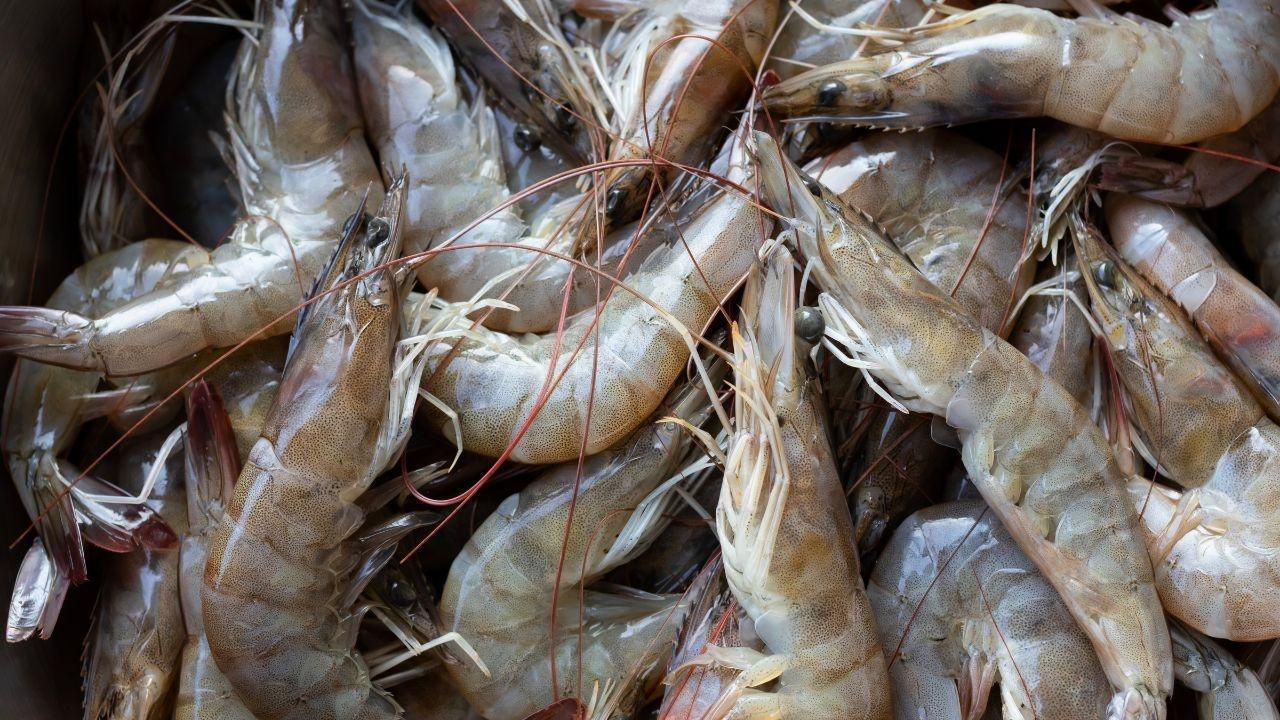
Kolkata, India – In the coastal town of Nandigram, West Bengal, shrimp farmer Buddhadeb Pradhan is taking a significant risk that could determine his future. Barely weeks after harvesting his first crop, he has opted to initiate a second cycle of shrimp farming, despite the heightened danger of disease associated with consecutive harvests. This risky decision stems from the pressing need to sustain his income, as recent US tariffs have drastically reduced shrimp prices.
India ranks as the second-largest shrimp producer globally, following Ecuador, having exported $5 billion in frozen shrimp in the fiscal year concluding March 2025. Almost 50% of those exports were headed for the United States. However, with the introduction of tariffs, prices have plummeted from 300 rupees ($3.38) per kilogram to just 230 rupees ($2.59), while production costs stabilize around 275 rupees ($3.10). For farmers like Pradhan, this discrepancy between cost and selling price is leading to significant financial repercussions.
“The drop in shrimp prices makes it difficult to see how I can recover my investment of 300,000 rupees,” expressed Pradhan. Fellow farmers, including Nardu Das, emphasize that without measures to stabilize the market, the threat of economic disaster looms large, compelling some to take drastic actions. As they point out, shrimp farming is an expensive venture, involving loans, feed, energy, and leasing land, with price fluctuations and diseases pushing many close to bankruptcy.
India predominantly produces two key shrimp types: black tiger and Pacific whiteleg, commonly known as vannamei. The vannamei shrimp allows for two annual harvests – from February to June and from July to October – but farmers are apprehensive about the risks tied to the second harvest. In contrast, black tiger shrimp is typically harvested once yearly, from March to August. The majority of production occurs in coastal states like West Bengal, Gujarat, Odisha, Andhra Pradesh, Tamil Nadu, Goa, Maharashtra, Karnataka, and Kerala, generating employment for approximately 10 million individuals across various sectors, including farming, hatcheries, and processing.
The US tariffs, which include antidumping duties and countervailing duties exceeding 58 percent, pose a formidable barrier to Indian farmers trying to maintain access to their most significant market. In comparison, Ecuador exports high-quality vannamei shrimp to the US at a much lower tariff rate of just 15 percent. In the initial nine months of 2025, Ecuador's shrimp exports to the US rose 14 percent year-on-year, hitting 1,038,208 metric tonnes valued at $5.51 billion.
This crisis extends beyond individual farms; India's 550 private shrimp hatcheries, which collectively yield around 80 billion seeds each year, are experiencing a drastic decrease in demand. With half of these hatcheries already shuttered, the owners are facing dire losses, given that shrimp seeds are viable for only three to four days.
Industry experts indicate that Indian farmers largely rely on imported brood stock from the US. However, irregular quality can result in disease outbreaks, exacerbating the challenges posed by tariff-induced price declines. There is a growing consensus that developing local brood stock could be vital for stabilizing shrimp farming.
As access to the US market becomes more constrained and Ecuador continues to thrive, Indian shrimp farmers are contemplating their next steps. Some are finding potential in the largely untapped domestic market, while others prepare for difficult months ahead, navigating the balance between financial risk and survival.






Hyundai raises profit target, expands hybrid lineup in the US
Hyundai hybrid cars get a major boost as the automaker raises its profit margin target and plans new

Josh Kerr and Jakob Ingebrigtsen Set for 1,500m Rivalry Rematch
Josh Kerr and Jakob Ingebrigtsen will renew their 1,500m rivalry at the Ultimate Championship in Bud

PSG Coach Luis Enrique Urges Players to Step Outside Comfort Zone
PSG coach Luis Enrique says players must leave their comfort zone and keep improving as the club tar

China’s Tiangong Sets New 400m Record at Robot Olympics
China’s Tiangong robot sets a new 400m record at the Robot Olympics, beating a South African robot i
George Russell Wins Dutch GP Sprint, Boosts Mercedes Morale
George Russell wins the Dutch GP Sprint from pole as Mercedes teammate Kimi Antonelli extends his F1
Australia 50/3 After Bangladesh Bowled Out for 64 in Second Test
Australia reached 50/3 after Bangladesh were bowled out for 64 in the second Test, with Mitchell Sta