
You have not yet added any article to your bookmarks!
Join 10k+ people to get notified about new posts, news and tips.
Do not worry we don't spam!
Post by : Meena Ariff
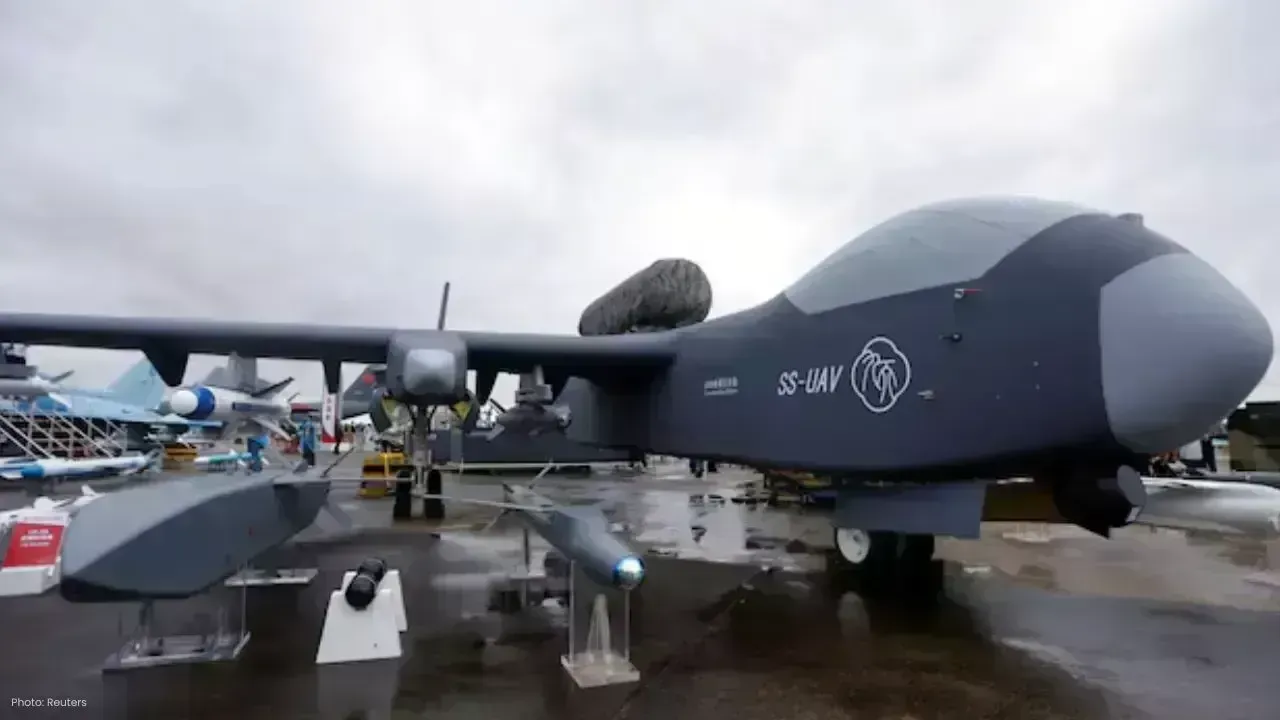
China has officially passed a groundbreaking revision to its Civil Aviation Law, marking the first time that unmanned aircraft, commonly known as drones, are formally regulated by law in the country. The revised legislation was approved by the Standing Committee of the National People's Congress on December 27, signifying a major advancement in the governance of China’s rapidly growing drone industry and the emerging low-altitude economy.
This update introduces a detailed legal framework designed to oversee the production, operation, and management of drones across China’s vast airspace. One of the most significant additions is the requirement for airworthiness certification for drones, a regulatory measure that had been missing in earlier laws. This certification process ensures that every drone meets strict safety and technical standards before being authorized to fly, helping to close a crucial safety gap and prevent potential accidents or misuse.
China’s drone industry has been expanding at an extraordinary pace, with applications spanning agriculture, logistics, emergency services, urban planning, and more. By establishing clear regulations, the government aims to promote innovation and growth in these sectors while also ensuring responsible and safe drone usage. The new law not only encourages manufacturers and operators to adhere to high standards but also enhances oversight by relevant aviation authorities.
Experts believe that the law will significantly improve the management of low-altitude airspace, which has become increasingly crowded due to the proliferation of drones. This will help reduce risks associated with uncontrolled drone flights, such as collisions with manned aircraft, privacy invasions, and interference with critical infrastructure. The regulatory clarity provided by the law is expected to benefit all stakeholders—manufacturers, service providers, regulators, and the general public.
Moreover, the legislation aligns China with international aviation norms and standards, positioning the country as a leader in the global drone ecosystem. This is particularly important as drones become indispensable tools in modern economies, supporting activities like disaster relief, delivery services, and environmental monitoring.
In summary, China’s formal regulation of unmanned aircraft represents a pivotal step toward integrating drones safely and efficiently into the national airspace system. This move is expected to fuel sustainable growth in the drone and low-altitude economy sectors while safeguarding public safety and fostering technological advancements in aerial applications.










PM Modi Pays Tribute to Mahatma Gandhi, Urges People to Support Khadi
PM Modi pays tribute to Mahatma Gandhi on Gandhi Jayanti and urges citizens to support Khadi and the

Amazon Seeks to Offload $8 Billion in Nvidia Chips to Investors
Amazon plans to move $8 billion in Nvidia chips to investors, using a new financing model to strengt

Samsung Raises Galaxy S26 Prices as Memory Chip Costs Rise
Samsung raises Galaxy S26 prices in South Korea as rising memory chip costs put pressure on smartpho

Lewis Hamilton Calls Singapore Grand Prix One of F1's Toughest Races
Lewis Hamilton discusses the demanding Singapore Grand Prix and brings Plus44 and Almave to Singapor

Denmark's Pandora Opens World's Largest Jewellery Factory in Vietnam
Pandora opens its largest jewellery factory in Vietnam, expanding global production, strengthening s

Gautam Gambhir Questions Batting-Friendly Pitches After India's Record ODI Chase
Gautam Gambhir questions batting-friendly ODI pitches after India’s record chase, calling for a bett

