
You have not yet added any article to your bookmarks!
Join 10k+ people to get notified about new posts, news and tips.
Do not worry we don't spam!
Post by : Anis Farhan
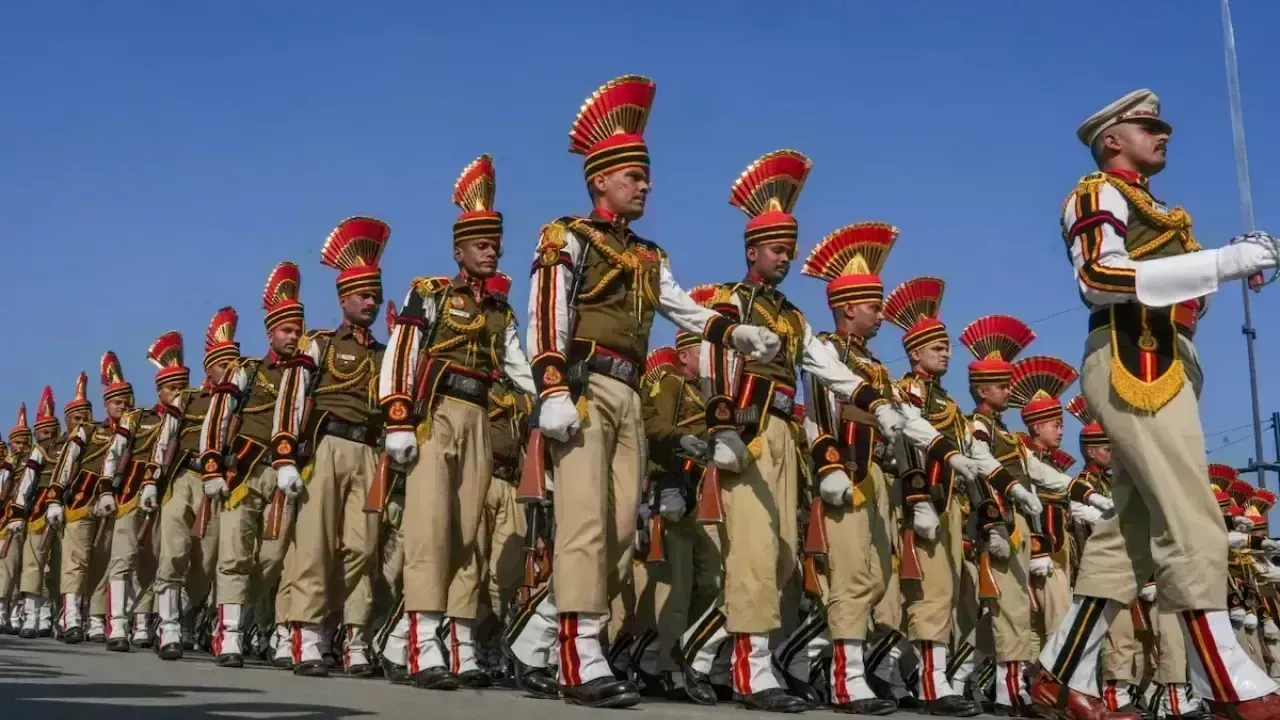
The 77th Republic Day celebrations in India on January 26, 2026, were marked by a grand parade at Kartavya Path, New Delhi, bringing into focus not just the nation’s cultural unity and heritage, but also the formidable capability of the Indian Armed Forces. While cultural tableaux and marching contingents have always been a core component of the ceremony, this year’s parade held special significance as it underscored India’s rapidly evolving defence readiness and technological self-reliance. With an impressive lineup that included the Akash and BrahMos missile systems, the Arjun Main Battle Tank, aerial formations and a range of modern weaponry, the parade reflected not only a national celebration but a declaration of strategic competence and sovereignty.
The Republic Day Parade is an annual event commemorating the adoption of the Indian Constitution on January 26, 1950. Held against the backdrop of India’s democratic success and unity in diversity, the parade offers an opportunity for the nation to display both its military prowess and cultural richness. This year’s parade carried added strategic weight, occurring in a global environment marked by shifting geopolitical dynamics and a renewed emphasis on indigenous defence manufacturing and capability. The government and military leadership used this platform to showcase advancements that result from sustained investments in homegrown defence technologies and platforms under initiatives promoting self-reliance and innovation.
One of the most anticipated entries in the mechanised column was the BrahMos supersonic cruise missile system. Jointly developed by India and Russia, the BrahMos represents one of the fastest cruise missiles in the world, notable for its speed, precision, and strategic versatility. Its inclusion in the parade underscores India’s ability to integrate high-end missile technologies into defence operations. The BrahMos is designed for rapid strike capability against land and sea targets, enhancing deterrence and operational flexibility.
Another highlight was the Akash medium-range surface-to-air missile system, a cornerstone of India’s air defence architecture. The system, developed indigenously, offers robust protection against aerial threats and has participated in multiple defense drills with proven success. Its portrayal during the Republic Day Parade symbolised India’s commitment to securing its airspace and assured capability in modern conflict scenarios.
The parade also featured the Arjun Main Battle Tank, one of India’s most advanced indigenous armoured platforms. With its high mobility, firepower and armour protection, the Arjun MBT represents decades of domestic research and development to meet the combat needs of contemporary mechanised warfare. Its presence in the mechanised display underlined the progress of India’s defence production ecosystem.
The ATAGS artillery gun, developed by Indian industry in collaboration with defence research laboratories, was also part of the pantheon of systems on parade. Known for its long range and accurate firepower, the ATAGS signifies India’s ability to produce sophisticated artillery systems to support ground operations.
Marking its first appearance in a Republic Day Parade, the Suryastra universal rocket launcher system drew significant attention. Capable of deep strike operations against high-value targets, Suryastra underscores India’s focus on enhancing its firepower footprint and versatility in ground warfare. Officials noted that the system could conduct surface-to-surface strikes at distances reaching up to several hundred kilometers, illustrating a leap in mobile artillery capability.
The Dhanush artillery gun, another indigenously enhanced system, was presented as part of the mechanised column, adding to India’s diversified artillery inventory. Designed to offer high range and rapid-fire capabilities, Dhanush further highlights the successful implementation of domestic innovation into operational units.
The aerial display at the Republic Day Parade is always a centerpiece of excitement, and the 2026 edition was no exception. Pilots representing the Indian Air Force executed precision formations and elaborate flypasts that showcased both fighter jets and support aircraft. Among these, formations featuring the Rafale, MiG-29, Sukhoi-30 and Jaguar fighter jets provided a dramatic visual narrative of aerial strength and operational readiness.
These aerial formations were arranged in the new “Sindoor formation”, celebrating operational successes and symbolising unity in the air domain. In total, the flypast included 29 aircraft featuring fighter jets, transport aircraft and helicopters, each contributing to a layered depiction of the Indian Air Force’s combat and support capabilities.
Beyond traditional platforms, this year’s parade also exhibited India’s progress in emerging defence technologies. Static displays of advanced drone systems and unmanned ground vehicles highlighted how automation and robotic systems are being integrated into modern military doctrine. These systems, often developed in partnership with private industry and defence research bodies, provide capabilities ranging from reconnaissance to autonomous operations in challenging environments.
The mechanised column further included medium-range surface-to-air missiles (MRSAM) and other air defence components such as the ABHRA system, adding depth to the display of India’s layered protective architecture. The appearance of the Drone Shakti Lorry, engineered to enhance forward-area operational capabilities, demonstrated practical applications of unmanned platforms in battlefield logistics and support.
A remarkable feature of the 2026 parade was the inclusion of newly raised units and unique ground contingents. The Bhairav Light Commando Battalion and the Shaktiban Regiment participated for the first time, offering a glimpse into evolving organisational structures and specialised capabilities within the Indian Army.
In addition to regular infantry and mechanised formations, the parade featured unconventional participants such as Bactrian camels and Zanskar ponies—referred to as “animal soldiers”—symbolising the historic and enduring role of animals in military operations across challenging terrains, particularly in border regions where mechanised vehicles may be impractical.
Another first was the deployment of the Indian Army’s ‘silent warriors’ or mook yoddhas, which included aerial reconnaissance assets such as trained raptors symbolically representing surveillance and rapid response capabilities.
The parade was commanded by senior military leadership, with Lieutenant General Bhavnish Kumar overseeing the procession, exemplifying the professional coordination behind such a multifaceted display.
The overarching theme of the Republic Day 2026 celebrations was “150 Years of Vande Mataram,” commemorating the sesquicentennial of the iconic national song, which carries deep cultural and patriotic resonance for the country.
Adding a diplomatic dimension to the festivities, distinguished international guests, including high-ranking European Union dignitaries, attended the event. The presence of these guests underscored India’s growing global partnerships and the international recognition of its defence and cultural milestones.
Across the nation, people engaged with the parade through various broadcast platforms, including television channels and digital streaming services, bringing the event into homes and communities across India. The parade not only celebrated India’s constitutional values but also stood as a reaffirmation of the country’s defence resolve and technological progress to a global audience.
The Republic Day Parade 2026 was therefore not only a ceremonial homage to the nation’s constitutional journey but also a live demonstration of India’s defence evolution—one that blends heritage and modernity, tradition and innovation, with a clear message of readiness and capability.
Disclaimer: This article is based on publicly available information and reports from multiple news sources. It is intended for informational purposes only.










PM Modi Pays Tribute to Mahatma Gandhi, Urges People to Support Khadi
PM Modi pays tribute to Mahatma Gandhi on Gandhi Jayanti and urges citizens to support Khadi and the

Amazon Seeks to Offload $8 Billion in Nvidia Chips to Investors
Amazon plans to move $8 billion in Nvidia chips to investors, using a new financing model to strengt

Samsung Raises Galaxy S26 Prices as Memory Chip Costs Rise
Samsung raises Galaxy S26 prices in South Korea as rising memory chip costs put pressure on smartpho

Lewis Hamilton Calls Singapore Grand Prix One of F1's Toughest Races
Lewis Hamilton discusses the demanding Singapore Grand Prix and brings Plus44 and Almave to Singapor

Denmark's Pandora Opens World's Largest Jewellery Factory in Vietnam
Pandora opens its largest jewellery factory in Vietnam, expanding global production, strengthening s

Gautam Gambhir Questions Batting-Friendly Pitches After India's Record ODI Chase
Gautam Gambhir questions batting-friendly ODI pitches after India’s record chase, calling for a bett

