
You have not yet added any article to your bookmarks!
Join 10k+ people to get notified about new posts, news and tips.
Do not worry we don't spam!
Post by : Shweta
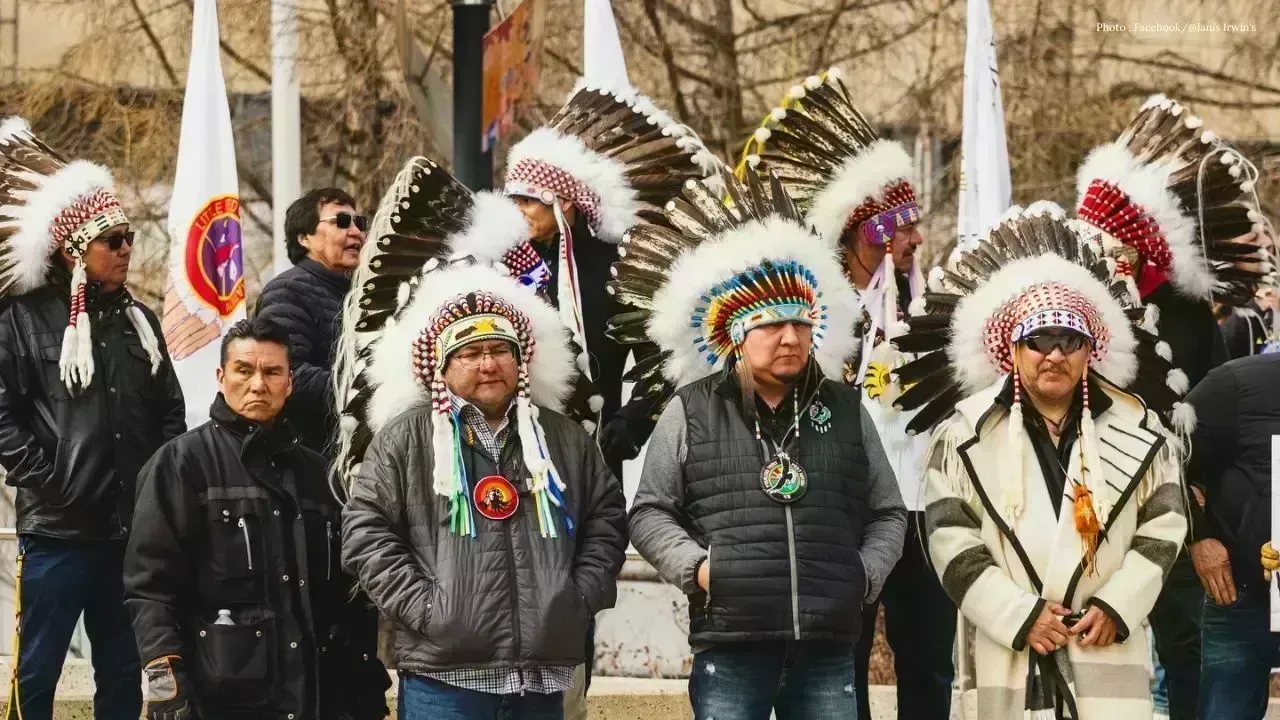
Indigenous leaders in Alberta have issued a stark warning: civil disobedience may be on the table if the provincial government pushes forward with a proposed referendum that could impact treaty rights and Indigenous interests. This alert underscores escalating tensions between First Nations and the Alberta government as talks about the province's political future and its interactions with Ottawa proceed.
The concerns arose after Alberta’s government backed legislation that could simplify the process for citizens to initiate provincial referendums on critical issues. While an official referendum question has yet to be established, discussions increasingly spotlight matters concerning provincial autonomy, constitutional authority, and Alberta’s place within Canada.
A number of chiefs from First Nations have voiced their strong dissent against any referendum that might affect treaty relationships or amend constitutional agreements without proper engagement with Indigenous communities. They contend that treaties are legally binding pacts between First Nations and the Crown and cannot be altered through a provincial ballot.
Indigenous leaders are meticulously observing developments and are ready to uphold treaty rights through legal, political, and public means if deemed necessary. Certain chiefs have indicated that civil disobedience stands as one of multiple avenues open to them should they feel treaty commitments are disregarded.
This issue has ignited wider conversations about Indigenous rights within the framework of Canada's Constitution. Leaders emphasize that treaty agreements predate Alberta’s establishment as a province and remain protected by Canadian law. Consequently, they advocate for any political method affecting these agreements to entail direct consultations with Indigenous nations.
The Alberta government has reassured that any referendum would function within the confines of Canada’s constitutional framework and wouldn’t inherently alter legal agreements or treaty obligations. Provincial officials maintain that referendums aim to capture public sentiment on significant matters rather than directly redefine constitutional rights.
Despite this reassurance, trepidations persist within Indigenous circles regarding the potential legal and political ramifications of a referendum. Chiefs caution that public votes concerning treaty arrangements could generate uncertainty and break trust between governments and Indigenous communities.
The discussion unfolds at a time when themes of reconciliation and Indigenous partnerships are crucial across Canada. Both federal and provincial governments have repeatedly declared their commitment to bolstering relations with Indigenous groups, enhancing consultation processes, and honoring treaty commitments.
Experts emphasize that treaty rights safeguard under the Canadian Constitution cannot merely be stripped away through a provincial referendum. They recognize, however, that political campaigns surrounding such constitutional questions can stir significant public discourse and highlight issues related to governance, jurisdiction, and Indigenous sovereignty.
Organizations representing Indigenous communities nationwide are closely monitoring the situation in Alberta. Some leaders advocate for proactive and meaningful discussions between the provincial administration and First Nations to prevent unnecessary strife and ensure Indigenous concerns are considered before advancing any referendum process.
Political analysts remark that this conflict reflects broader tensions over provincial autonomy, resource management, Indigenous rights, and Canada’s constitutional landscape. Alberta has consistently sought greater authority over certain policy realms, while Indigenous communities reiterate that treaty relationships exist independently from provincial political disputes.
As these discussions evolve, many First Nations leaders are imploring governments to place a premium on consultation and respect for existing agreements. They assert that collaborative strategies are more productive than unilateral governmental actions when navigating complex constitutional and treaty matters.
Should discussions on a referendum progress, Ottawa may find itself under pressure to clarify its stance given its legal obligations tied to treaty relationships. Any proposals stirring concern among Indigenous communities could draw national scrutiny.
Currently, no definitive referendum question has been authorized, and talks are still nascent. Nevertheless, statements from chiefs suggest that resistance could grow if Indigenous concerns remain unaddressed. The approaching months are poised for further negotiations, legal considerations, and political discourse as Alberta's plans take shape.
As the landscape shifts, the interplay between provincial objectives, constitutional tenets, and treaty commitments will be pivotal for the administration, Indigenous leaders, and Canadians countrywide.
For further updates and in-depth analysis, stay connected with us.
#Canada News #Globally News First #Politics News #World News









PM Modi Pays Tribute to Mahatma Gandhi, Urges People to Support Khadi
PM Modi pays tribute to Mahatma Gandhi on Gandhi Jayanti and urges citizens to support Khadi and the

Amazon Seeks to Offload $8 Billion in Nvidia Chips to Investors
Amazon plans to move $8 billion in Nvidia chips to investors, using a new financing model to strengt

Samsung Raises Galaxy S26 Prices as Memory Chip Costs Rise
Samsung raises Galaxy S26 prices in South Korea as rising memory chip costs put pressure on smartpho

Lewis Hamilton Calls Singapore Grand Prix One of F1's Toughest Races
Lewis Hamilton discusses the demanding Singapore Grand Prix and brings Plus44 and Almave to Singapor

Denmark's Pandora Opens World's Largest Jewellery Factory in Vietnam
Pandora opens its largest jewellery factory in Vietnam, expanding global production, strengthening s

Gautam Gambhir Questions Batting-Friendly Pitches After India's Record ODI Chase
Gautam Gambhir questions batting-friendly ODI pitches after India’s record chase, calling for a bett

