
You have not yet added any article to your bookmarks!
Join 10k+ people to get notified about new posts, news and tips.
Do not worry we don't spam!
Post by : Rohit Dhiman
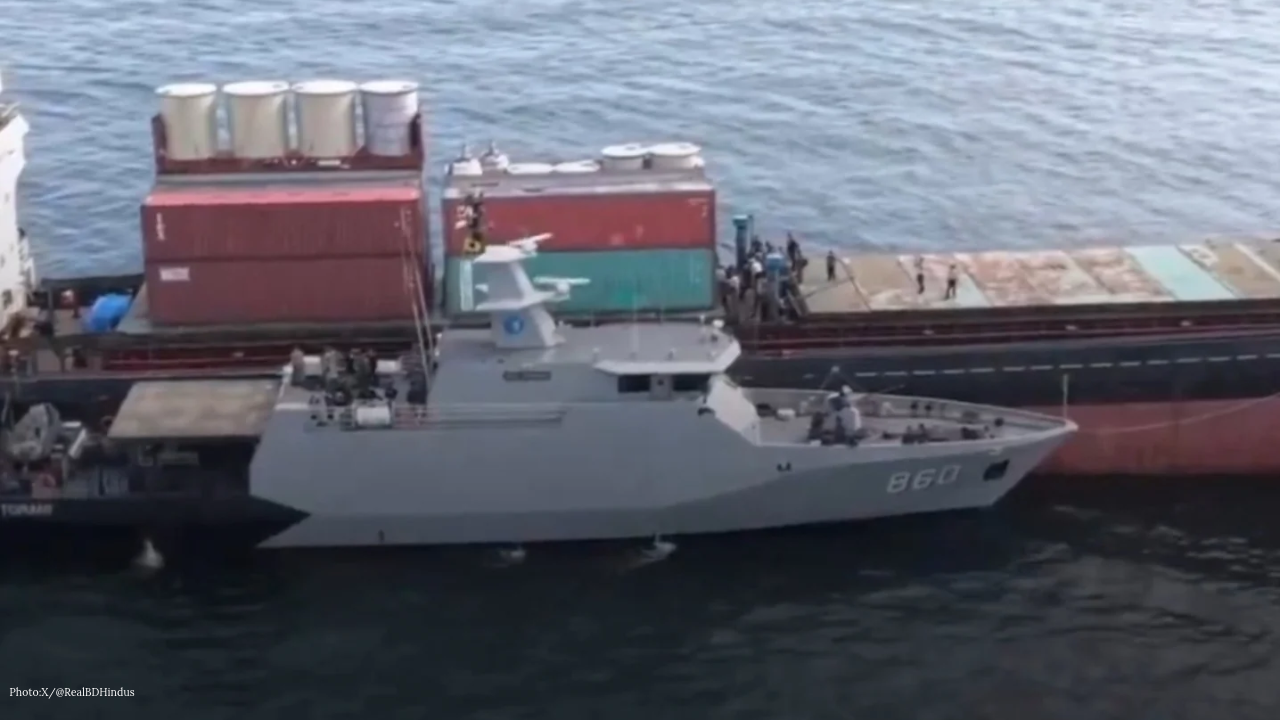
Indonesia: Indonesian authorities have seized a foreign cargo vessel after discovering a massive consignment of industrial chemicals and millions of unregistered SIM cards onboard. The interception has raised questions about the nature of the shipment, the vessel's documentation and the identities of the companies involved in the transportation of the goods. The operation took place on November 7, 2026, when the Indonesian Navy intercepted the Comoros-flagged cargo ship MV Star Line off the coast of North Sumatra. The vessel was reportedly travelling from China towards Bangladesh when naval personnel stopped it for inspection. During the examination, authorities discovered approximately 405 tonnes of sodium percarbonate stored in 15 shipping containers. Investigators also found nearly four million blank 4G LTE SIM cards onboard. The scale and combination of these consignments have drawn considerable attention from Indonesian security agencies. The details of the seizure were made public during a press conference on November 20, where officials discussed the findings and ongoing investigation. Authorities are now examining the shipment's intended purpose, the vessel's registration status and the identities of the individuals and businesses connected to the cargo.
One of the most significant discoveries aboard the MV Star Line was the presence of approximately 405 tonnes of sodium percarbonate, a chemical compound commonly used in industrial and household cleaning products. Sodium percarbonate is an oxygen-releasing compound widely used in laundry detergents, cleaning agents, bleaching products and various industrial applications. Under certain conditions, it releases hydrogen peroxide, making it useful in products that require bleaching and oxidation. However, authorities have also highlighted the potential security implications associated with the quantity of material found aboard the vessel. According to the information disclosed by officials, the seized quantity could theoretically provide chemical material equivalent to the requirements associated with approximately 100 missiles, depending on the formulation and intended application. This comparison has attracted attention because of the possible dual-use nature of certain industrial chemicals. Materials that have legitimate commercial applications can sometimes become relevant to security investigations when transported in unusually large quantities or under questionable circumstances. Nevertheless, the discovery does not establish that the chemical was intended for weapons manufacturing or missile production. Investigators will need to determine its actual destination, intended use and the nature of the transaction before drawing any conclusions.
The discovery of almost four million blank 4G LTE SIM cards has added another important dimension to the investigation. SIM cards are essential components of mobile communication networks. They allow mobile devices to connect with telecommunications operators and access services such as voice calls, text messaging and mobile internet. Blank SIM cards are not necessarily illegal. Telecommunications companies routinely import and distribute unactivated SIM cards for legitimate commercial purposes. However, the large quantity found aboard the vessel has prompted questions about the shipment's ownership, intended distribution network and regulatory compliance. Authorities are expected to examine whether the cards were properly documented and whether the shipment was connected to an authorised telecommunications business. The investigation may also focus on the intended recipients of the SIM cards, their manufacturing origins and the commercial arrangements under which they were being transported. The presence of millions of SIM cards alongside a substantial quantity of industrial chemicals has made the seizure particularly significant for investigators.
Another major issue emerging from the case concerns the registration documents of the MV Star Line. According to the information released by Indonesian officials, the vessel's documentation indicated that its registration had been suspended. This has raised questions about the ship's legal status and whether it was authorised to operate on the international shipping route. International maritime transportation requires vessels to maintain valid registration and comply with applicable safety, documentation and operational requirements. A suspended registration can create serious complications for a vessel's ability to operate legally. It can also make it difficult for authorities to establish responsibility when questions arise about ownership, cargo declarations and the parties involved in international transportation. Investigators are therefore examining the vessel's documentation, ownership details, operational records and the circumstances under which it continued its journey despite the registration issue. The investigation will also need to establish whether the shipping documents accurately represented the cargo carried onboard.
One of the most important unanswered questions concerns the intended recipient of the shipment. The vessel was reportedly travelling from China to Bangladesh when it was intercepted by Indonesian naval personnel. However, officials indicated that the identity of the Bangladesh-based importer had not yet been established. Identifying the importer is crucial because it could help investigators understand who ordered the chemicals and SIM cards, who financed the shipment and where the cargo was ultimately supposed to be delivered. Investigators may also examine the shipping arrangements, commercial invoices, customs declarations and other documents associated with the consignment. The identity of the importer could provide important information about whether the shipment was part of a legitimate commercial transaction or involved activities requiring further regulatory scrutiny. At this stage, however, the available information does not establish any wrongdoing by a particular company, individual or organisation in Bangladesh.
The interception of the MV Star Line has drawn attention to the challenges faced by maritime authorities in monitoring international cargo movements. Global shipping networks transport enormous quantities of industrial materials, electronic components, telecommunications equipment and consumer products every day. Most shipments are part of legitimate commercial activity, but authorities must also identify consignments that involve suspicious documentation, undeclared goods or potential violations of international regulations.
The Indonesian operation highlights several areas that investigators are now examining:
Chemical transportation: Whether the large quantity of sodium percarbonate was properly declared and intended for an authorised commercial purpose.
Telecommunications equipment: Whether the millions of blank SIM cards were being transported in compliance with applicable telecommunications regulations.
Vessel registration: Why the ship's registration was reportedly suspended and under what circumstances it continued operating.
International shipping documents: Whether the cargo declarations and commercial paperwork accurately reflected the contents of the containers.
Destination and ownership: Who arranged the shipment, who was financing it and who was expected to receive the goods in Bangladesh.
These questions are particularly important because international shipping often involves several intermediaries, including exporters, shipping companies, freight operators, importers and customs agents. Establishing the complete chain of responsibility will be an important part of the investigation.
Read Also: Cadillac Targets F1 Progress After Difficult Debut Season
Following the seizure, Indonesian authorities have continued their investigation with the involvement of multiple agencies. The probe is expected to focus on the origin of the cargo, the legal status of the vessel, the identity of the shipment's intended recipients and the circumstances surrounding its transportation. Officials disclosed the case publicly on November 20, providing details about the chemicals and SIM cards discovered during the November 7 interception. The involvement of multiple agencies reflects the different regulatory issues raised by the shipment. The chemical consignment requires examination from a commercial and industrial safety perspective, while the SIM cards raise questions concerning telecommunications regulations. The vessel's registration and international movement also fall within the wider scope of maritime oversight. Authorities will need to establish whether the cargo was supported by valid permits, accurate declarations and legitimate commercial arrangements. No definitive conclusion about the intended use of the shipment or the involvement of any particular organisation should be drawn until the investigation produces further evidence.
The next stage of the investigation is likely to focus on establishing the complete ownership and transportation history of the cargo. Investigators will need to determine who purchased the 405 tonnes of sodium percarbonate, who arranged the transportation of the nearly four million SIM cards and why the vessel's registration status was reportedly suspended. The identification of the Bangladesh importer could become a particularly important development because it may help authorities trace the commercial chain behind the shipment. The case also raises broader questions about the monitoring of dual-use industrial materials and telecommunications equipment moving through international maritime routes. For Indonesia, the seizure represents an important maritime enforcement operation involving a foreign-flagged vessel carrying a substantial and unusual combination of cargo. For now, the investigation remains ongoing, and authorities have yet to establish the complete purpose behind the shipment.









Shubman Gill Wants Bowler-Friendly Pitch for 2nd Test
Shubman Gill wants a bowler-friendly Christchurch pitch as India prepare to bounce back after a draw

Cadillac Targets F1 Progress After Difficult Debut Season
Cadillac F1 retains Valtteri Bottas for 2027 as Dan Towriss focuses on team stability, performance a

GTA 6 Launches Worldwide After 13 Years With a New Vice City Story
GTA 6 arrives after 13 years with Jason and Lucia, a new Vice City world, immersive gameplay, major

Arda Guler Signs Six-Year Real Madrid Contract Extension Until 2032
Arda Guler signs a new six-year Real Madrid deal, extending his stay until 2032 after an impressive

APEC Members Emphasise Safe and Responsible Use of Artificial Intelligence
APEC members discuss responsible AI use, digital innovation and data governance as China and the US

Union of European Clubs Challenge UEFA and EFC Over EU Competition Rules
UEC files an EU competition complaint against UEFA and EFC, challenging club representation, governa