
You have not yet added any article to your bookmarks!
Join 10k+ people to get notified about new posts, news and tips.
Do not worry we don't spam!
Post by : Badri Ariffin
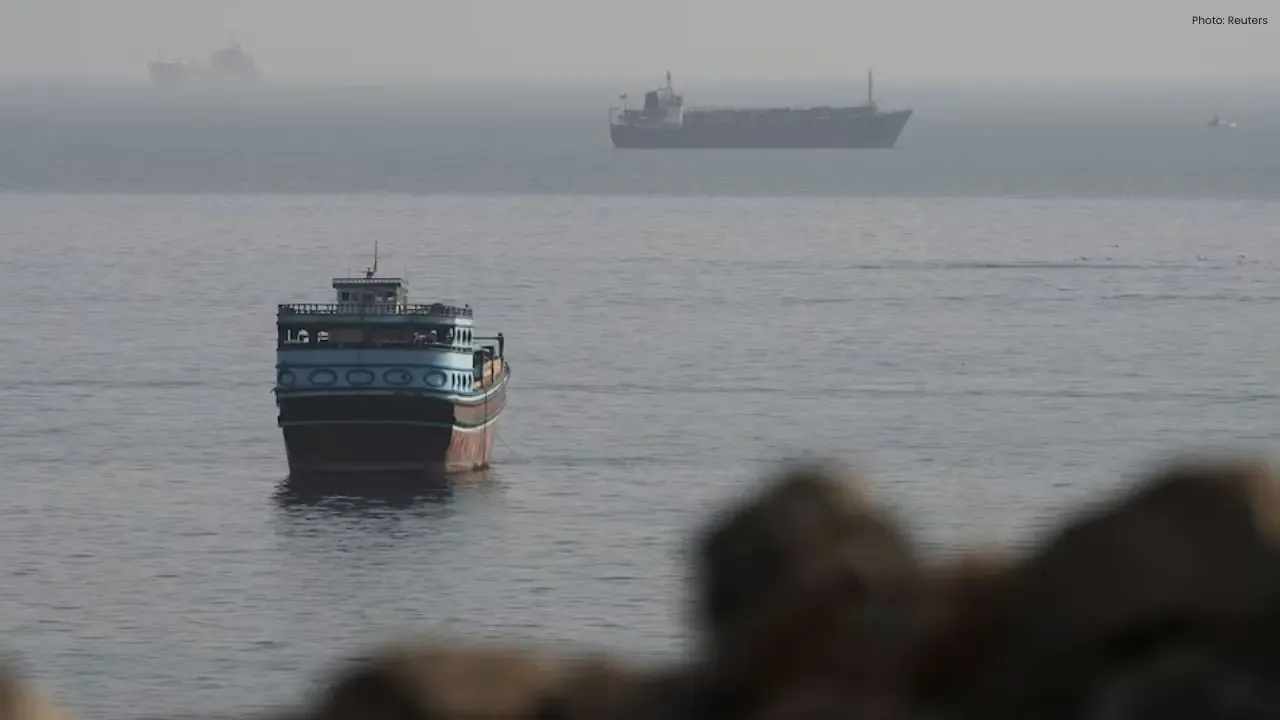
On Sunday, Iran's Revolutionary Guards announced that the Strait of Hormuz will remain inaccessible until the U.S. agrees to a list of stipulations proposed by Tehran, focusing on reparations for wartime damages.
This blockade of the pivotal waterway has severely impacted shipping, global energy markets, and has resulted in soaring prices. In response, U.S. President Donald Trump remarked on Sunday that the country is adopting a cautious stance towards Tehran, hinting that economic pressures might eventually persuade Iran to reconsider its position.
Iran maintains it must keep authority over the Strait of Hormuz post-conflict and has also sought to introduce tariffs for vessels operating in the area. Iranian forces have targeted ships they suspect of evading routes favored by Tehran.
These actions have drastically diminished maritime traffic in the strait. Previously open for transit, the sea route has seen increased tension since the collapse of an April ceasefire. Diplomatic efforts have emphasized the need for both parties to revisit a June memorandum that proposed a path toward negotiations.
According to Tasnim news agency, Iran’s Supreme National Security Council outlined its requirements for reopening the strait on Saturday.
The stipulations call for an end to the conflict across all fronts, termination of what Iran labels a U.S. counterblockade on its ports, lifting of sanctions, release of Iranian assets held in foreign accounts, and compensation for damages incurred during war.
These terms echo those from the June agreement, which included proposals for a $300 billion reconstruction fund for Iran.
On Sunday, Iran's Revolutionary Guards reiterated that the blockade will persist until these demands are met, characterizing the Strait of Hormuz as a “theatre of war” rather than just a sea route.
The strait's closure has heightened costs for American consumers, and this poses further political pressure on President Trump as the November elections approach.
However, Trump stated the U.S. is pursuing a restrained policy regarding its disputes with Iran.
“We are low-keying it,” he mentioned in a conversation with Axios regarding his Iran strategy.
He also referred to the U.S. as “semi-negotiating” with Tehran, observing Iran's economic challenges, which include soaring inflation and budgetary constraints.
“It will work out,” Trump remarked, likening the situation to a chess match.
Earlier on Sunday, Iranian Foreign Minister Abbas Araghchi clarified that Tehran isn't engaged in direct negotiations with Washington but rather “sending messages” via intermediaries.
With ongoing assaults, traffic through the Strait of Hormuz has dramatically decreased.
At least one tanker was reportedly struck on Saturday, as noted by the UAE. Oman’s foreign ministry condemned the recurring attacks without directly implicating Iran.
According to the June memorandum, Iran and Oman were expected to engage in talks surrounding future management of the strait with other Gulf nations while adhering to international law.
Generally, international law forbids imposing tolls on such waterways.
Oman indicated that discussions regarding navigation customs in the Strait of Hormuz are ongoing and urged caution against any actions that might jeopardize them.
Araghchi mentioned that discussions with Oman about the waterway’s management are approaching their conclusion.
Amid limited shipping through the Strait of Hormuz, Iran's Houthi allies in Yemen have announced a different maritime blockade affecting Saudi ports along the Red Sea.
The Houthis reported on Sunday that they targeted a Saudi oil facility on the Red Sea coast, which Saudi Arabia later indicated had its fire extinguished.
The clash between Saudi Arabia and the Houthis is intertwined with the broader Yemeni conflict. Saudi Arabia has historically backed Yemen's internationally recognized government. Although hostilities had paused under a UN-backed agreement from 2022, tensions have escalated since the Houthis’ announcement of their maritime blockade last month.
A medical source in the government-held Mokha reported that on Sunday, three civilians and eight military personnel died, with 32 others injured, all as a result of Houthi fire on the port city.
Houthi military spokesperson Yahya Saree claimed that the group targeted Saudi forces and weaponry in the region using missiles and drones.
The ongoing conflict in the Middle East presents a significant security dilemma for Saudi Arabia as the country seeks to reduce its reliance on oil.
Recently, Saudi Arabia entered a joint defence agreement with Turkey and Pakistan. This pact encompasses a NATO-style clause stipulating that an attack against one member is considered an attack against all.
Turkish Foreign Minister Hakan Fidan stated on Saturday that he anticipates Egypt will become part of the agreement, calling Egypt a “natural partner” on various issues.
Fidan affirmed that Turkey and the other involved nations already operate with an alliance mentality.
He also clarified that the agreement is not aimed at any specific nation. Pakistan's foreign ministry emphasized that this pact aims to bolster collective deterrence.
#Global News #Breaking News #Iran News #Strait of Hormuz #GCC News










PM Modi Pays Tribute to Mahatma Gandhi, Urges People to Support Khadi
PM Modi pays tribute to Mahatma Gandhi on Gandhi Jayanti and urges citizens to support Khadi and the

Amazon Seeks to Offload $8 Billion in Nvidia Chips to Investors
Amazon plans to move $8 billion in Nvidia chips to investors, using a new financing model to strengt

Samsung Raises Galaxy S26 Prices as Memory Chip Costs Rise
Samsung raises Galaxy S26 prices in South Korea as rising memory chip costs put pressure on smartpho

Lewis Hamilton Calls Singapore Grand Prix One of F1's Toughest Races
Lewis Hamilton discusses the demanding Singapore Grand Prix and brings Plus44 and Almave to Singapor

Denmark's Pandora Opens World's Largest Jewellery Factory in Vietnam
Pandora opens its largest jewellery factory in Vietnam, expanding global production, strengthening s

Gautam Gambhir Questions Batting-Friendly Pitches After India's Record ODI Chase
Gautam Gambhir questions batting-friendly ODI pitches after India’s record chase, calling for a bett

