You have not yet added any article to your bookmarks!
Join 10k+ people to get notified about new posts, news and tips.
Do not worry we don't spam!
Post by : Rohit Dhiman
Iran has said that its delegation in New York has no plans to hold fresh negotiations with the United States, despite President Donald Trump saying he expects discussions between Washington and Tehran to resume soon. The latest development comes as diplomatic efforts remain stuck over Iran's conditions for ending the conflict and reopening the strategically important Strait of Hormuz. Tehran has communicated its position through Qatar, while the United States has rejected the proposal put forward by Iran. Iran's state news agency IRNA reported on Monday that the Iranian delegation attending the United Nations General Assembly in New York was not preparing for a new meeting with US officials. The agency cited an unnamed source close to the delegation.
Iran's delegation is currently in New York for the UN General Assembly, where Iranian officials have been discussing the country's position on the conflict and possible diplomatic solutions. However, according to IRNA, there is currently no scheduled negotiation between the Iranian delegation and the US side. The Iranian news agency also reported that Tehran had already communicated its position to Washington through a Qatari mediator. This suggests that Iran is continuing to use indirect diplomatic channels even while denying that a new direct meeting is planned. Iranian officials have repeatedly said that diplomacy has not been completely closed off. At the same time, Tehran has insisted that any agreement must address the conditions it has put forward for ending hostilities and restoring normal movement through the Strait of Hormuz.
Iran has presented a set of conditions linked to a possible ceasefire and the reopening of the Strait of Hormuz. One of the central demands is a seven-day halt to fighting across the Middle East. Iran's proposal includes Lebanon, where Hezbollah, an Iranian ally, has been involved in the wider regional conflict. Tehran has also demanded relief from economic pressure. Its conditions include the release of frozen Iranian assets, the lifting of sanctions affecting its oil sector and an end to the US naval blockade of Iranian ports. Iran has said that the Strait of Hormuz could be reopened after the required conditions are fulfilled. The proposal therefore links the future of the waterway directly to broader political, military and economic issues.
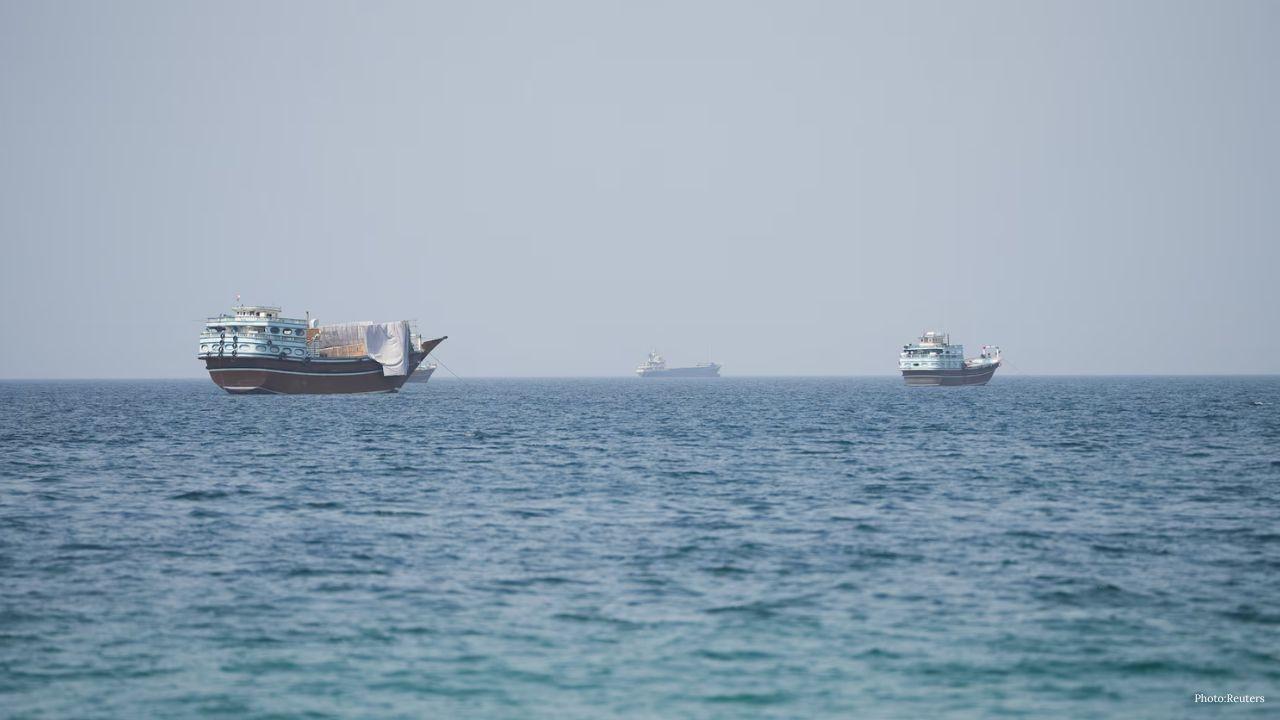
The Strait of Hormuz is one of the world's most important energy routes. It connects the Persian Gulf with the Gulf of Oman and the Arabian Sea. Before the conflict, roughly one-fifth of global oil and gas supplies moved through the waterway, making any major disruption there a concern for energy markets and international shipping. The dispute over Hormuz has therefore extended beyond the direct confrontation between Iran and the United States. Iran has asserted control over movement through the waterway since the conflict intensified, while Washington has responded with a naval blockade of Iranian ports. The situation has affected commercial shipping and created concerns about energy supplies and transportation costs.
While Iran says its delegation has no plans for new negotiations, President Donald Trump has given a different signal. Trump said he expected talks with Iran to resume soon. Earlier, he had rejected Tehran's proposal concerning the Strait of Hormuz. According to reports, indirect negotiations could potentially take place through Qatar, which has been involved in communication between Washington and Tehran. The possibility of indirect talks is important because the two sides have continued to communicate through intermediaries even when direct diplomatic engagement has remained limited. Previous discussions between US representatives and Iranian Foreign Minister Abbas Araghchi were also conducted through diplomatic channels during the UN General Assembly meetings.
Qatar has emerged as an important intermediary in the latest diplomatic efforts. Iran says it communicated its position to the United States through a Qatari mediator. The use of an intermediary allows the two governments to exchange proposals even when direct negotiations are difficult. The latest Iranian message indicates that Tehran believes its conditions have already been clearly conveyed to Washington. The next step could therefore depend on the response from the US side and whether both countries are willing to modify their positions enough to restart negotiations.
For Tehran, reopening the waterway is not being presented as a separate issue. Iranian officials have linked the reopening of Hormuz to a broader agreement covering the ceasefire, sanctions, frozen assets and the US naval blockade. Iran has argued that it cannot simply reopen the strategic waterway without receiving commitments on the issues it considers central to ending the conflict. This position has created a major obstacle because Washington has rejected the conditions attached to the proposal. The disagreement means that the future of Hormuz remains closely connected to the wider Iran conflict.
The latest diplomatic deadlock follows an earlier attempt to establish a framework for ending the conflict. The United States and Iran had reached a memorandum of understanding in June that was intended to provide a path toward ending the war, reopening the Strait of Hormuz and beginning discussions related to Iran's nuclear programme. That understanding later collapsed amid accusations from both sides. Iran subsequently hardened some of its demands. Iranian Revolutionary Guards spokesman Hossein Mohebi said Tehran had changed its position after the previous arrangement broke down. According to earlier reporting, Iran has sought the lifting of oil sanctions, removal of the US naval blockade and the release of frozen Iranian assets as part of a settlement.
Although the most intense phase of the conflict has eased, the situation has not returned to normal. Fighting around the region has continued intermittently, particularly around the Strait of Hormuz. Commercial vessels have also faced risks in the waterway. Iran has required ships passing through the strait to coordinate with its authorities, citing security and sovereignty concerns. The United States, meanwhile, has maintained pressure on Iran through military and economic measures. This has created a situation in which diplomatic efforts are taking place alongside continued military and economic pressure.
Read Also: Religious Teacher Charged With Sexual Assault of Student
The lifting of oil-related sanctions is one of Iran's key demands. Iran's economy relies heavily on its energy sector, making restrictions on oil exports an important part of the pressure applied by Washington. Tehran wants sanctions affecting its oil industry removed as part of any agreement to end the conflict. For the United States, however, sanctions have been an important tool in its strategy toward Iran. This difference is one of the reasons that reaching a broader agreement remains difficult.
The immediate question is whether indirect communication through Qatar can lead to a new round of negotiations. Iran's latest statement makes clear that its New York delegation does not currently have a planned meeting with US officials. At the same time, Washington has indicated that it remains interested in the possibility of renewed talks. The two sides therefore appear to be sending different signals. Iran is maintaining its demands, particularly regarding the ceasefire, sanctions, frozen assets and the US naval blockade. The United States has rejected the current proposal but has not ruled out further discussions. For now, the Iran sanctions issue, the future of the Strait of Hormuz and the proposed regional ceasefire remain closely connected.
The Strait of Hormuz is a major route for global energy shipments. Any prolonged disruption could affect oil and gas markets, shipping companies and countries that depend on imports from the Gulf. A ceasefire could also have consequences for other parts of the Middle East, particularly Lebanon and Yemen, where the conflict has broader regional dimensions. That is why international governments are closely watching the diplomatic messages coming from Tehran and Washington. The next stage could depend on whether indirect talks through Qatar can bridge the gap between Iran's conditions and the position of the United States.
Iranian state media reported that the Iranian delegation in New York has no plans for negotiations with the United States at present.
Iran has proposed a seven-day halt to hostilities across the Middle East as part of its conditions for ending the conflict and reopening the Strait of Hormuz.
Iran has demanded a ceasefire, release of frozen Iranian assets, lifting of oil sanctions and an end to the US naval blockade.
The waterway is a major global energy route. Before the conflict, roughly one-fifth of the world's oil and gas supplies passed through it.





Thailand Floods Leave Eight Dead as Heavy Rain Hits 27 Provinces
Thailand floods have killed eight people since September 16, affecting 1.7 million people across 27

OpenAI Says AI Agents Accidentally Posted 53 User Images Online
OpenAI says AI agents accidentally posted 53 ChatGPT user images online, raising new concerns over A

Virat Kohli Says 2027 World Cup Will Be His Last For India
Virat Kohli confirms the 2027 World Cup will be his last for India as he targets one final title bid
Weak Earthquake Hits Kinabatangan in Sabah Early Saturday Morning
A 3.3-magnitude Sabah Earthquake hit Kinabatangan early Saturday. Firefighters found no damage, whil
Europe's Biggest Leagues Demand Sweeping FIFA Reforms
Europe's top leagues demand FIFA reforms, stronger FIFA governance, stakeholder representation and c

Sri Lanka Economy Shows Resilience, But IMF Flags Growing Downside Risks
Sri Lanka economy remains resilient, but IMF warns of downside risks from energy costs, inflation an