
You have not yet added any article to your bookmarks!
Join 10k+ people to get notified about new posts, news and tips.
Do not worry we don't spam!
Post by : Saif Rahman
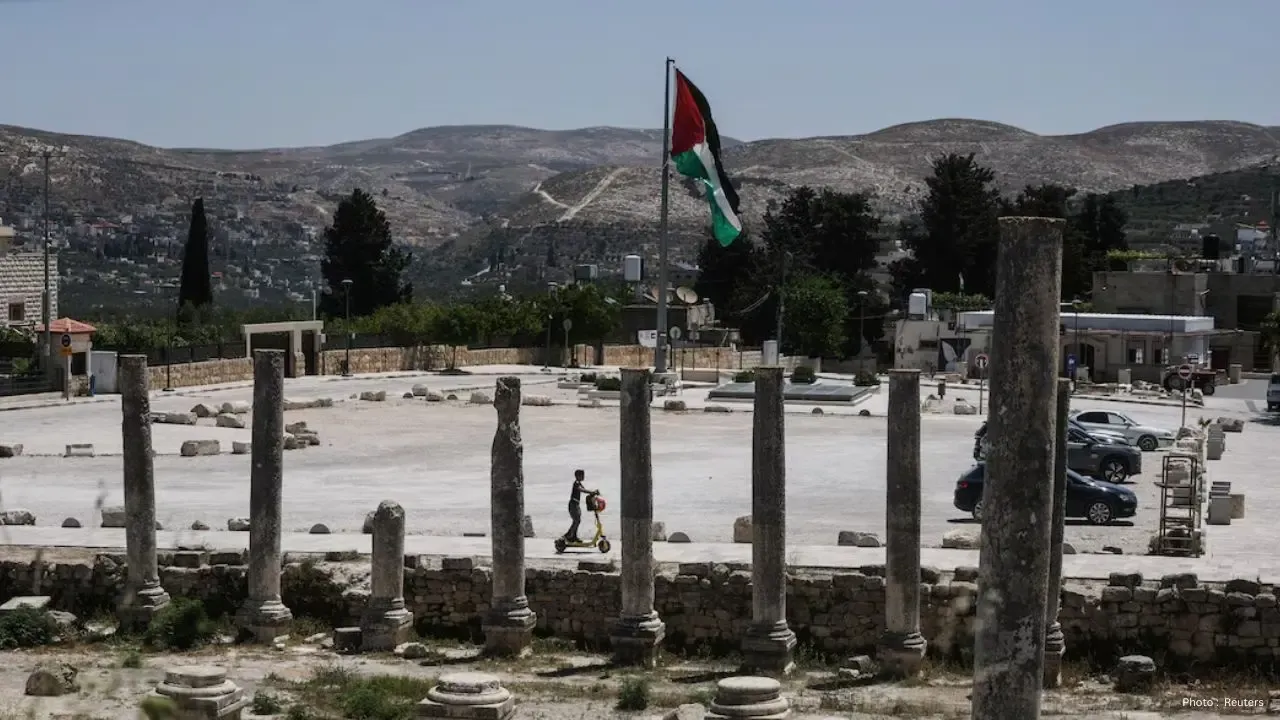
The proposed Israeli heritage bill concerning the West Bank has ignited fresh anxieties among Palestinian communities over the implications it carries for ancient sites. Critics argue that this initiative is more than just a move for historical preservation; it aims to extend political control over contested territories. The bill seeks to authorize stronger Israeli civil governance over archaeological sites and to facilitate land acquisition in these regions. Palestinian advocates, alongside rights organizations and discerning Israeli academics, have asserted that this legislation could undermine Palestinian autonomy while amplifying settlement expansion and exacerbating land confiscation, particularly in significant locations like Sebastia, situated near Nablus.
This issue transcends a simple discourse on historical preservation; it intertwines with vital aspects of daily life, such as tourism, agriculture, and access to resources like water and roads. For communities adjacent to these ancient sites, alterations in who governs them can substantially impact local income and their connection to their heritage. Such has been the intensity of the backlash against the proposed bill, with critics contending that it drags archaeological efforts into a politically charged struggle for dominance over the land, while supporters assert it protects a heritage that is integral to biblical history.
Dubbed the “Heritage Authority in Judea and Samaria,” the bill is progressing through Israel’s parliament, receiving initial approval. If it gains full legislative endorsement, it would transition the oversight of significant cultural sites dating from Roman to Crusader periods to Israel’s Ministry of Heritage. This would allow for the “expropriation and purchase of real estate” linked to these historical areas, granting the Israeli state expanded influence over these archaeological zones within territories governed under restricted Palestinian self-rule as per the Oslo accords of the 1990s. The Palestinians perceive this as a substantial shift in the political landscape, even as proponents of the bill evade any assertion that it alters the territory's legal status.
One of the stark reminders of the sensitivity surrounding this issue is the village of Sebastia, home to an important archaeological site rich with 9th-century B.C. remains and artifacts spanning various historical eras. Sebastia’s economic sustainability hinges largely on the tourism it attracts to its ruins, making any changes particularly alarming for families reliant on this influx of visitors. However, to the community members, these ruins represent far more than mere tourist attractions; they embody their cultural roots and economic lifeblood.
Thus, this village has emerged as a potent symbol of Palestinian apprehensions. In late 2025, local authorities revealed plans for Israel to seize approximately 1,800 dunams (around 445 acres) in the vicinity of Sebastia for development related to the archaeological site, as reported by local officials to Reuters. Representatives from the village voiced concerns that this action could jeopardize around 5,000 olive trees, essential agricultural land, and overall community resources. According to Sebastia’s deputy mayor Nizar Kayed, this could deprive residents of critical resources and further entrench settlement expansion.
Existing local businesses are already feeling the effects, with tourism suffering significantly since late 2023 due to ongoing regional conflict and safety concerns. Villagers worry that if Israeli authorities gain more control over archaeological and surrounding territories, their community could be severed from one of its last remaining sources of income. Restaurant owner Nahed Sakha, whose property is reportedly on the list for confiscation, expressed concerns about the delineation between the archaeological site and the local populace, embodying the broader Palestinian narrative that heritage protection is being manipulated to isolate rather than uplift local communities.
Palestinian leaders have explicitly articulated their viewpoint regarding the implications of the bill. Hani Al-Hayek, the Palestinian Authority’s tourism minister, remarked that controlling these antiquities is a conduit for increasing Israeli dominance and settlement activities within Palestinian lands. This apprehension visualizes archaeology and historical claims as instruments justifying territorial actions, echoing the longstanding Palestinian refrain of control and occupation.
Israeli authorities supporting the bill counter these claims, asserting that the initiative is oriented toward preserving significant archaeological sites and ensuring evidence of the Jewish historical association with the land is safeguarded. Zvi Sukkot, a key Israeli lawmaker involved in pushing this proposal forward, asserts that the bill does not alter the legal classification of the territories known as Judea and Samaria, instead framing it as a protective measure for sites with a biblical lineage.
Nonetheless, this perspective has not quelled criticisms within Israel itself. The anti-settlement group Peace Now denounced the bill as one that facilitates annexation and exposes Palestinians to substantial land appropriation. The group highlighted a prevailing trend where archaeological narratives have been wielded to bolster settlement expansion, warning that the current endeavors are unparalleled in scale. Concurrently, the Israel Academy of Sciences and Humanities issued a public statement urging the bill’s withdrawal, alerting to potential threats to Israel’s standing in archaeological academia and international collaborations. This illustrates that concerns regarding the bill are not confined to the Palestinian sphere but resonate among numerous Israeli scholars and professionals, who worry the legislation could politicize heritage management and lead to long-term repercussions.
Furthermore, this context fits into a broader pattern worrying many across the West Bank, as recent developments have indicated a concerted effort to consolidate Israeli control over cultural heritage sites. Earlier, Israel’s shift to take land-use and planning authority at the Ibrahimi Mosque/Tomb of the Patriarchs in Hebron further exemplifies this trend. When viewed collectively, all these actions converge into a landscape where the heritage bill is perceived not merely as a legal adjustment but as part of a broader strategy to deepen Israeli governing reach over land and historical sites throughout the West Bank.
The multifaceted legal and political intricacies surrounding this legislation amplify the contentious nature of the issue. Following its capture of the West Bank during the 1967 conflict, Israel has been navigating the complexities of governing the area, with the Palestinian Authority retaining limited autonomy under the Oslo framework, while Israel exercises comprehensive military control over significant portions. International law typically frames Israeli settlements in the West Bank as illegal, suggesting they contravene the Fourth Geneva Convention by relocating civilian populations into occupied regions. Conversely, Israel challenges this view, positing that the land remains disputed rather than occupied, referencing historical and security rationales.
This legal contention influences each group’s perception regarding the proposed bill. For Israeli proponents, it signifies protecting pivotal archaeological sites and solidifying a historical claim to the land. Conversely, Palestinians interpret it as a gradual step toward de facto annexation, where regulatory advancements and legislative modifications extend control without resorting to overt declarations. The proposed heritage authority assumes importance that transcends discussions of museums or tourism endeavors; it tackles one of the foundational questions underpinning the conflict: who dominates the land, authors its narrative, and reaps its benefits.
From an editorial standpoint, the entwinement of cultural preservation with territorial authority in this highly contested region raises substantial concerns. While safeguarding ancient sites is undeniably essential, when legislation that champions such protection simultaneously sets the stage for land expropriation and diminished Palestinian governance, it becomes convoluted to disentangle archaeology from the political landscape. In these conditions, heritage risks morphing into an instrument of control, instead of a connector of narratives.
The human ramifications—often veiled by legal terminology—are profoundly impactful. For communities such as Sebastia, ceding control over land equates to losing essential agricultural and economic resources. It can lead to diminished access to water, loss of infrastructure connecting people to vital services, and the depletion of income-generating opportunities tied to local tourism. These concerns resonate deeply, enveloping the daily experiences of individuals already enduring occupation, mobility restrictions, and economic precarity. When heritage sites’ surrounding lands become targets for appropriation, the implications extend far beyond mere heritage concerns.
Another pertinent question looms regarding whether such moves will genuinely safeguard archaeology in the long term. Should local populations shift their perceptions of ancient sites towards views of displacement rather than shared historical narratives, a breakdown of trust may ensue. This deterioration could obstruct preservation efforts, diminish collaborative spirit, and allow heritage itself to warp into a fresh conflict zone. The warnings expressed by Israeli scientists underscore the ramifications: they are concerned not only about international diplomatic tensions but also how politicizing archaeology could adversely affect research integrity and erode the reliability of Israeli academic endeavors on the global stage.
As the bill navigates the parliamentary process, its final outcome remains resolute in uncertainty amid rumors of potential elections later this year. However, the mere momentum preceding its potential enactment has intensified fears among Palestinians, suggesting that the conflict over the West Bank is entering a new stratum—one where history, tourism, land governance, and heritage preservation are enmeshed into the overarching struggle for authority. Sebastia epitomizes these anxieties, portraying a scenario where ancient relics bewitch global interest while, concurrently, its residents grapple with the escalating threats against their own future.
Ultimately, the contention surrounding West Bank ancient sites transcends concerns about the remnants of bygone eras. It fundamentally delves into contemporary power dynamics and questions of future ownership. While the Israeli heritage bill may be touted as a protective measure for historical legacies, for numerous Palestinians, it symbolizes a potential alteration in who governs the land, a perspective that fuels vehement reactions and will likely continue to be a focal point in future discussions.










PM Modi Pays Tribute to Mahatma Gandhi, Urges People to Support Khadi
PM Modi pays tribute to Mahatma Gandhi on Gandhi Jayanti and urges citizens to support Khadi and the

Amazon Seeks to Offload $8 Billion in Nvidia Chips to Investors
Amazon plans to move $8 billion in Nvidia chips to investors, using a new financing model to strengt

Samsung Raises Galaxy S26 Prices as Memory Chip Costs Rise
Samsung raises Galaxy S26 prices in South Korea as rising memory chip costs put pressure on smartpho

Lewis Hamilton Calls Singapore Grand Prix One of F1's Toughest Races
Lewis Hamilton discusses the demanding Singapore Grand Prix and brings Plus44 and Almave to Singapor

Denmark's Pandora Opens World's Largest Jewellery Factory in Vietnam
Pandora opens its largest jewellery factory in Vietnam, expanding global production, strengthening s

Gautam Gambhir Questions Batting-Friendly Pitches After India's Record ODI Chase
Gautam Gambhir questions batting-friendly ODI pitches after India’s record chase, calling for a bett

