You have not yet added any article to your bookmarks!
Join 10k+ people to get notified about new posts, news and tips.
Do not worry we don't spam!
Post by : Meena Ariff
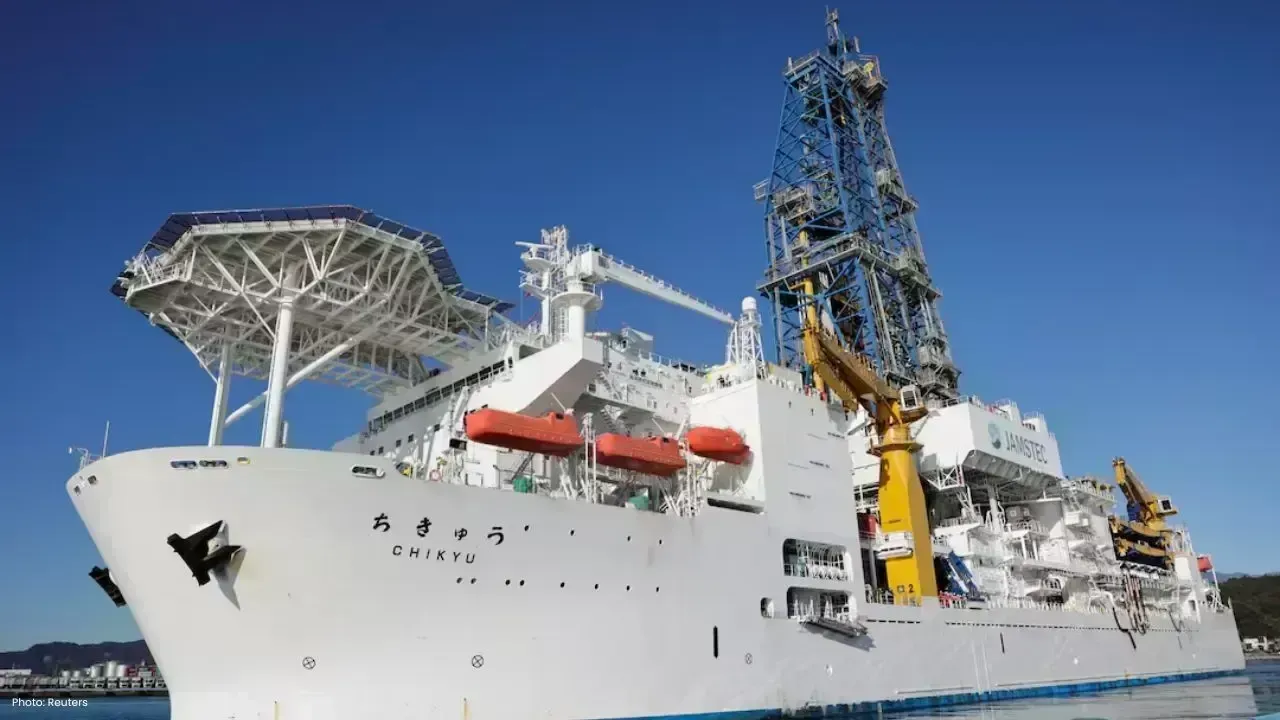
Japan has taken a major step toward strengthening its access to critical minerals by launching a groundbreaking deep-sea exploration initiative aimed at reducing its reliance on foreign suppliers. On Monday, the Japanese mining test vessel Chikyu set sail for Minamitori Island, a remote coral atoll located roughly 1,900 kilometers southeast of Tokyo in the Pacific Ocean.
The month-long mission will focus on examining vast deposits of seabed mud believed to contain unusually high concentrations of rare earth elements. These minerals are considered strategically vital, as they are essential components in the production of electric vehicles, renewable energy technologies such as wind turbines, advanced consumer electronics, and a wide range of defense and aerospace systems.
What makes the expedition particularly significant is its unprecedented technical ambition. The project marks the world’s first attempt to continuously extract rare-earth-bearing sludge from an extreme depth of about six kilometers below the ocean surface and transport it directly to a vessel. During the trial, engineers and scientists will evaluate cutting-edge drilling, lifting, and pumping systems designed to withstand immense underwater pressure, low temperatures, and other harsh deep-sea conditions.
Japan’s renewed focus on deep-sea mineral resources comes at a time of increasing global concern over the stability of supply chains for rare earths. China currently dominates global production and processing of these materials and has tightened export controls in recent years, raising alarms among technology-dependent economies. By exploring domestic and offshore sources, Japan aims to diversify supply options, enhance economic security, and reduce strategic vulnerability.
If the trial proves successful, the project could have far-reaching implications for the global rare earth market. It may open the door to large-scale seabed mining and establish Japan as a leading player in next-generation mineral extraction technologies. At the same time, authorities have emphasized that environmental impacts will be carefully studied, with the mission also serving as a test case for balancing resource development with marine ecosystem protection.









George Russell Wins Dutch GP Sprint, Boosts Mercedes Morale
George Russell wins the Dutch GP Sprint from pole as Mercedes teammate Kimi Antonelli extends his F1

Australia 50/3 After Bangladesh Bowled Out for 64 in Second Test
Australia reached 50/3 after Bangladesh were bowled out for 64 in the second Test, with Mitchell Sta

Jordan Burroughs Returns to Wrestling with 2028 Olympic Dream
Jordan Burroughs returns to wrestling with Real American Freestyle as the Olympic champion eyes a po

Lamborghini Catches Fire on Singapore's ECP, Causing Heavy Traffic
A Lamborghini caught fire on Singapore's ECP, causing heavy traffic and bus delays. No injuries were

Bangkok Airport Duty-Free Area Flooded by Pipe Burst
A burst water pipe flooded the duty-free shopping area at Bangkok's Suvarnabhumi Airport on July 16,
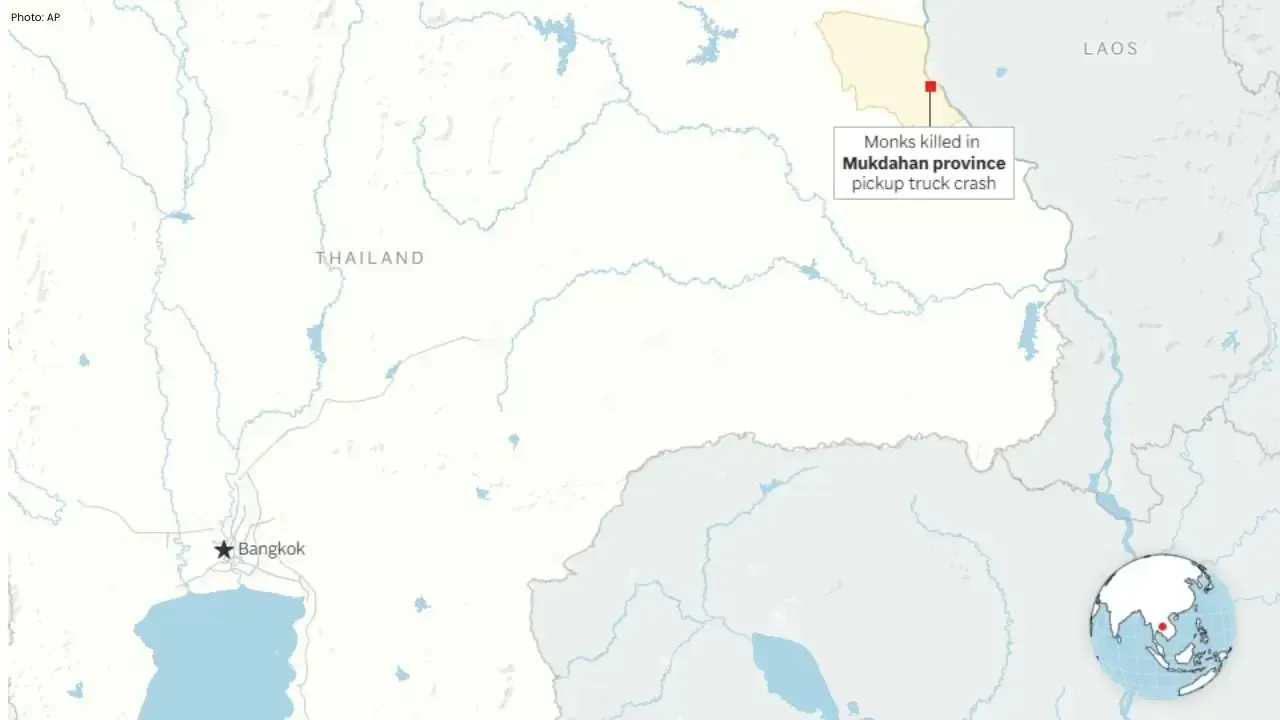
Nine Monks Killed in Thailand Pickup Truck Tragedy
An 11-year-old boy driving a pickup truck crashed into monks during a pilgrimage in northeastern Tha