
You have not yet added any article to your bookmarks!
Join 10k+ people to get notified about new posts, news and tips.
Do not worry we don't spam!
Post by : Samjeet Ariff
For newcomers to Dubai, understanding the public transport system can seem daunting. While many perceive the city as overly reliant on cars or taxis, it actually boasts one of the most efficient, budget-friendly, and tech-savvy public transport frameworks in the region. From metro lines and trams to buses and water taxis, Dubai’s network is tailored to offer a clean, efficient, and user-friendly experience.
This guide will clarify how the public transport system operates, details on fare structures, and practical tips for both residents and tourists to navigate it seamlessly.
Dubai’s public transport is operated by the Roads and Transport Authority (RTA), which is responsible for every aspect from planning to pricing and safety. This governance produces a consistent environment across all transport options.
The system emphasizes cashless travel, a zone-based fare model, and interconnected services, with a single card applicable for different transport modes.
The city is organized into fare zones, determining ticket costs based on the zones you traverse rather than the distance traveled.
Zone 1: Covers the heart of the city, including Bur Dubai, Deira, and parts of Downtown.
Zone 2: Encompasses areas like Al Barsha and its neighboring districts.
Zone 3: Includes outlying areas such as Jebel Ali and Expo City.
Prices are lower when traveling within a single zone, whereas crossing zones incurs additional costs.
At the core of Dubai’s transport network is the Nol Card, a smart card facilitating easy access to all public transport.
Red Ticket: Ideal for tourists or short visits.
Silver Nol Card: The preferred choice for local residents.
Gold Nol Card: Similar to Silver, but grants access to Gold Class cabins.
Blue Nol Card: A personalized option for students, senior citizens, and other special categories.
This card works seamlessly across all modes of transport.
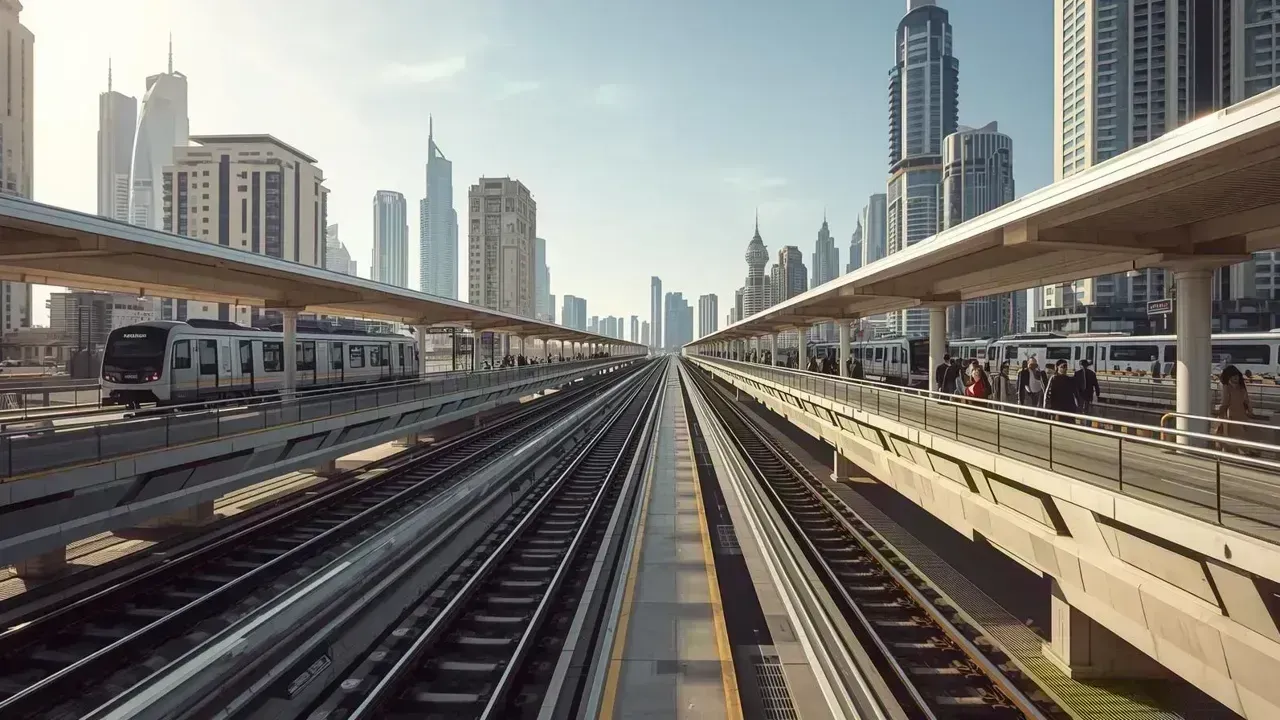
The Dubai Metro forms the backbone of the public transport network. It is driverless, fully automated, air-conditioned, and known for its punctuality.
Red Line: Extends from Centrepoint (near DXB Airport) to Expo City.
Green Line: Connects Deira with Bur Dubai.
The Red Line, in particular, is favored due to its connectivity to airports, business hubs, shopping centers, and tourist sites.
Metro stations are clearly marked, multilingual, and designed to be user-friendly. Facilities such as elevators, escalators, tactile paths, and clear signage ensure accessibility for all.
Metro ticket prices vary based on the zones traveled and the type of card used.
Typical fares using a Silver Nol Card are:
Within 1 zone: around AED 3.
Across 2 adjacent zones: approximately AED 5.
Traveling through more than 2 zones: approximately AED 7.5.
Gold Class fares are typically double that of the Silver class.
Moreover, daily, weekly, and monthly passes are available, offering savings for regular commuters.
Gold Class provides:
More spacious seating
Less crowded atmosphere
Priority seating availability.
Silver Class is more budget-friendly and widely used.
Be cautious as using Gold Class with a Silver card incurs penalties; card types must align with cabin types.
The bus network fills gaps in metro service coverage. Buses are new, air-conditioned, and adhere to strict schedules.
Local buses
Feeder buses that connect metro stations
Intercity services to Sharjah, Abu Dhabi, and other emirates.
Bus stops are equipped with shelters, air conditioning in many areas, and display real-time route information.
As with the metro, bus fares are also zone-based and automatically deducted from the Nol Card.
Fares are on par with metro pricing, making buses a viable choice for daily travel.
Feeder buses to metro stations are often counted as part of the same journey when timed appropriately.
The Dubai Tram operates mainly in the Dubai Marina, JBR, and Al Sufouh areas.
Links metro stations with residential areas and beaches
Lessens reliance on taxis in busy zones
Fully incorporated into the Nol Card system.
Tram fares are typically in line with single-zone metro travel.
Dubai also provides water transport that combines functionality with aesthetics.
Water Bus: Budget-friendly with set routes.
Dubai Ferry: Covers longer distances with picturesque views.
Abra: Traditional wooden boats mainly serving Deira and Bur Dubai.
Taking an Abra ride across Dubai Creek is one of the city’s most economical transport options.
Traditional Abra rides generally range from AED 1 to AED 2.
Water buses and ferries vary in cost based on the route and service type.
Many water transport options can be paid for via Nol Card.
Dubai provides daily, weekly, and monthly passes for frequent users.
Unlimited travel within selected fare zones
Lower per-trip costs
Great for regular commuters.
Monthly passes are particularly economical for those frequently using both metro and bus services.
Dubai does not implement surge pricing for public transport. Nevertheless:
Peak hours typically coincide with morning and evening work commutes.
Metro trains can become crowded during these times.
Consistent pricing simplifies your budgeting.
Dubai maintains strict regulations within its transport system for order.
Common penalties include:
Traveling with insufficient balance
Attempting to enter Gold Class with a Silver card
Consuming food or beverages inside the metro
Crossing designated safety lines.
Fines are imposed electronically and deducted via official processes.
Dubai’s public transport meshes seamlessly with taxi services.
All metro stations feature designated taxi ranks.
Ride-hailing services are prevalent near metro stations,
allowing for smooth last-mile connectivity without the necessity of car ownership.
Tourists receive substantial advantages from Dubai’s transport system.
Metro connectivity to the airport
Easy access to major attractions
Cost-effective compared to taxis.
Red Tickets or Silver Nol Cards typically suffice for brief visits.
For residents, utilizing public transport means:
Reduced fuel expenditures
Less stress concerning parking
Minimized exposure to traffic.
Many professionals depend entirely on metro and bus services for work commutes.
Dubai’s public transport upholds high standards for:
Cleanliness
CCTV surveillance
Dedicated spaces for women and children.
Security staff and emergency protocols are prevalent throughout stations and vehicles.
The RTA facilitates apps for:
Route guidance
Fare estimations
Card balance verification
Service updates.
Digital tools significantly enhance travel convenience and planning.
The public transport system contributes to Dubai’s sustainability objectives.
Lesser carbon emissions
Reduced traffic congestion
Energy-efficient operations.
Opting for public transport promotes long-term urban planning efforts.
It is neither slow nor outdated.
It offers affordability compared to taxi services.
It caters to daily life, not exclusively tourists.
A solid grasp of the system transforms how residents and visitors experience the city.
Dubai’s public transportation system is structured, affordable, and dependable. With an understanding of the zones, Nol card usage, and essential rules, moving around the city can be straightforward and efficient. Be it as a tourist, newcomer, or long-term resident, the transport framework is designed to optimize time, finances, and convenience.
Public transport in Dubai transcends mere travel—it's a forward-thinking urban mobility solution.
This article is for informational purposes only and subject to change based on RTA updates. For the most current information on routes, prices, and rules, please consult the RTA’s official sources or station announcements prior to your travels.










PM Modi Pays Tribute to Mahatma Gandhi, Urges People to Support Khadi
PM Modi pays tribute to Mahatma Gandhi on Gandhi Jayanti and urges citizens to support Khadi and the

Amazon Seeks to Offload $8 Billion in Nvidia Chips to Investors
Amazon plans to move $8 billion in Nvidia chips to investors, using a new financing model to strengt

Samsung Raises Galaxy S26 Prices as Memory Chip Costs Rise
Samsung raises Galaxy S26 prices in South Korea as rising memory chip costs put pressure on smartpho

Lewis Hamilton Calls Singapore Grand Prix One of F1's Toughest Races
Lewis Hamilton discusses the demanding Singapore Grand Prix and brings Plus44 and Almave to Singapor

Denmark's Pandora Opens World's Largest Jewellery Factory in Vietnam
Pandora opens its largest jewellery factory in Vietnam, expanding global production, strengthening s

Gautam Gambhir Questions Batting-Friendly Pitches After India's Record ODI Chase
Gautam Gambhir questions batting-friendly ODI pitches after India’s record chase, calling for a bett

