
You have not yet added any article to your bookmarks!
Join 10k+ people to get notified about new posts, news and tips.
Do not worry we don't spam!
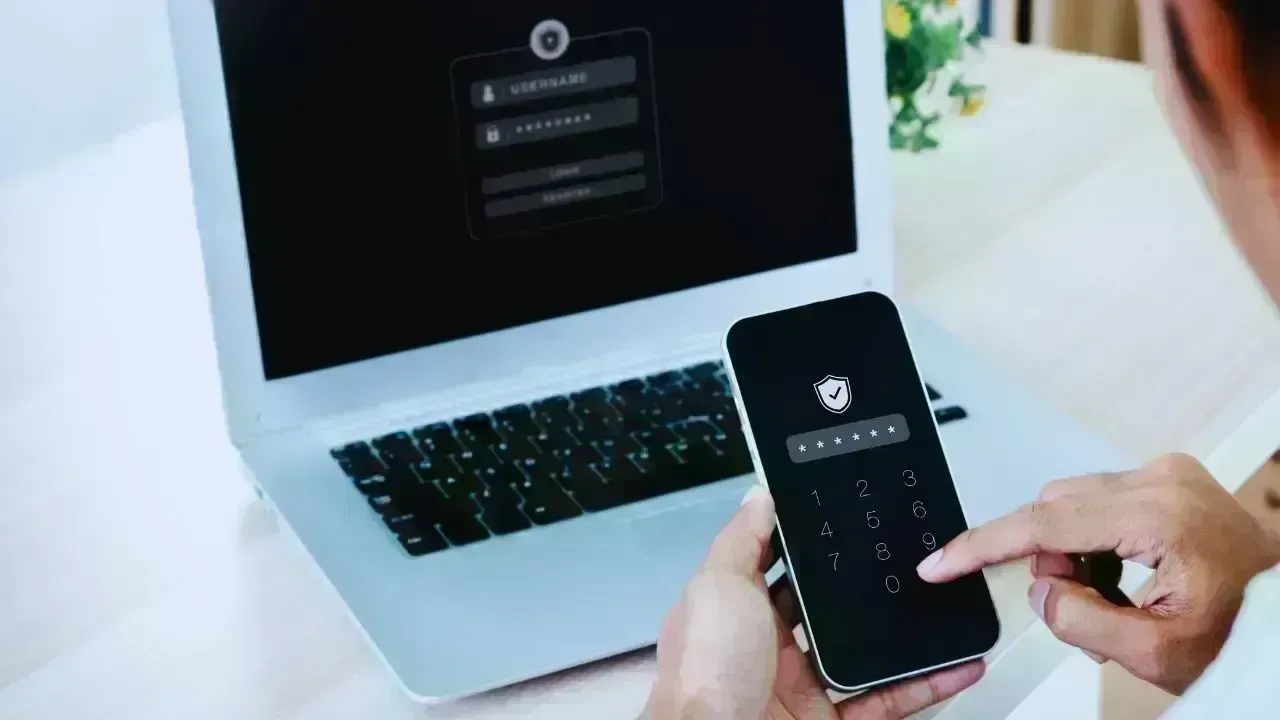
Post by : Anis Farhan
Once upon a time, creating a “strong password” seemed sufficient to protect your accounts. Today, with evolving threats, that confidence is misguided.
Frequent data breaches have made password databases vulnerable. Phishing scams now look incredibly convincing, and malware records your keystrokes without detection. Once a password is compromised, it circulates in underground markets, meaning hackers often purchase passwords rather than trying to guess them.
This shifts the concern from “Is my password strong enough?” to “How quickly will my password be leaked?”
Unfortunately, the answer is often troubling.
Two-factor authentication introduces an additional layer of security. Even if an attacker knows your password, they also require something you possess—typically your phone, a fingerprint, or a one-time code.
Instead of depending on a single lock, your account now requires two forms of identification.
Common methods for the second check include:
Time-based one-time codes
Push notification confirmations
Biometric scans like fingerprints or facial recognition
Hardware security keys
Backup codes
This development effectively transforms a single lock into a fortified entrance.
The main reason hackers shy away from accounts secured with two-factor authentication is straightforward: it disrupts automation.
Most modern cyber thefts are executed automatically, with scripts testing numerous passwords across multiple sites. When a two-factor code is required for access, the automated attack falters; scripts cannot receive text messages or accomplish login confirmations.
Two-factor security may not make hacking unfeasible, but it certainly delays the process.
And delays are detrimental to crime.
Cyberattacks seldom start with financial accounts; they target the weakest links first.
Typically, they focus on:
Email accounts
Retail websites
Social media profiles
Cloud storage
Streaming services
After compromising a less secure account, hackers can often change passwords on other platforms utilizing the access gained from email. Thus, a single vulnerable account can serve as a master key to your greater digital ecosystem.
Loss starts with access, not data.
While malware alerts users to its presence, data breaches can be stealthy.
Once your credentials are out in the open, hackers won’t rush:
They exercise patience
They methodically test accounts
They monitor user behavior
Even a year post-breach, accounts can still be exploited if passwords remain unchanged.
Two-factor authentication serves as a safety net.
Even when passwords are leaked, they often become worthless.
It's a common misconception that only banking applications require stringent security.
This is misleading.
An online shopping account has access to your home address.
A delivery app can track your habits.
A social media account can reveal relationships.
An email account enables identity resets.
Cloud storage often holds private data.
Hackers are no longer solely after bank funds; they pursue your identity.
And that identity frequently emerges from seemingly innocent applications.
Many avoid two-factor authentication not due to its complexity but because it feels tedious.
That extra verification step may seem bothersome, especially when:
Logging in could be instant.
A simple tap interrupts the process.
An app requests a code.
However, genuinely secure options are often a bit cumbersome, and criminals thrive on convenience.
If a security measure is overly easy, it’s likely ineffective.
Consequently, slightly more inconvenient protection tends to be more effective.
Those attacked often express disbelief:
“I didn’t imagine this could affect me.”
Many wrongly believe they are:
Too insignificant to target
Too dull to interest hackers
Too unknown to matter
However, hackers are indifferent to personal identities. They are interested in the data they can access.
Automation in hacking is indiscriminate.
When someone gains access to your account:
Your photos may disappear.
Funds can be relocated.
Your circle may be in danger of scams.
Your reputation may suffer.
Data may vanish unexpectedly.
Recovery can be a slow process.
Sometimes, it becomes impossible.
Two-factor authentication safeguards more than just accounts; it shields treasured memories.
Text-message verification improves security compared to passwords alone.
However, attackers now exploit phone numbers through SIM swapping.
For enhanced security, consider:
App-based authentication
Physical security keys
Device-level authentication
The more robust your second factor, the more secure your account becomes.
When enabling two-factor authentication, many skip saving backup codes.
This oversight can be hazardous.
Without your phone and backup codes, you could permanently lock yourself out.
Secure practices include:
Printing backup codes
Storing them in a secure location
Keeping multiple copies
Using trusted storage solutions
Without a way to recover, security becomes a trap.
Many believe that advanced cybersecurity is only for those within the field.
Such thinking is misguided.
Maintaining cyber safety is as fundamental as locking your front door.
No technical expertise is necessary—just a willingness to commit.
Financial loss can often be rectified, but trust is harder to regain.
When accounts are breached:
Victims may feel violated.
Embarrassed.
Powerless.
Anxious.
Exposed.
Hacking feels deeply personal, and that’s because it is.
Your online identity is an extension of your real-life persona.
Just like securing your doors at night, your accounts require protection as well.
Two-factor authentication ought to be applied to:
Email accounts
Banking apps
Payment services
Social networks
Cloud storage
Shopping websites
Work systems
Security measures should be pervasive rather than selective.
It should be a routine practice.
In the absence of strong authentication:
Identity theft will become commonplace
Online fraudulent activities will heighten
Digital trust will deteriorate
Privacy will vanish
Financial security will wane
An unsafe internet experience looms ahead.
Without adaptations, we risk a precarious future.
With robust verification:
Fraud becomes increasingly difficult
Privacy expands
Access is secure
Trust gets reestablished
Confidence is restored
Simple adjustments lead to powerful protection.
Two-factor authentication has transcended mere recommendation; it is a necessity.
Not because threats loom heavily, but because threats are now ever-present.
Each time you log in, you step into a gateway.
Every entrance must be guarded.
That second factor acts as your ultimate line of defense.
Adopt it.
DISCLAIMER
This article is intended solely for informational purposes and does not serve as technical or cybersecurity advice. Readers should consult with qualified professionals for individualized digital security guidance.








Jacob Bethell Returns as England Name Squads for Australia Tour
England name ODI and T20 squads for the Australia tour, with Jacob Bethell returning from injury and

Beauden Barrett Opens Up About Mental Struggles During All Blacks Exile
Beauden Barrett discusses his confidence struggles after missing six tests, his return against Austr

IMF Says AI Investment Supports Global Growth Despite Energy Shock
IMF says AI investment is supporting global growth near 3%, with Asian economies benefiting from ris

Will O'Rourke Ruled Out of New Zealand's India Series
New Zealand fast bowler Will O'Rourke will miss the India series with hamstring and calf injuries as

AI Companies Expected to Drive Most US Earnings Growth in Q3
AI companies are expected to drive US third-quarter earnings growth as investors assess tech profits

Money Market Funds See Record Inflows as Global Bond Selloff Intensifies
Global money market funds attract $153.81 billion as bond yields rise, inflation fears persist and i

