
You have not yet added any article to your bookmarks!
Join 10k+ people to get notified about new posts, news and tips.
Do not worry we don't spam!
Post by : Rameen Ariff
Photo : Reuters / Wikipedia
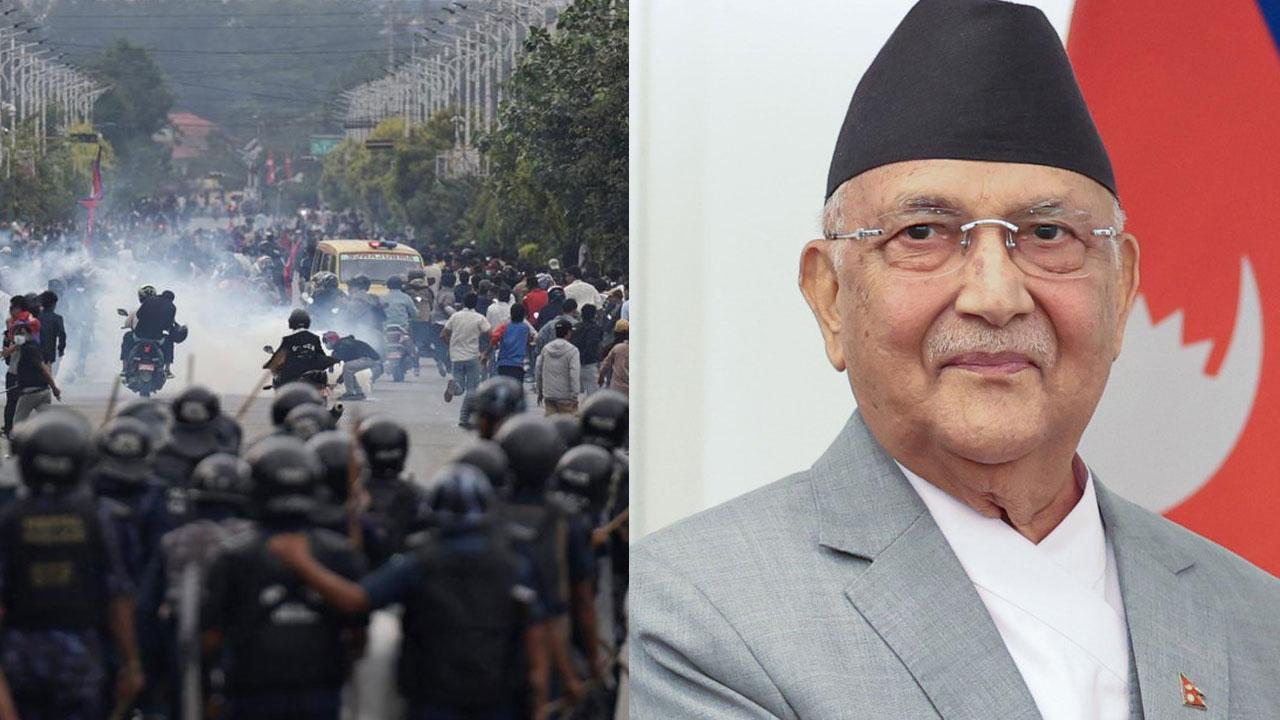
Nepal witnessed one of its most intense political crises in recent years as protests erupted violently across the country, leading to the resignation of Prime Minister KP Sharma Oli. The unrest followed the government's controversial decision to impose a ban on major social media platforms, including Facebook, Instagram, WhatsApp, X, and YouTube, which triggered outrage among the population, especially the youth.
The protests, led largely by the Gen Z demographic, turned deadly on Monday when at least 20 people lost their lives and over 250 were injured. Despite the government announcing that the social media ban had been lifted, demonstrators continued to demand the resignation of Prime Minister Oli and the dismissal of his government, citing corruption, poor governance, and a lack of opportunities for young people.
On Tuesday, KP Sharma Oli officially stepped down as the Prime Minister of Nepal. His aide, Prakash Silwal, confirmed the resignation, quoting Oli’s statement: he was stepping down “to facilitate a solution to the problem and to help resolve it politically.” The move came after hours of intense dialogue, both within the government and with military officials, as the situation in the capital, Kathmandu, deteriorated rapidly.
Just before resigning, Oli had urged protesters to maintain peace and exercise restraint, emphasizing the importance of resolving issues through dialogue. He had also called for an all-party meeting to discuss the crisis. “Any form of violence is not in the national interest. We must adopt peaceful dialogue and discussion,” Oli said.
However, with protests escalating and large parts of Kathmandu engulfed in chaos, Oli reportedly sought military assistance to stabilize the situation and ensure his safe exit from the Prime Minister's residence. Sources revealed that the Army Chief advised Oli to step down, stating that the military could only restore order if the Prime Minister relinquished power. Reports also suggested that Oli considered fleeing to Dubai amid the crisis.
Security operations intensified across Kathmandu on Tuesday, with multiple army helicopters deployed to evacuate government officials. Around a dozen helicopters were seen leaving the Bhaisepati ministerial quarters to transport ministers and key officials to Tribhuvan International Airport. Eventually, the airport was closed, and all flights were cancelled due to security concerns. Protesters reportedly attempted to disrupt operations by flying drones, launching fireworks, and using laser lights to interfere with aircraft.
The demonstrations targeted key government structures and residences. Protesters set fire to Nepal’s Parliament building, Singha Durbar – home to ministers’ offices – and vandalized the private residences of both the Prime Minister and the President. Videos circulating on social media showed thick black smoke rising from the Parliament and streets filled with chaos as citizens clashed with security forces.
The protests were characterized by high energy, with thousands of young demonstrators participating in street marches, shouting anti-government slogans, and demanding accountability. The movement gained momentum following viral online campaigns highlighting government corruption and social inequalities, which resonated strongly with the younger generation.
The unrest began after the government imposed a sudden ban on 26 social media platforms, citing non-compliance with new registration rules under the Ministry of Communication and Information Technology. Officials claimed the move was aimed at controlling misuse of social media, such as spreading fake news, cybercrime, and online hatred.
However, the ban was perceived by many as an attack on freedom of speech. Young people, organized under the banner of “Gen Z,” staged demonstrations accusing the government of censorship and corruption. Online movements like “Nepo Kid” exposed the luxurious lifestyles of politicians’ children, further fueling public anger.
The situation escalated on Monday when protesters attempted to enter government buildings, prompting police to use water cannons, tear gas, and live rounds. The violent clashes led to the tragic deaths of 20 people, with hundreds more injured across the Kathmandu Valley and other parts of Nepal.
The ongoing unrest has disrupted daily life in the capital and other major cities, affecting education, business, and transportation. The shutdown of social media had already created communication difficulties for residents, and the continued protests have added further challenges.
India and other neighboring countries have expressed concern about the situation. The Indian Ministry of External Affairs stated it is “closely monitoring the developments in Nepal” and urged Indian nationals in Nepal to exercise caution. The United Nations also called for peaceful resolution and stressed that authorities must respect the rights of citizens to assemble and express themselves freely.
With KP Sharma Oli’s resignation, Nepal enters a new phase of political uncertainty. The move is expected to calm tensions temporarily, but the country still faces significant challenges in restoring order, rebuilding trust between the government and citizens, and addressing the grievances that sparked the protests.
Political analysts suggest that the next steps for Nepal involve forming a consensus government or holding early elections to prevent further unrest. Meanwhile, security forces continue to maintain a high presence in the capital, ensuring that law and order is gradually restored.
As the nation mourns the lives lost during the violent clashes, there is also hope that political dialogue and responsible governance will pave the way for a more stable and inclusive Nepal. The events of these past two days serve as a stark reminder of the power of youth activism, social media, and public accountability in shaping a nation’s future.
Nepal’s recent crisis highlights the delicate balance between governance, freedom of speech, and public trust. KP Sharma Oli’s resignation, while a significant political development, is just the beginning of what will be a crucial period for the country. The coming weeks will determine how Nepal navigates its democratic processes while addressing the deep-rooted frustrations of its people.








PM Modi Pays Tribute to Mahatma Gandhi, Urges People to Support Khadi
PM Modi pays tribute to Mahatma Gandhi on Gandhi Jayanti and urges citizens to support Khadi and the

Amazon Seeks to Offload $8 Billion in Nvidia Chips to Investors
Amazon plans to move $8 billion in Nvidia chips to investors, using a new financing model to strengt

Samsung Raises Galaxy S26 Prices as Memory Chip Costs Rise
Samsung raises Galaxy S26 prices in South Korea as rising memory chip costs put pressure on smartpho

Lewis Hamilton Calls Singapore Grand Prix One of F1's Toughest Races
Lewis Hamilton discusses the demanding Singapore Grand Prix and brings Plus44 and Almave to Singapor

Denmark's Pandora Opens World's Largest Jewellery Factory in Vietnam
Pandora opens its largest jewellery factory in Vietnam, expanding global production, strengthening s

Gautam Gambhir Questions Batting-Friendly Pitches After India's Record ODI Chase
Gautam Gambhir questions batting-friendly ODI pitches after India’s record chase, calling for a bett

