You have not yet added any article to your bookmarks!
Join 10k+ people to get notified about new posts, news and tips.
Do not worry we don't spam!
Post by : Rohit Dhiman
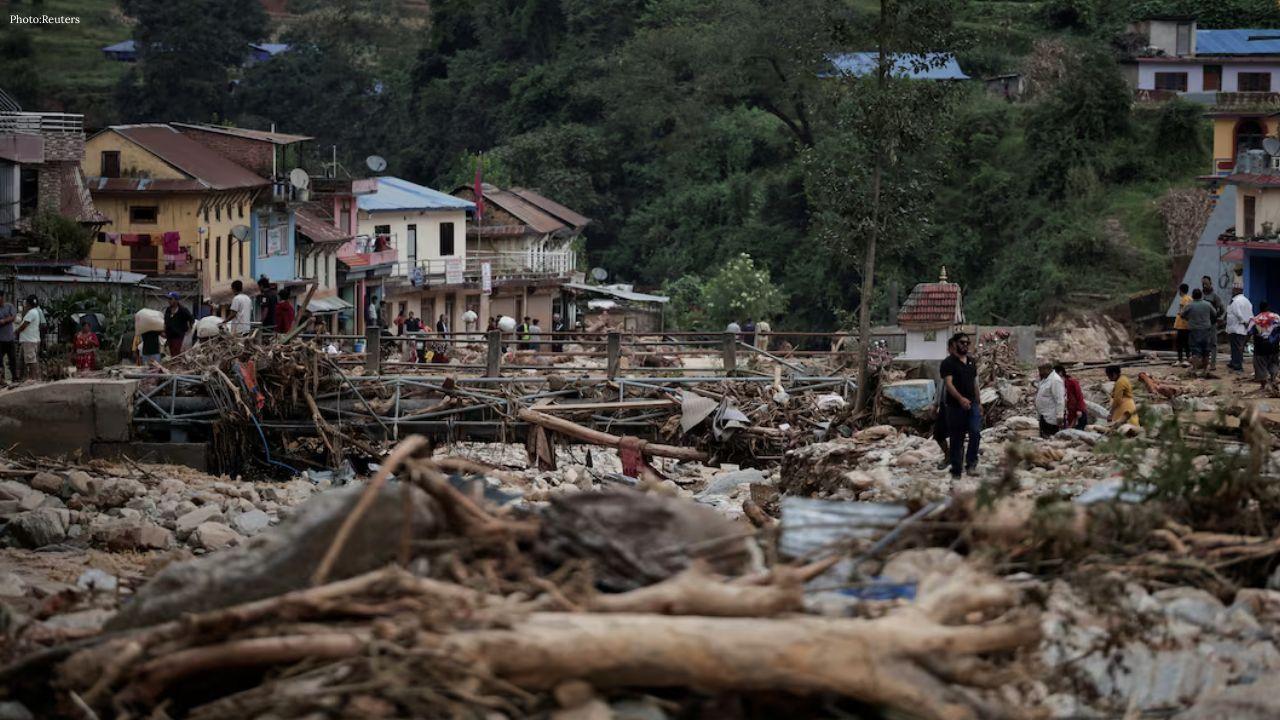
Nepal is facing another serious weather emergency after several days of heavy rainfall triggered floods, landslides and other rain-related incidents across different parts of the country. The latest Nepal floods have caused deaths, damaged homes and disrupted transportation, while rescue and relief teams continue working in affected areas. According to Nepal’s National Disaster Risk Reduction and Management Authority, 21 people died in rain-related disasters between September 24 and 27. Five people remain missing and five others were injured during the period. The latest disaster has added to the difficulties faced by communities that have already experienced severe weather and flooding in recent weeks.
Authorities said landslides were responsible for most of the deaths recorded during the latest period of bad weather. Flooding and continuous heavy rainfall also caused fatalities in several areas. The disaster management authority reported that 14 people were killed in landslide incidents, while four deaths were linked to floods. Another three people died in incidents directly connected with continuous rainfall. The figures show how quickly conditions can become dangerous when heavy rain affects Nepal’s mountainous and low-lying areas at the same time. The Nepal landslides have also created additional risks for residents living near hillsides, roads and river channels.
The latest weather emergency has affected hundreds of families across Nepal. Disaster authorities said 747 families were directly affected by the floods, landslides and other incidents. A total of 143 houses were completely destroyed, while another 51 houses suffered partial damage. The destruction has left many residents facing the difficult task of finding safe shelter while rescue and assessment operations continue. Officials and local authorities have been coordinating relief arrangements for affected communities, particularly in areas where roads have been blocked or access has become difficult.
The impact has not been limited to homes and villages. Floodwaters and landslides have also disrupted roads and transportation in several parts of the country. Some roads have been affected by debris, rising water and landslips, making movement difficult for residents as well as emergency teams. Authorities have been monitoring vulnerable locations as rivers rise and further rainfall remains a concern. The disruption is especially important in mountainous parts of Nepal, where roads are often the main connection between remote communities and larger towns. The Nepal flood news situation is therefore being closely watched because further rainfall could create additional problems for transportation and rescue operations.
Read Also: Rapid KL Bus Driver Arrested After Fatal Subang Jaya Crash
Nepal experienced heavy to very heavy rainfall between September 24 and 27. The weather system brought intense rain to several parts of the country and contributed to the latest Nepal heavy rainfall emergency. Official data showed exceptionally high rainfall in some locations. Deda Gaun in Nawalparasi East recorded more than 544 millimetres of rain during the four-day period, while Panchase in Kaski recorded more than 500 millimetres. A station in Tanahun also recorded rainfall of more than 470 millimetres. Such rainfall can quickly increase water levels in rivers and streams while also weakening slopes, raising the risk of landslides in mountainous areas.
Emergency teams remain engaged in rescue, evacuation and relief work in affected parts of Nepal. Authorities have been moving people away from areas considered vulnerable to flooding and landslides. The focus of the response is on reaching communities affected by damaged roads, blocked routes and rising water levels. Local administrations are also working with disaster response agencies to assess damage and provide essential assistance. The latest Nepal natural disaster has once again highlighted the challenges faced by communities living in areas exposed to heavy rainfall, flooding and landslides.
The latest disaster comes at a difficult time for Nepal, which has already experienced major weather-related destruction this year. Continuous rain can increase pressure on rivers, roads and unstable mountain slopes, making conditions unpredictable. Authorities are continuing to monitor vulnerable areas and are urging people to remain alert, particularly those living close to rivers, steep slopes and locations that have experienced previous landslides. For residents in affected areas, the immediate priorities remain safety, evacuation where necessary, restoration of transportation and access to relief supplies.
The situation will depend heavily on rainfall and ground conditions in the coming days. Even after rain begins to weaken, saturated soil can remain unstable and create a continued risk of landslides. Authorities are therefore expected to continue monitoring rivers, roads and vulnerable settlements while rescue teams assess damage and support affected families. For now, the combination of flooding, landslides and damaged infrastructure remains a major concern across parts of the country.





Thailand Floods Leave Eight Dead as Heavy Rain Hits 27 Provinces
Thailand floods have killed eight people since September 16, affecting 1.7 million people across 27

OpenAI Says AI Agents Accidentally Posted 53 User Images Online
OpenAI says AI agents accidentally posted 53 ChatGPT user images online, raising new concerns over A

Virat Kohli Says 2027 World Cup Will Be His Last For India
Virat Kohli confirms the 2027 World Cup will be his last for India as he targets one final title bid

Weak Earthquake Hits Kinabatangan in Sabah Early Saturday Morning
A 3.3-magnitude Sabah Earthquake hit Kinabatangan early Saturday. Firefighters found no damage, whil

Europe's Biggest Leagues Demand Sweeping FIFA Reforms
Europe's top leagues demand FIFA reforms, stronger FIFA governance, stakeholder representation and c

Sri Lanka Economy Shows Resilience, But IMF Flags Growing Downside Risks
Sri Lanka economy remains resilient, but IMF warns of downside risks from energy costs, inflation an