
You have not yet added any article to your bookmarks!
Join 10k+ people to get notified about new posts, news and tips.
Do not worry we don't spam!
Post by : Saif Rahman
Nvidia's CEO Jensen Huang has accompanied President Donald Trump on his significant visit to China, underscoring the pivotal role of artificial intelligence and semiconductor technologies in the modern economic landscape between these two superpowers.
This trip to Beijing is under intense scrutiny, given the escalating tensions surrounding trade, cutting-edge technology, and global influence between the U.S. and China. Trump's decision to invite a leading figure from the tech industry underscores the strategic importance of AI in international relations.
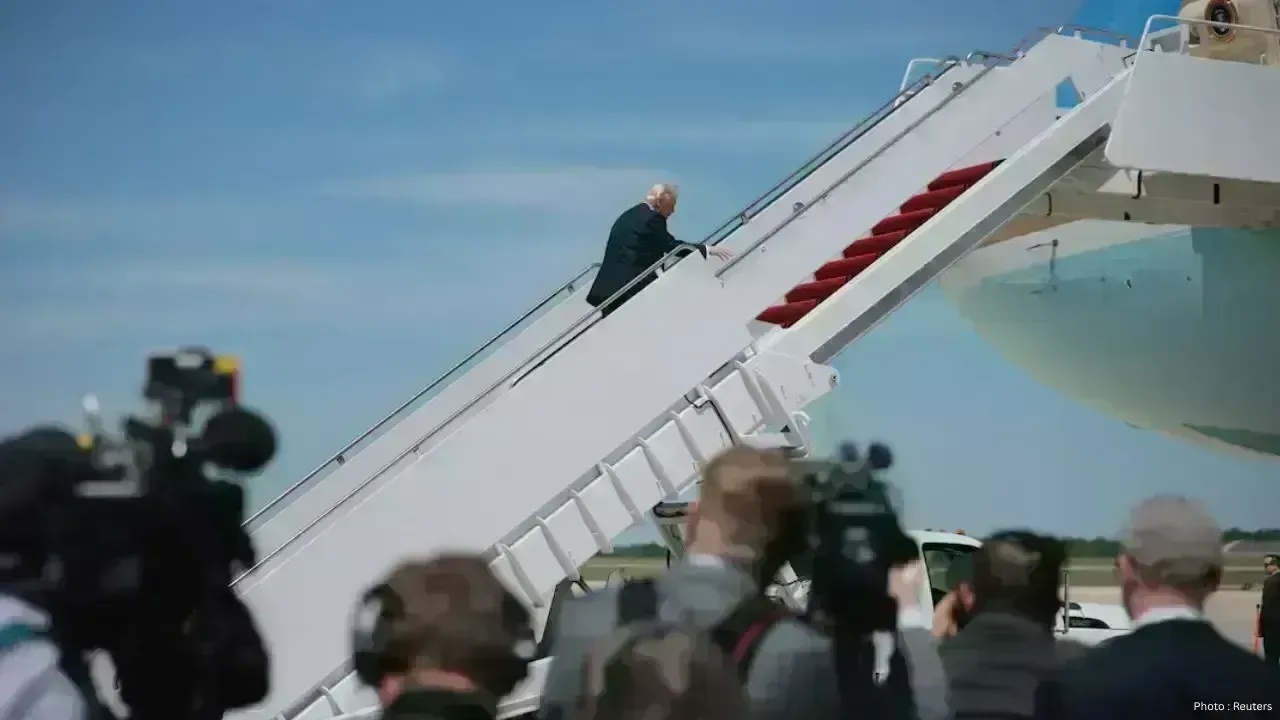
Reports indicate that Huang was added to the delegation just before the trip, following a personal invitation from Trump. He boarded Air Force One during a brief stop in Alaska before heading to China.
This visit holds substantial significance for Nvidia, which has been challenged by U.S. export restrictions and other regulatory hurdles when selling its cutting-edge AI chips in China. The company’s powerful H200 chips are crucial for advancements in AI, cloud computing, and tech research, making the Chinese market particularly valuable.
Trump has expressed his desire for China to become more open to American enterprises, emphasizing the need for greater access to Chinese markets. The trip is attended by various prominent American business leaders from sectors including technology, aviation, finance, and manufacturing.
The discussions will primarily focus on the fierce global competition in AI, with Nvidia's chips being fundamental in powering AI technologies globally. Consequently, semiconductor exports have emerged as a contentious issue in U.S.-China relations.
In a move to bolster national security, the U.S. has imposed restrictions on advanced semiconductor sales to China, amid concerns that this technology could enhance China's military capabilities. Concurrently, China is investing in developing its own semiconductor industry to diminish reliance on foreign tech.
Trump’s talks with Chinese President Xi Jinping are projected to address complex topics including tariffs, AI collaboration, trade dynamics, and regional conflicts. Economic factors are also pressing, as both nations face challenges from sluggish growth and global instability.
The outcome of these negotiations could significantly impact Nvidia's business prospects in China, which is anticipated to develop a multi-billion-dollar AI market in the coming years, marking it as a key player in the global tech industry.
This trip reflects how tech firms are increasingly influencing international diplomacy, with AI, semiconductor production, and digital rivalry gaining prominence alongside traditional matters of trade and military strategy.
Despite the ongoing fierce competition, many businesses remain hopeful that these meetings may ease tensions and foster more stable economic relationships. Nonetheless, the enduring conflicts over technology management and national security are likely to pose significant challenges in future U.S.-China interactions.










PM Modi Pays Tribute to Mahatma Gandhi, Urges People to Support Khadi
PM Modi pays tribute to Mahatma Gandhi on Gandhi Jayanti and urges citizens to support Khadi and the

Amazon Seeks to Offload $8 Billion in Nvidia Chips to Investors
Amazon plans to move $8 billion in Nvidia chips to investors, using a new financing model to strengt

Samsung Raises Galaxy S26 Prices as Memory Chip Costs Rise
Samsung raises Galaxy S26 prices in South Korea as rising memory chip costs put pressure on smartpho

Lewis Hamilton Calls Singapore Grand Prix One of F1's Toughest Races
Lewis Hamilton discusses the demanding Singapore Grand Prix and brings Plus44 and Almave to Singapor

Denmark's Pandora Opens World's Largest Jewellery Factory in Vietnam
Pandora opens its largest jewellery factory in Vietnam, expanding global production, strengthening s

Gautam Gambhir Questions Batting-Friendly Pitches After India's Record ODI Chase
Gautam Gambhir questions batting-friendly ODI pitches after India’s record chase, calling for a bett

