
You have not yet added any article to your bookmarks!
Join 10k+ people to get notified about new posts, news and tips.
Do not worry we don't spam!
Post by : Sameer Farouq
Travel in 2025 is taking a grounded turn — literally. As more people seek purpose-driven vacations, regenerative farm stays are emerging as a transformative trend that blends travel, sustainability, and self-discovery.
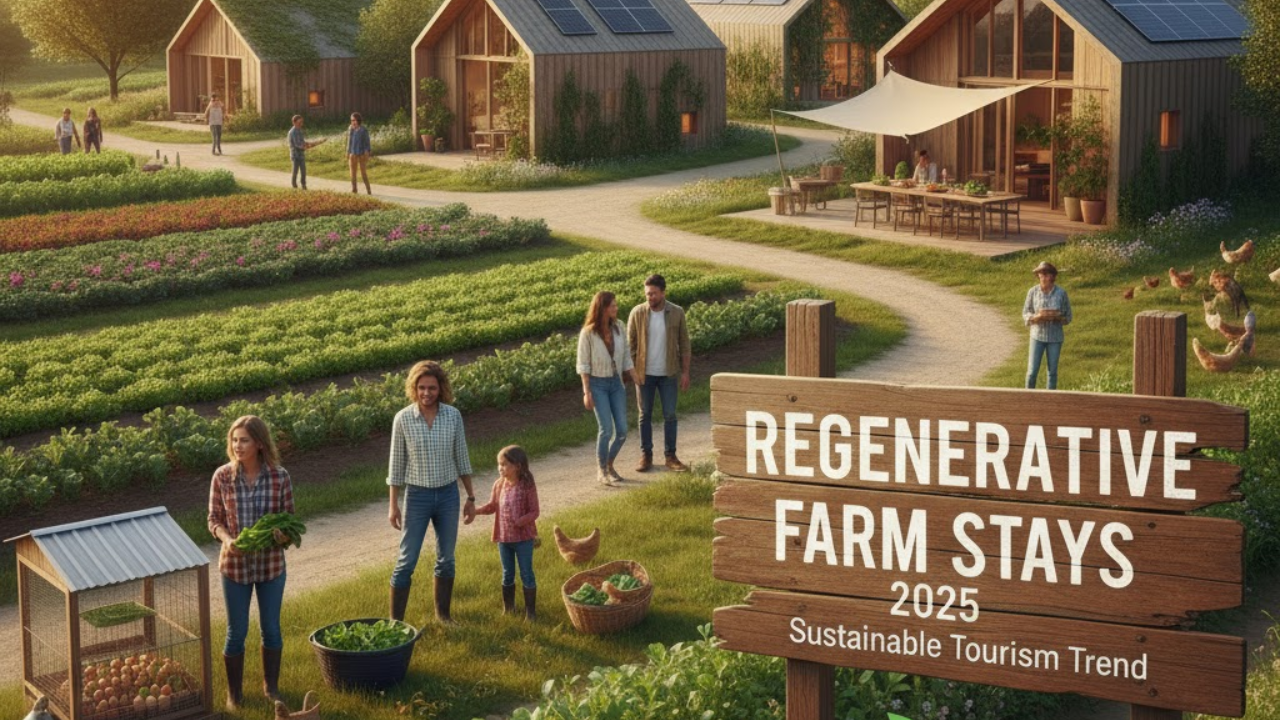
Unlike traditional tourism, these stays invite travelers to live and learn on working farms that focus on soil regeneration, organic farming, and community resilience. It’s not just about escaping the city — it’s about getting your hands dirty, learning where your food comes from, and leaving the planet better than you found it.
Regenerative tourism goes beyond being eco-friendly. It’s not only about minimizing harm — it’s about creating positive impact. In regenerative farm stays, travelers contribute directly to the health of the land, helping restore ecosystems, plant crops, compost waste, and support local farmers.
These experiences are rooted in the principles of regenerative agriculture, which focuses on restoring soil fertility, promoting biodiversity, and using farming methods that capture carbon and heal the environment.
Every guest becomes part of the cycle — planting, harvesting, or simply observing how sustainable living can thrive in harmony with nature.
People are increasingly aware that the planet’s well-being is tied to food systems. Urban fatigue, climate anxiety, and digital overload have pushed travelers to seek authentic, slow, and meaningful experiences.
Farm stays offer a refreshing antidote to over-tourism — replacing luxury hotels with simplicity and substance. Guests reconnect with nature’s rhythm, wake up with the sunrise, and experience firsthand how food, soil, and community are interconnected.
In an age where everything feels disposable, regenerative travel offers something rare — belonging and purpose.
Each regenerative farm stay is different, but they all share one goal: to nourish both people and the planet. Guests can participate in:
Organic vegetable harvesting and composting workshops
Beekeeping, dairy, and herbal medicine sessions
Permaculture design and sustainable gardening
Farm-to-table cooking classes using freshly picked produce
Guided walks explaining soil restoration and biodiversity
Even simple tasks like feeding chickens or planting saplings become moments of mindfulness. Travelers leave not only with memories but with skills and awareness that last a lifetime.
Beyond environmental impact, these farm stays also cater to the growing wellness tourism movement. Many farms combine sustainability with yoga retreats, meditation sessions, and nature therapy, recognizing that healing the planet and healing ourselves go hand in hand.
The quiet rural environment allows travelers to disconnect from screens, breathe cleaner air, and reset their mental rhythm. It’s wellness without Wi-Fi — where grounding your feet in soil becomes the most powerful therapy of all.
From the vineyards of Tuscany to the organic farms of Kerala, regenerative travel is gaining global traction.
Italy and Spain are promoting eco-agrotourism through community-owned farms and wineries.
India has seen a rise in farm stays in Coorg, Uttarakhand, and Punjab that focus on local traditions and organic cultivation.
Australia and New Zealand are pioneers in regenerative farming techniques, offering immersive eco-retreats.
Costa Rica and Bali lead with rainforest farm resorts combining agriculture, wellness, and conservation.
These destinations are redefining hospitality — where the earth is not just the setting, but the host.
Regenerative tourism supports local economies by providing farmers with an alternative income stream while preserving traditional knowledge. It promotes cultural exchange, sustainable food production, and community empowerment.
Travelers, in turn, become conscious consumers, supporting eco-practices that ripple far beyond their stay. Every visit becomes a small act of climate activism — one that gives back more than it takes.
Looking ahead, regenerative farm stays will continue to grow as travelers seek ethical, immersive, and planet-positive experiences. Future farm stays will likely integrate AI and smart farming technology for education, offering digital tools to teach sustainability in real time.
We may also see partnerships between hospitality brands and farming cooperatives — blending modern comfort with ecological wisdom. The travel industry is slowly realizing that luxury and sustainability can grow side by side, rooted in respect for the land.
Disclaimer: This article is for informational purposes only. Travelers should research local regulations, safety measures, and sustainability certifications before booking farm stays to ensure authentic and ethical regenerative experiences.










PM Modi Pays Tribute to Mahatma Gandhi, Urges People to Support Khadi
PM Modi pays tribute to Mahatma Gandhi on Gandhi Jayanti and urges citizens to support Khadi and the

Amazon Seeks to Offload $8 Billion in Nvidia Chips to Investors
Amazon plans to move $8 billion in Nvidia chips to investors, using a new financing model to strengt

Samsung Raises Galaxy S26 Prices as Memory Chip Costs Rise
Samsung raises Galaxy S26 prices in South Korea as rising memory chip costs put pressure on smartpho

Lewis Hamilton Calls Singapore Grand Prix One of F1's Toughest Races
Lewis Hamilton discusses the demanding Singapore Grand Prix and brings Plus44 and Almave to Singapor

Denmark's Pandora Opens World's Largest Jewellery Factory in Vietnam
Pandora opens its largest jewellery factory in Vietnam, expanding global production, strengthening s

Gautam Gambhir Questions Batting-Friendly Pitches After India's Record ODI Chase
Gautam Gambhir questions batting-friendly ODI pitches after India’s record chase, calling for a bett

