
You have not yet added any article to your bookmarks!
Join 10k+ people to get notified about new posts, news and tips.
Do not worry we don't spam!
Post by : Meena Ariff
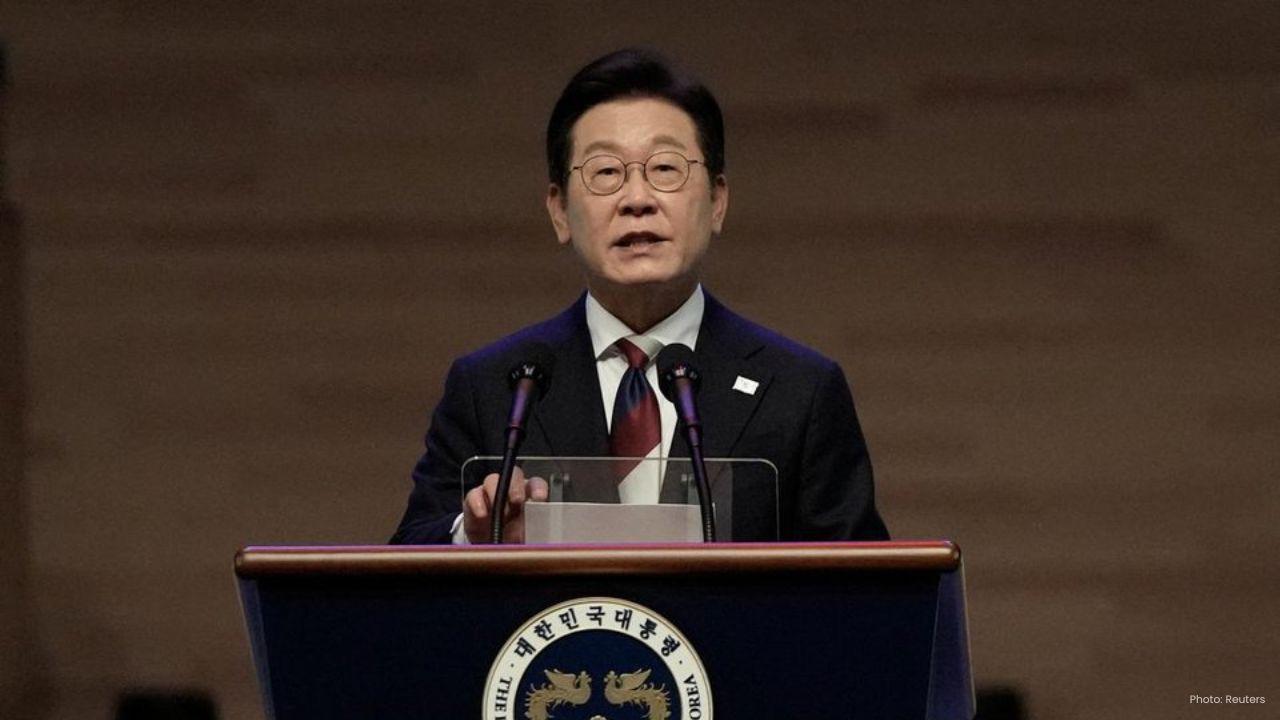
South Korean President Lee Jae-myung has begun a fresh effort to improve the country’s strained relationship with North Korea. On August 18, he asked his Cabinet ministers to prepare for a gradual, step-by-step plan to bring back parts of old agreements made with Pyongyang.
President Lee explained that he wanted to start with areas where progress is possible and slowly rebuild trust. His plan reflects the idea that peace and dialogue cannot be restored overnight, but small steps may eventually open the door to bigger changes.
The president did not list the exact agreements his government plans to restore. However, just a few days earlier, on August 15, he mentioned that Seoul hopes to bring back the 2018 military agreement. That deal had been designed to reduce armed tensions along the heavily guarded border between the two Koreas. Over time, the agreement collapsed as trust faded and military activities resumed.
Why the Move Matters
Lee Jae-myung said improving relations with the North is essential for South Korea’s future. “Relations between South and North Korea are crucial to protect the national interests of South Korea and expand the space to operate diplomatically in the face of rapidly changing external conditions,” he said.
In other words, he believes that peace with the North is not just about avoiding conflict. It also helps South Korea gain more room to act wisely in world affairs. With global situations changing quickly—from tensions between major powers to economic challenges—he sees better ties with the North as a way to strengthen the South’s position.
A New Start After Entering Office
President Lee took office in June 2025. Since then, he has repeatedly said that his government wants to find a path to peace with North Korea. The two countries remain technically at war because the Korean War of the 1950s ended with a ceasefire, not a peace treaty.
Over the years, leaders from both sides have sometimes tried to work together, but mistrust, disputes, and outside pressures often stopped progress. Lee’s approach focuses on small, careful steps instead of sudden, big promises. He believes this method will make it harder for peace efforts to fall apart again.
Challenges Ahead
So far, North Korea has not shown much interest in Lee’s offers. State media from Pyongyang have dismissed his early moves and speeches. The North has also continued military drills, missile tests, and sharp criticism of Seoul.
Despite this, Lee is pressing forward. He has told his ministries to look for any areas where cooperation might still be possible. This could include humanitarian projects, small-scale exchanges, or agreements to reduce risks near the border.
Lee knows progress will not come easily. But he believes that even limited cooperation can keep communication open and reduce the chances of dangerous misunderstandings.
Remembering the 2018 Agreement
The 2018 agreement that Lee wants to restore is often seen as a hopeful moment in inter-Korean relations. Signed during a time of historic talks between leaders, it called for both sides to stop certain military activities near the border. The goal was to reduce the chance of clashes and build trust.
For a while, it seemed to work. Military tensions calmed, and people on both sides hoped for more peace. But as global talks stalled and disputes returned, the agreement broke down. Each side accused the other of breaking the rules.
Lee’s idea is not to simply copy the past but to bring back the useful parts of the 2018 deal while adding new steps for today’s reality.
The Importance of Diplomacy
Experts often say that Korea’s future depends not only on military strength but also on diplomacy. For South Korea, having peaceful ties with its neighbor could mean less defense spending, more trade opportunities, and a safer region overall.
Lee is also aware that international attention is focused on many other crises around the world. By showing that South Korea is working toward peace, he may strengthen the country’s reputation as a responsible and forward-looking nation.
A Hopeful Yet Uncertain Road
The path ahead is full of challenges. North Korea’s leadership has long insisted on its right to develop weapons and often views offers of dialogue with suspicion. Meanwhile, changes in international politics can quickly affect relations on the Korean Peninsula.
Still, Lee believes that doing nothing is more dangerous than trying. Even small steps, like reopening talks or reducing military risks, can prevent crises from spiraling out of control.
The South Korean government is now preparing detailed plans for this step-by-step approach. Ministries are expected to review past agreements, study which parts can be realistically restarted, and prepare proposals for action.
Lee hopes that with patience, persistence, and sincerity, his efforts will eventually lead to bigger achievements. He understands that peace is not guaranteed but sees it as a goal worth fighting for—through words, cooperation, and steady progress.










PM Modi Pays Tribute to Mahatma Gandhi, Urges People to Support Khadi
PM Modi pays tribute to Mahatma Gandhi on Gandhi Jayanti and urges citizens to support Khadi and the

Amazon Seeks to Offload $8 Billion in Nvidia Chips to Investors
Amazon plans to move $8 billion in Nvidia chips to investors, using a new financing model to strengt

Samsung Raises Galaxy S26 Prices as Memory Chip Costs Rise
Samsung raises Galaxy S26 prices in South Korea as rising memory chip costs put pressure on smartpho

Lewis Hamilton Calls Singapore Grand Prix One of F1's Toughest Races
Lewis Hamilton discusses the demanding Singapore Grand Prix and brings Plus44 and Almave to Singapor

Denmark's Pandora Opens World's Largest Jewellery Factory in Vietnam
Pandora opens its largest jewellery factory in Vietnam, expanding global production, strengthening s

Gautam Gambhir Questions Batting-Friendly Pitches After India's Record ODI Chase
Gautam Gambhir questions batting-friendly ODI pitches after India’s record chase, calling for a bett

