You have not yet added any article to your bookmarks!
Join 10k+ people to get notified about new posts, news and tips.
Do not worry we don't spam!
Post by : Shivyah Rahman
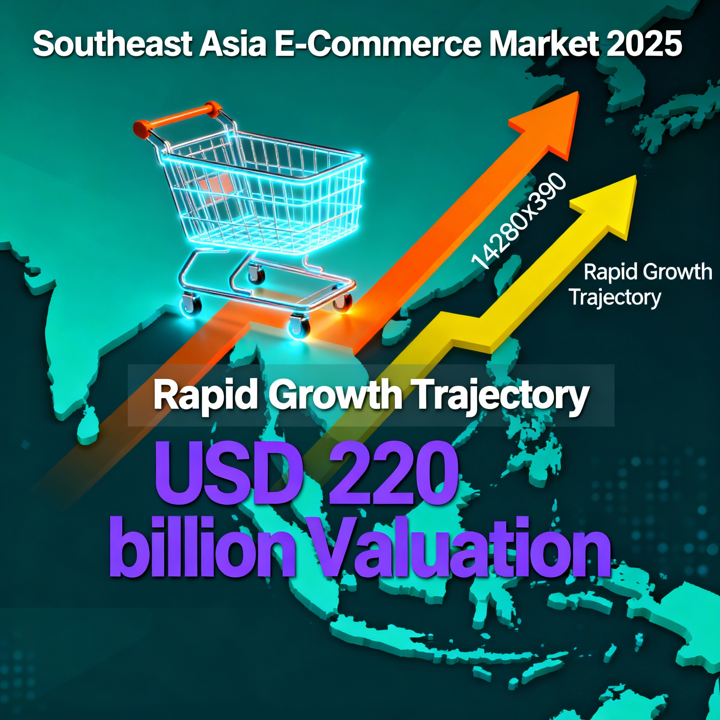
The Southeast Asia e-commerce market is experiencing unprecedented growth, set to hit USD 220 billion in 2025, up from USD 221.6 billion in 2024. Fueled by a mobile-first population, rising digital payments adoption, and the expansion of online marketplaces, Southeast Asia (SEA) has emerged as one of the fastest-growing e-commerce regions globally.
As smartphones and digital wallets become central to daily life, consumer behavior in countries like Indonesia, Vietnam, and Thailand is rapidly evolving. With mega sales events and social commerce gaining traction, businesses and investors are seizing opportunities in this booming market. This article explores market size, growth drivers, emerging trends, and challenges in SEA e-commerce 2025, helping readers understand the digital landscape shaping Southeast Asia’s retail future.
The Southeast Asia e-commerce market reached USD 221.6 billion in 2024 and is projected to achieve USD 220–230 billion in 2025, reflecting a strong compound annual growth rate (CAGR). By 2033, analysts predict the region could exceed USD 500 billion, driven by increasing internet penetration, mobile-first consumers, and expanding digital infrastructure.
SEA’s e-commerce growth is outpacing many other regions, reflecting a unique combination of mobile-first consumers, digital payment adoption, and government support for digital economies.
Southeast Asia is a mobile-first region, with the majority of online shoppers accessing platforms via smartphones. Mobile apps like Shopee, Tokopedia, and Lazada dominate consumer engagement, enabling quick transactions and personalized shopping experiences. Mega shopping events like 11.11 and 12.12 rely heavily on mobile adoption.
Digital payments are central to SEA e-commerce growth. Platforms like GoPay, ShopeePay, and SeaMoney are driving adoption of cashless payments, increasing trust and convenience. This has expanded access to online marketplaces for consumers who previously relied on cash transactions.
Improved logistics networks, warehousing solutions, and last-mile delivery services are critical to e-commerce expansion. SEA countries are investing heavily in fulfillment centers and cross-border shipping solutions to reduce delivery times and improve customer satisfaction.
Indonesia is the largest e-commerce market in SEA, with over 200 million internet users. Local platforms like Shopee and Tokopedia are the backbone of online retail, supported by mobile payment adoption and mega sales campaigns.
Vietnam’s e-commerce market is booming due to rapid urbanization, a young population, and increasing smartphone penetration. Social commerce and influencer-driven marketing are key growth strategies.
Thailand has high adoption of digital wallets and strong performance during mega sales campaigns. Local marketplaces and international players like Lazada and Shopee dominate the online retail landscape.
AI-driven recommendation engines and personalized marketing strategies are transforming SEA e-commerce. Brands use AI for chatbots, product suggestions, and dynamic pricing, enhancing customer engagement and boosting sales.
Social media platforms like Instagram, TikTok, and Facebook are increasingly integrated with online marketplaces. Influencer-driven campaigns and social commerce are shaping buying behaviors, particularly among younger demographics.
Mega sales events like 11.11, 12.12, and regional flash sales are major revenue drivers. These campaigns combine marketing, logistics, and payment innovations to encourage consumer spending and brand loyalty.
The future of SEA e-commerce is bright, with growth expected to continue at a strong pace through 2030 and beyond. Opportunities include:
Businesses that embrace innovation and address challenges can capture a larger share of the USD 220 billion SEA e-commerce market in 2025.
The Southeast Asia e-commerce market is poised for remarkable growth in 2025, reaching USD 220 billion. Fueled by mobile-first consumers, digital payments adoption, AI personalization, and mega sales events, SEA offers immense opportunities for brands, investors, and marketers. By understanding emerging trends and addressing challenges, businesses can successfully tap into this dynamic and rapidly expanding market.










Hyundai raises profit target, expands hybrid lineup in the US
Hyundai hybrid cars get a major boost as the automaker raises its profit margin target and plans new

Josh Kerr and Jakob Ingebrigtsen Set for 1,500m Rivalry Rematch
Josh Kerr and Jakob Ingebrigtsen will renew their 1,500m rivalry at the Ultimate Championship in Bud

PSG Coach Luis Enrique Urges Players to Step Outside Comfort Zone
PSG coach Luis Enrique says players must leave their comfort zone and keep improving as the club tar

China’s Tiangong Sets New 400m Record at Robot Olympics
China’s Tiangong robot sets a new 400m record at the Robot Olympics, beating a South African robot i

George Russell Wins Dutch GP Sprint, Boosts Mercedes Morale
George Russell wins the Dutch GP Sprint from pole as Mercedes teammate Kimi Antonelli extends his F1

Australia 50/3 After Bangladesh Bowled Out for 64 in Second Test
Australia reached 50/3 after Bangladesh were bowled out for 64 in the second Test, with Mitchell Sta