
You have not yet added any article to your bookmarks!
Join 10k+ people to get notified about new posts, news and tips.
Do not worry we don't spam!
Post by : Rohit Dhiman
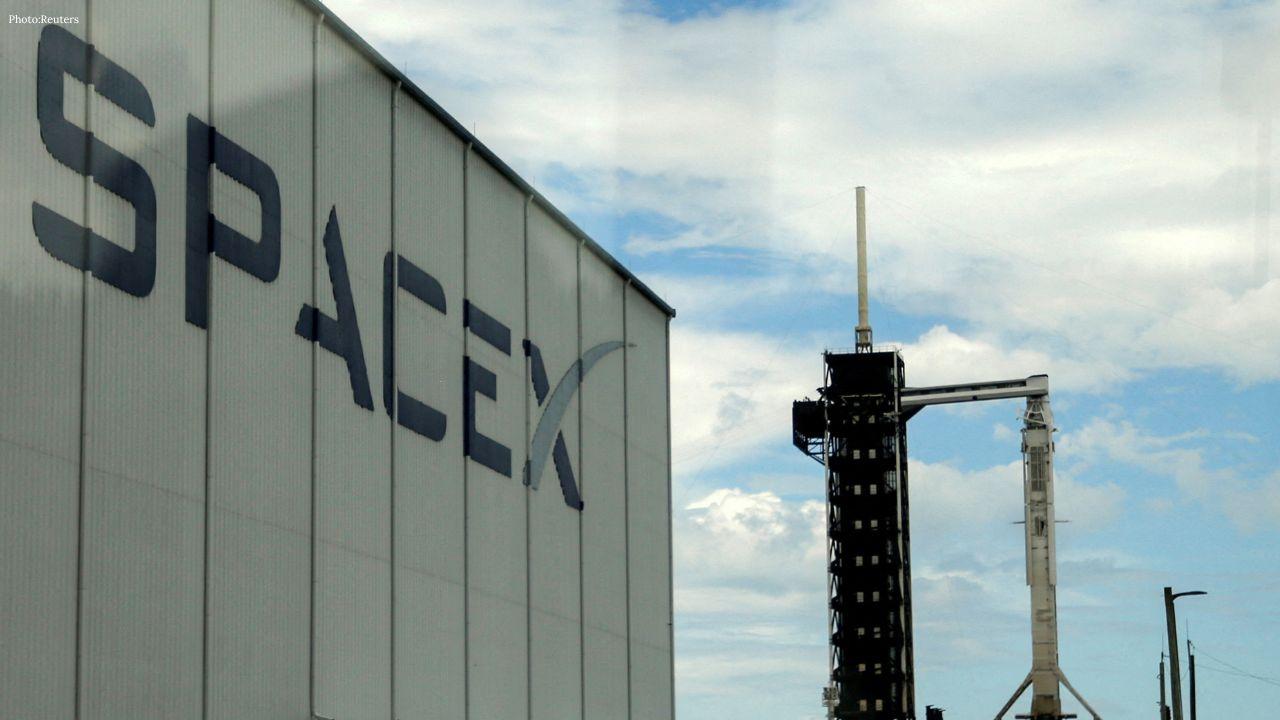
SpaceX has secured its first known customer for Starfall, its emerging business focused on transporting materials from Earth into orbit and returning them safely to the planet. Luxembourg-based mission integrator Space Cargo has signed an agreement to fly its BentoBox system on a planned Starfall mission in 2028. The agreement marks an important step for SpaceX as it looks to expand beyond satellite launches and establish a larger commercial business around the return of materials from space. Space Cargo chief executive Nicolas Gaume told Reuters that the company plans to fly its orbital reentry mission aboard the first commercial flight of SpaceX’s Starship. The mission is currently targeted for 2028.
Starfall is designed as a compact, disk-shaped capsule that can carry materials and research payloads through space before returning them to Earth. The system uses an aluminum structure protected by a heatshield roughly 3 metres wide. The heatshield is one of the most important elements of the technology because payloads returning from orbit must withstand extremely high temperatures and speeds while passing through the atmosphere. The SpaceX Starfall system builds on the company’s experience with Dragon spacecraft, which regularly transport cargo and other materials between Earth and orbit. SpaceX plans to launch Starfall payloads using Falcon 9 initially, while future missions are expected to use Starship as the company develops a larger-scale commercial operation.
Space Cargo plans to place its BentoBox system inside the Starfall capsule. The system is designed to accommodate payloads from multiple customers, allowing Space Cargo to operate as a mission integrator rather than simply transporting its own materials. Gaume said the company currently flies around 200 kilograms using its existing systems, but its objective is to increase that capacity dramatically with Starship and Starfall. The BentoBox could accommodate up to one tonne of customer payloads on a future mission. Space Cargo plans to collect materials from different commercial customers and place them together inside the system for their journey into orbit and subsequent return to Earth.
The planned Starship commercial mission represents a major milestone for both SpaceX and Space Cargo. The mission is expected to carry the first BentoBox aboard a Starfall capsule. Space Cargo said the mission is planned for 2028, although SpaceX itself has not publicly announced a specific date for its first commercial Starship mission. The agreement comes as SpaceX continues developing Starship, its large next-generation launch vehicle designed for much larger payloads and a significantly higher launch frequency than conventional rockets. The company has been working toward increasing Starship’s flight frequency after years of development and testing.
The commercial market for returning products from orbit is attracting increasing interest from industries that depend on the unique conditions of microgravity. Research conducted in orbit can produce results that are difficult or impossible to reproduce on Earth. Pharmaceutical companies, biotechnology firms and other manufacturers are particularly interested in using microgravity for experiments and production. Some materials can potentially achieve different characteristics when produced without the effects of normal Earth gravity. Fibre-optic manufacturing is one example that has attracted attention because researchers have found potential quality advantages from production in microgravity. Space Cargo said almost half of the potential customers for its first Starfall mission are expected to come from the life sciences and biotechnology sectors.
Microgravity provides an environment that cannot easily be recreated on Earth. It can allow scientists to study biological processes, materials and manufacturing techniques under conditions where gravity has a much smaller influence. For pharmaceutical and biotechnology companies, this could create opportunities to investigate drug development and biological processes in new ways. The ability to return products to Earth is particularly important because companies need to analyse, process or sell the materials after they have been exposed to the space environment. Starfall is being positioned to address this need by providing a dedicated return system for commercial customers.
SpaceX is entering a market that already has other companies developing dedicated space-return services. California-based Varda Space Industries is one of the companies operating in this sector. Its spacecraft have already completed multiple missions involving orbital manufacturing and atmospheric reentry, with capsules returning to Earth. SpaceX’s advantage could come from the scale of Starship. If the massive rocket achieves the launch frequency SpaceX is targeting, commercial operators could gain access to significantly larger payload capacity and more frequent missions. For Space Cargo, the combination of Starship and Starfall could therefore provide greater capacity than its existing systems.
Read Also: Skeletal Remains Found in Barrel Confirmed as Human Bones
Space Cargo does not intend to rely exclusively on Starfall. The company is also planning to use other commercial reentry systems as the market develops. Its BentoBox system is expected to fly on spacecraft including Phoenix, developed by German startup ATMOS Space Cargo, as well as the European Space Agency’s Space Rider. Gaume said the major attraction of the Starfall agreement is the potential volume and frequency of future missions. The company declined to provide details about the financial terms of its agreement with SpaceX.
Starship remains central to SpaceX’s long-term plans. The vehicle is being developed to support a wide range of missions, including satellite deployment, commercial payload transportation and eventually much larger space operations. The program has faced delays compared with earlier development targets, but SpaceX continues to conduct test flights and work toward more frequent operations. The next Starship test flight is expected to focus on deploying SpaceX-built Starlink satellites into orbit. Future missions are expected to increasingly support the company’s own satellite operations. The planned 2028 commercial target indicates that several Starship flights before then could be devoted primarily to SpaceX’s internal requirements, including Starlink launches.
The space manufacturing industry is expected to grow if launch and reentry costs continue to fall. Companies could use orbital facilities to manufacture specialised products, conduct experiments and then return finished materials to Earth. Space Cargo believes the combination of reusable launch systems and dedicated reentry capsules could make such operations more practical for commercial customers. The Starfall agreement therefore represents more than a single mission. It could become an early example of how private companies build commercial supply chains connecting Earth-based businesses with orbital manufacturing and research.
SpaceX’s entry into the commercial reentry market could intensify competition among companies developing spacecraft capable of surviving atmospheric return. Reentry vehicles must navigate extremely challenging conditions, including high temperatures and hypersonic speeds. Their ability to safely return valuable materials is essential for industries considering orbital production. The US government has also shown interest in reentry technologies for research and testing applications, including hypersonic systems and missile-defence-related programs. For Space Cargo, the immediate focus is commercial use, particularly life sciences, biotechnology and other industries that could benefit from microgravity.
The first Space Cargo mission will be closely watched because it could demonstrate whether Starfall can support a new generation of commercial orbital services. If the 2028 mission proceeds as planned, Space Cargo will become an early customer using SpaceX’s Starfall system to return multiple commercial payloads from orbit. The success of the mission could encourage more companies to investigate orbital manufacturing and microgravity research, while also giving SpaceX an opportunity to build a new revenue stream around space transportation and reentry.
#world news #Global News #Business News #Asia News #Tech News






Grab to Expand Autonomous Vehicle Fleet from 10 to 50 in Singapore
Grab will expand its autonomous vehicle fleet from 10 to 50 in Singapore, with new AV services plann

Judge Refuses to Record RM1.7mil Road Accident Settlement
Malaysia High Court says court approval is needed before a RM1.7 million road accident settlement in
Tesla Establishes Vietnam Unit in Major Southeast Asian Market
Tesla establishes a Vietnam unit with $3 million capital, opening a new route into the country's gro

Lamine Yamal Says Mbappe Is His Only Ballon d'Or Rival
Lamine Yamal says Kylian Mbappe is his only Ballon d'Or rival after World Cup success and another La

PM Modi Presents Putin Russian Translation of Thirukkural at BRICS Summit
PM Modi gifts Putin a Russian Thirukkural translation, highlighting India-Russia ties and the global

Tiafoe Proud of Comeback Season Despite Shelton Semi-Final Loss
Frances Tiafoe returns to the world top 10 after a strong US Open run, despite losing to Ben Shelton

