
You have not yet added any article to your bookmarks!
Join 10k+ people to get notified about new posts, news and tips.
Do not worry we don't spam!
Post by : Rameen Ariff
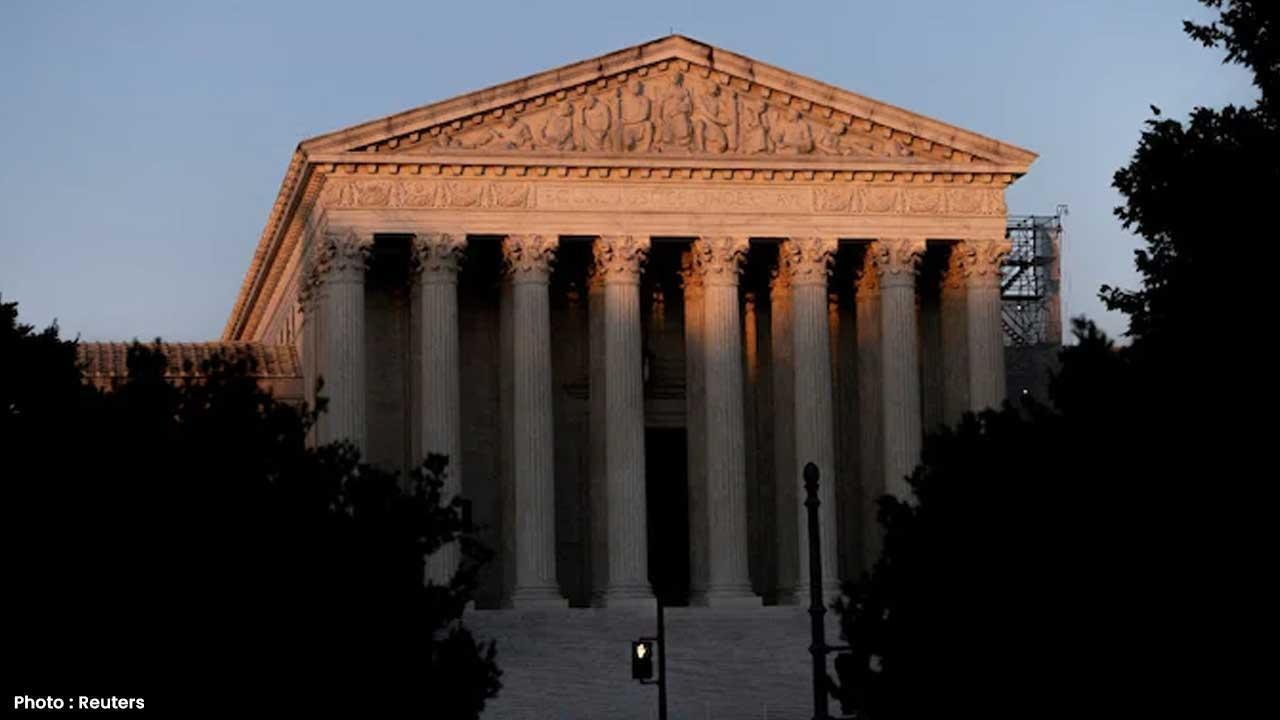
The US Supreme Court opened a pivotal hearing Wednesday to decide if former President Donald Trump lawfully used emergency authority to apply sweeping tariffs — a question with immediate consequences for international commerce and markets from New York to Dubai.
Central to the dispute is Trump’s invocation of the International Emergency Economic Powers Act (IEEPA) to roll out “reciprocal” duties on imports from major partners such as China, Mexico and Canada. The measure sharply raised import costs and altered long-standing trade ties.
At stake are billions in customs receipts and the constitutional balance between Congress and the presidency. Trump has described the case as one of the most consequential in US history, warning of economic fallout if the tariffs are struck down.
During oral arguments, justices pressed whether the president exceeded statutory authority and flagged the so-called major questions doctrine, which requires clear congressional authorization for decisions of great economic or political significance.
Solicitor General John Sauer defended the administration’s actions, telling the court that the president has broad constitutional and statutory powers to address foreign commerce and respond to urgent global economic threats.
Opponents — including industry groups, members of Congress and former officials — counter that IEEPA does not permit the president to impose tariffs, a power the Constitution vests in Congress. Nearly 40 legal briefs challenge the tariff program, while only a few back it.
Legal analysts say a verdict could take months but will carry weighty implications. A decision for Trump would broaden executive latitude in trade crises; a ruling against him would constrain future unilateral tariff actions without congressional approval.
The administration argues the tariffs strengthened US leverage in global trade and curbed unfair practices. Critics say the levies raised import prices and squeezed smaller businesses, even if they did not ignite runaway inflation.
Traders, multinational firms and Gulf partners alike are tracking the case. For Dubai’s re-export hubs, shifts in US tariff policy could reshape supply chains and cost structures tied to American markets.
One trade analyst noted the high stakes: “This decision could reset how Washington wields trade tools for years to come.”
Beyond the immediate fiscal effects, the ruling will also clarify the limits of executive action over economic policy — a question with global trade implications.
The Supreme Court’s final opinion will determine not only the fate of Trump’s tariff program but also the future contours of presidential authority over international commerce.










PM Modi Pays Tribute to Mahatma Gandhi, Urges People to Support Khadi
PM Modi pays tribute to Mahatma Gandhi on Gandhi Jayanti and urges citizens to support Khadi and the

Amazon Seeks to Offload $8 Billion in Nvidia Chips to Investors
Amazon plans to move $8 billion in Nvidia chips to investors, using a new financing model to strengt

Samsung Raises Galaxy S26 Prices as Memory Chip Costs Rise
Samsung raises Galaxy S26 prices in South Korea as rising memory chip costs put pressure on smartpho

Lewis Hamilton Calls Singapore Grand Prix One of F1's Toughest Races
Lewis Hamilton discusses the demanding Singapore Grand Prix and brings Plus44 and Almave to Singapor

Denmark's Pandora Opens World's Largest Jewellery Factory in Vietnam
Pandora opens its largest jewellery factory in Vietnam, expanding global production, strengthening s

Gautam Gambhir Questions Batting-Friendly Pitches After India's Record ODI Chase
Gautam Gambhir questions batting-friendly ODI pitches after India’s record chase, calling for a bett

