
You have not yet added any article to your bookmarks!
Join 10k+ people to get notified about new posts, news and tips.
Do not worry we don't spam!
Post by : Anis Farhan
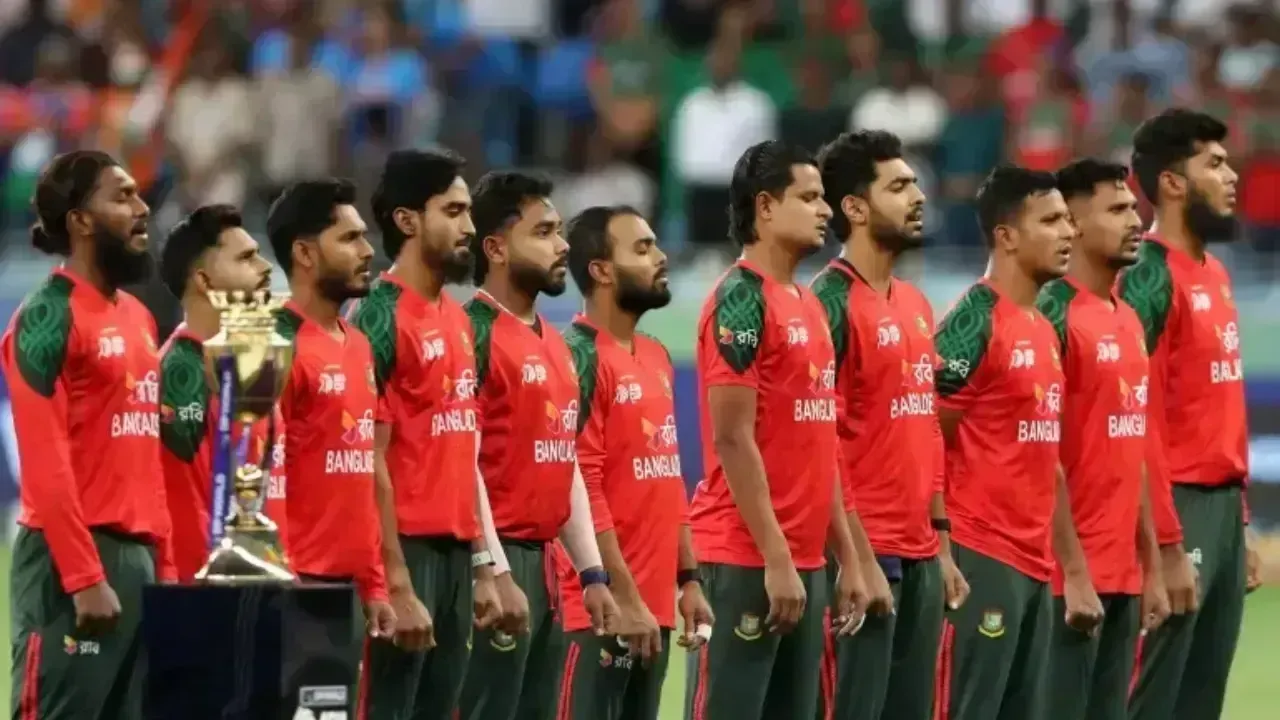
The ICC Men’s T20 World Cup 2026 was anticipated as one of the most eagerly awaited cricket tournaments of the year. Scheduled to be co-hosted by India and Sri Lanka, the event promised fierce competition and global fanfare. However, the preparations have been overshadowed by a high-stakes dispute involving the Bangladesh Cricket Board (BCB) and the International Cricket Council (ICC). Bangladesh has declared that it will not travel to India to compete in the tournament, citing unresolved security concerns and broader tensions that have escalated in recent weeks. This stance has put Bangladesh’s participation in jeopardy and raised broader questions about the administration of international sport, security protocols, and the future of global cricket diplomacy.
At the heart of the current conflict is the removal of Bangladeshi pacer Mustafizur Rahman from his Indian Premier League (IPL) franchise squad. This decision, which the BCB and government officials interpreted as linked to domestic unrest and safety fears, became a flashpoint. BCB President Aminul Islam Bulbul highlighted this incident as a key factor in doubting whether Bangladesh players would be safe in India.
The BCB’s position was that if such a situation could arise in one domestic tournament, the risks at a larger international event might be greater. Even though the ICC’s independent security assessments reportedly found no credible threat to players, media, officials, or fans, the board felt these assurances were insufficient.
Bangladesh’s government, through its sports advisor Asif Nazrul, reiterated that the security situation had “not changed” and that neither the ICC nor the Board of Control for Cricket in India (BCCI) had provided enough reassurance. Nazrul stressed that the decision to avoid travel to India was a government directive, emphasizing that player safety is the top priority.
Nazrul remarked that the concerns were rooted in real developments rather than speculative analysis and that pushing players into a risky environment was unacceptable, despite the ICC’s assurances.
The BCB sought to have its T20 World Cup matches played outside India — ideally in Sri Lanka, the co-host — or through a group swap with another team to play solely in Sri Lanka. However, the ICC rejected this request, emphasizing that altering the schedule at such a late stage would jeopardize the event’s organization, logistics, and future precedent for international tournaments.
Citing multiple independent security reviews that found no credible widespread risk, the ICC asked Bangladesh to confirm its willingness to travel to India within a strict deadline. If the BCB declined, the ICC stated that Bangladesh would be replaced, likely by Scotland, based on rankings and readiness to participate.
This ultimatum created significant pressure. The ICC made it clear that the tournament schedule — including group matches and fixtures — could not feasibly change in the short window before the February 7 start date. Accepting the BCB’s request for a venue change at this stage would disrupt not just Bangladesh’s itinerary but the balance of fixtures across all participating teams.
Despite this, the BCB remained defiant and stated it would appeal again, insisting it wanted to play but not in India — preferring Sri Lanka as a safer alternative.
Bangladesh cricketers and board officials held intense discussions, expressing both the disappointment of possibly missing the tournament and their desire to find a workable solution. While players have trained and prepared for months to compete on the world stage, the board’s stance, backed by government direction, remained firm.
BCB President Aminul Islam made it clear that Bangladesh still hoped for “justice” from the ICC, stressing that the team wanted to play but insisted that security assurances needed to be credible and convincing — which they felt had not been provided.
The ICC upheld its position, with most member boards supporting the maintenance of the original schedule. In the ICC board meeting, stakeholders agreed that postponing or relocating Bangladesh’s matches at this juncture was not feasible.
The governing body’s decision reflects broader concerns about preserving the integrity and neutrality of tournament organizational processes. Changing plans for one team due to internal disputes could set a precedent impacting future events.
There have been varied reactions across the global cricket community. Some commentators underscored the need for diplomatic resolution and assurance of safety for all players, while others highlighted the logistical challenges and implications for future tournaments.
For instance, former Indian players have suggested that diplomatic and cricket board engagement might help resolve tensions, promoting cricket as a bridge between nations. One cricket analyst suggested leveraging leadership ties — even referencing the religious identity of Bangladesh’s captain — as a means to ease tensions.
Meanwhile, calls from former Pakistan players for solidarity and even boycott in support of Bangladesh reflect the broader political entanglements that have come to affect sports.
The ICC has indicated that if Bangladesh ultimately decides not to travel to India or confirm participation, the team will likely be replaced by Scotland. This decision is based on team rankings and readiness to compete in the T20 World Cup.
Scotland’s potential entry underscores the ramifications of Bangladesh’s withdrawal — not just for one team but for the composition and competition dynamics of the tournament as a whole.
Replacing a team of Bangladesh’s calibre — a regular T20 World Cup contender — would be a significant shift. It would affect group balance, fan interest, and competitive expectations, particularly given Bangladesh’s recent performances in major ICC events.
Cricket has long been more than just a sport in South Asia. It is deeply interwoven with national identity, pride, and diplomacy. The Bangladesh standoff highlights how geopolitical tensions can spill over into sports, affecting not only fans’ enthusiasm but also the administrative mechanisms that govern international events.
The controversy follows a series of political disputes between India and Bangladesh, with last year’s IPL episode involving Bangladeshi players contributing to rising tensions. The removal of Mustafizur Rahman became symbolic, in the BCB’s view, of broader concerns about safety and respect on foreign soil.
The ICC’s security assessment process is designed to provide an independent evaluation of risk. In this case, the ICC’s findings did not align with the BCB’s perception, leading to an impasse. This clash underscores the complex challenge of balancing objective risk assessments with subjective national sentiment and political developments.
The standoff raises questions about how global sporting bodies manage such disputes in the future, especially when member boards and governments differ on fundamental issues like player safety and participation.
With the World Cup’s opening scheduled for Feb 7, 2026, time is running out for resolution. If Bangladesh stands by its decision, the BCB may formally withdraw, triggering Scotland’s inclusion. The cricket community waits for clarity as negotiations continue behind closed doors.
If a last-minute diplomatic breakthrough arises — such as relocation of matches or stronger security agreements — Bangladesh might still participate. However, given the ICC’s firm stance and limited flexibility cited internally, a reversal seems uncertain.
The T20 World Cup 2026 boycott dispute involving Bangladesh represents a complex mix of national security concerns, cricket administration principles, geopolitical tensions, and the intricate governance of international sports. Whether Bangladesh ultimately competes or not will have lasting implications for how global cricket navigates similar challenges in the future — underscoring that sport does not exist in isolation from politics, national sentiment, or diplomatic relations.
The cricket world now waits — with billions of fans looking to see how this high-stakes standoff resolves — and whether the spirit of competition can prevail over unresolved tensions.
Disclaimer: This article is for informational purposes only and does not constitute legal, professional, or official guidance. Details and developments are subject to change as official statements from relevant parties emerge.






Google Signs 3.6-GW Power Deal With Constellation Energy in US
Google signs a 3.6-GW power deal with Constellation Energy, including nuclear power upgrades to supp

Harmanpreet Kaur Steps Down as India Captain Across All Formats
Harmanpreet Kaur steps down as India captain across all formats after a remarkable leadership journe
Michael Bracewell Chooses Casual Contract, Targets BBL Opportunity
Michael Bracewell moves to a casual contract as he eyes a BBL opportunity while remaining available

Tuchel Says Alex Scott Can Challenge Declan Rice for England Midfield Spot
Thomas Tuchel says Alex Scott can challenge Declan Rice for an England midfield place after his impr
Air Quality Turns Unhealthy in Central and Western Singapore Amid Haze
Singapore haze pushes PSI above 100 in central and western areas as smoke from regional hotspots rai

PM Modi Pays Tribute to Mahatma Gandhi, Urges People to Support Khadi
PM Modi pays tribute to Mahatma Gandhi on Gandhi Jayanti and urges citizens to support Khadi and the

