You have not yet added any article to your bookmarks!
Join 10k+ people to get notified about new posts, news and tips.
Do not worry we don't spam!
Post by : Anis Farhan
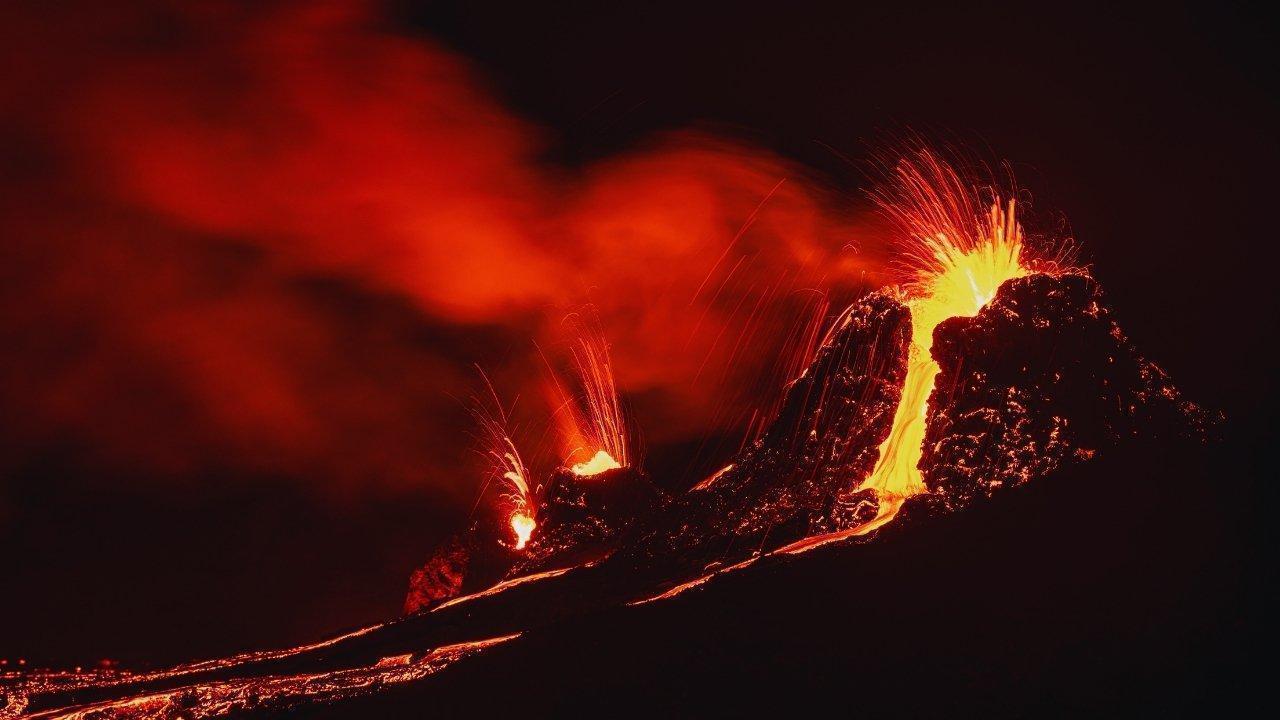
Volcanoes are both feared and admired. For centuries, people have marveled at their towering presence, fiery eruptions, and mysterious connection to the inner workings of our planet. They stand as gateways between Earth’s surface and its molten interior, occasionally reminding humanity of nature’s raw power. While eruptions can bring devastation to towns and cities, volcanoes also play a vital role in the creation of land, the regulation of climate, and the nurturing of fertile soil. Understanding volcanoes is not just about studying natural hazards—it is about discovering how they shape the Earth we live on.
At its core, a volcano is a vent or opening in Earth’s crust that allows molten rock, gases, and ash to escape from beneath the surface. This molten rock, called magma, originates deep within the mantle where intense heat and pressure create movement. When magma reaches the surface, it becomes lava, often accompanied by explosive bursts of ash and gases.
Volcanoes are not random; they form where tectonic plates collide, pull apart, or float above hot spots. This explains why most volcanoes cluster around the Pacific Ring of Fire, a horseshoe-shaped region where multiple tectonic plates meet, stretching from South America to Asia.
Volcanoes vary greatly in size, shape, and behavior. Scientists categorize them into four main types:
Shield Volcanoes: Broad and gently sloping, they produce slow-flowing lava. Mauna Loa in Hawaii is a prime example.
Stratovolcanoes (Composite Volcanoes): Steep, cone-shaped, and prone to explosive eruptions. Mount Fuji in Japan and Mount Vesuvius in Italy belong to this type.
Cinder Cone Volcanoes: Small, steep-sided, and built from volcanic fragments. They often erupt for short periods.
Lava Domes: Formed from thick, slow-moving lava that piles up over vents.
Each type brings a unique eruption style, from gentle lava flows to catastrophic explosions that can alter entire regions.
Volcanic eruptions occur when pressure builds up beneath the Earth’s surface. As magma rises, gases trapped within it expand. When the pressure becomes too great, an eruption occurs, releasing molten rock, ash, and gases.
The intensity of an eruption depends on the magma’s composition. Magma rich in silica tends to be thick and sticky, leading to violent eruptions. Low-silica magma, by contrast, is thinner and flows more easily, producing gentler lava flows.
Eruptions are measured using the Volcanic Explosivity Index (VEI), which ranges from 0 (non-explosive) to 8 (mega-colossal). The eruption of Mount Tambora in Indonesia in 1815, which registered VEI 7, remains one of the most powerful in recorded history, causing global climate disruptions.
Volcanoes are not just destructive forces—they are also builders. Islands like Hawaii, Iceland, and much of Indonesia owe their existence to volcanic activity. Over time, successive eruptions deposit layers of lava and ash, creating entirely new landforms.
Even on continents, volcanoes shape landscapes by forming mountains, plateaus, and valleys. Without volcanic activity, Earth’s surface would look drastically different.
One of the most surprising gifts of volcanoes is fertile soil. Volcanic ash contains minerals such as potassium and phosphorus, which enrich the ground when weathered and mixed with organic material. This explains why regions like the slopes of Mount Etna in Italy and Java in Indonesia are among the most agriculturally productive in the world.
Generations of farmers have lived in the shadow of volcanoes, accepting the risk of eruptions in exchange for fertile fields that can sustain abundant crops.
Volcanoes also influence global climate. During large eruptions, they release vast amounts of sulfur dioxide into the atmosphere, forming aerosols that reflect sunlight and temporarily cool the Earth.
For example, the 1991 eruption of Mount Pinatubo in the Philippines lowered global temperatures by about 0.5°C for nearly two years. Conversely, volcanoes also emit carbon dioxide, contributing to greenhouse gases, though their overall output is far smaller compared to human activity.
Throughout history, volcanoes have inspired myths, legends, and fear. Ancient Greeks believed that Mount Etna was the forge of Hephaestus, the god of fire. In Hawaiian culture, Pele, the goddess of volcanoes, is still honored as the spirit of creation and destruction.
Historically, volcanic eruptions have altered human civilization. The eruption of Mount Vesuvius in 79 CE buried Pompeii and Herculaneum, preserving them as archaeological time capsules. In Iceland, the Laki eruption of 1783 caused famine and devastation, influencing migration patterns and even contributing to unrest in Europe.
Today, scientists work tirelessly to monitor volcanoes using seismographs, satellite imagery, gas sensors, and drones. While predicting the exact timing of eruptions remains challenging, modern technology helps issue early warnings, saving countless lives.
Countries like Japan, Indonesia, and the Philippines invest heavily in volcanic monitoring due to their high exposure. International collaborations also allow scientists to share data and expertise to better understand global volcanic activity.
Despite their benefits, volcanoes remain dangerous. Hazards include lava flows, pyroclastic flows (fast-moving clouds of hot gas and ash), landslides, and toxic gases. Ashfall can collapse roofs, disrupt aviation, and cause health problems.
Yet, millions of people continue to live near active volcanoes. The allure of fertile land, cultural ties, and economic opportunities outweigh the risks for many. Balancing these risks is an ongoing challenge for governments and communities.
Interestingly, volcanoes are not unique to Earth. Other planets and moons also host volcanic activity. Mars has Olympus Mons, the largest volcano in the solar system, while Jupiter’s moon Io is dotted with active lava flows. Studying extraterrestrial volcanoes helps scientists understand both planetary evolution and Earth’s volcanic behavior.
Volcanoes are powerful reminders that Earth is alive and ever-changing. They destroy, but they also create. They threaten, but they also sustain life through fertile soils and mineral resources. Their eruptions can alter climates, change landscapes, and even shape the course of human history.
To study volcanoes is to understand the dynamic balance of our planet—a balance between chaos and renewal, destruction and creation. The secret life of volcanoes lies not just in their fiery eruptions, but in their quiet role as architects of Earth’s beauty and diversity.
This article is intended for educational and informational purposes only. Readers should refer to geological institutions and local authorities for safety guidelines regarding volcanic regions.









Rabada Misses First Australia Test as South Africa Pick Two Spinners
Kagiso Rabada misses the opener as South Africa vs Australia begins, with Anrich Nortje returning an

Starc Compares Australia's Tough Year to McIlroy's Major Sweep
Mitchell Starc says Australia winning three away Test series and the World Cup would match Rory McIl

France’s Sesterce Plans $11 Billion AI Data Centre in Finland
Sesterce plans a $11 billion AI data centre in Finland, with major expansion, green energy plans and

Danaher to Launch AI-Powered Autonomous Research Lab in 2027
Danaher plans an AI research lab for 2027, combining robotics and automation to speed up drug discov

Musk Welcomes German Support for Tesla Driver Assistance Tech as EU Approval Push Continues
Elon Musk welcomes Germany's backing for Tesla FSD as the company seeks EU approval amid speed, safe

Microsoft and Nvidia CEOs to Unveil AI Laptop at San Francisco Event
Microsoft and Nvidia showcase a new AI laptop with RTX Spark chips as they push powerful local AI co